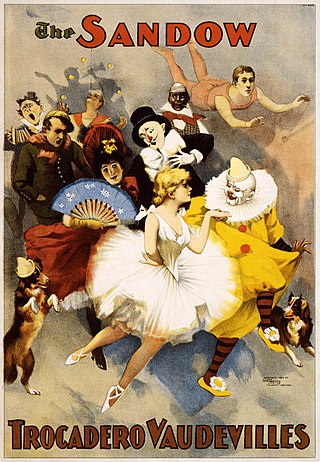
Vaudeville is a theatrical genre of variety entertainment which began in France at the end of the 19th century. A vaudeville was originally a comedy without psychological or moral intentions, based on a comical situation: a dramatic composition or light poetry, interspersed with songs or ballets. It became popular in the United States and Canada from the early 1880s until the early 1930s, while changing over time.

Olive Eleanor Boardman was an American film actress of the silent era.
Harry B. Lachman was an American artist, set designer, and film director.
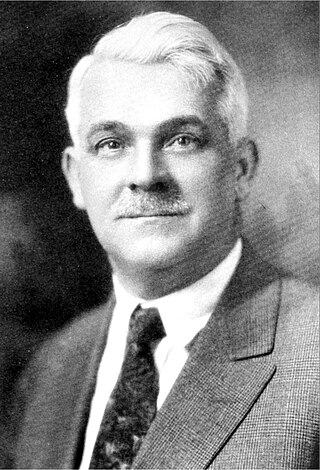
Thomas White Lamb was a Scottish-born, American architect. He was one of the foremost designers of theaters and cinemas of the 20th century.
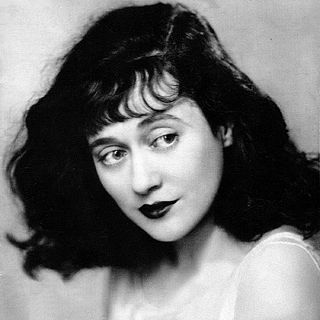
Lena Corinne "Lee" Morse was an American jazz and blues singer-songwriter, composer, guitarist, and actress. Morse's greatest popularity was in the 1920s and early 1930s as a torch singer, although her career began around 1917 and continued until her death in 1954.
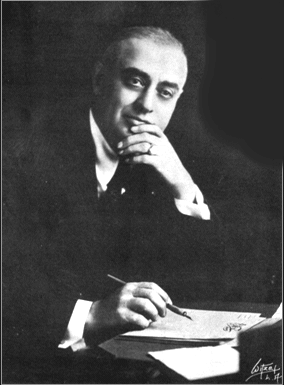
Alexander Pantages was a Greek American vaudeville impresario and early motion picture producer. He created a large and powerful circuit of theatres across the Western United States and Canada.

Benjamin Marcus Priteca was a Scottish architect. He is best known for designing theatres for Alexander Pantages.

Daphne Pollard was an Australian-born vaudeville performer and dancer, active on stage and later in US films, mostly short comedies.

Kathleen Eloise Rockwell, known as "Klondike Kate" and later known as Kate Rockwell Warner Matson Van Duren, was an American dancer and vaudeville star during the Klondike Gold Rush, where she met Alexander Pantages who later became a very successful vaudeville/motion picture mogul. She garnered notoriety for her flirtatious dancing and ability to keep hard-working miners happy if not inebriated. Before her death she appeared on the television show You Bet Your Life with Groucho Marx December 23, 1954, at the age of 74. She died in obscurity after some minor success training Hollywood starlets in the 1940s.

The Hippodrome Theatre, also called the New York Hippodrome, was a theater located on Sixth Avenue between West 43rd and West 44th Streets in the Theater District of Midtown Manhattan in New York City. The theater operated from 1905 to 1939 and was called the world's largest theater by its builders, with a seating capacity of 5,300 and a stage measuring 100 by 200 feet. It had state-of-the-art theatrical technology, including a rising glass water tank.

Margarita Fisher was an American actress in silent motion pictures and stage productions. Newspapers sometimes referred to her as "Babe" Fischer.
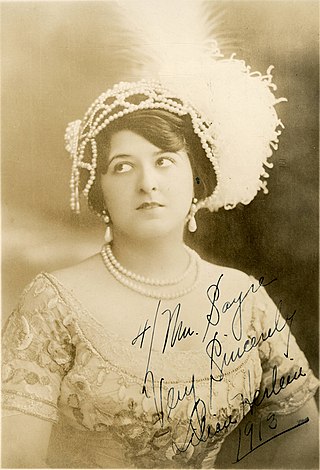
Lillian Herlein was an actress and singer in theater and vaudeville in the early 20th century. In vaudeville, she was sometimes known more for display of her figure than for the quality of her performances.
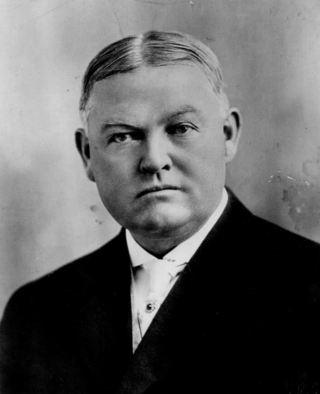
John W. Considine was an American impresario, a pioneer of vaudeville.
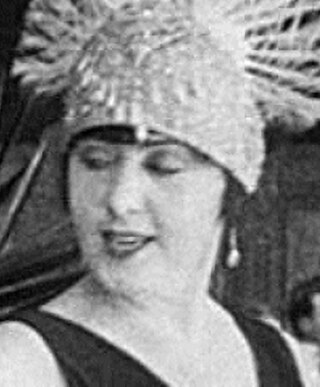
May Emory was an American actress whose name was also seen as Mae Emory.

Heloise McCeney, stage name La Belle Titcomb, was an American vaudeville performer known as The Parisian Dancer on Horseback. Her act usually had her riding upon a white horse while singing operatic arias.
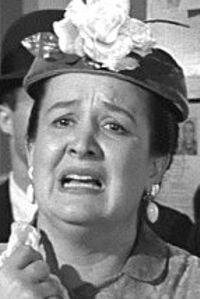
Kate Murtagh was an American actress and singer-comedian, a native of Los Angeles, California.

Belle Story was an American vaudeville performer and singer, noted for her coloratura soprano style. She appeared in a number of productions at the New York Hippodrome.

Winona Winter was an American vaudeville performer and silent-film actress.
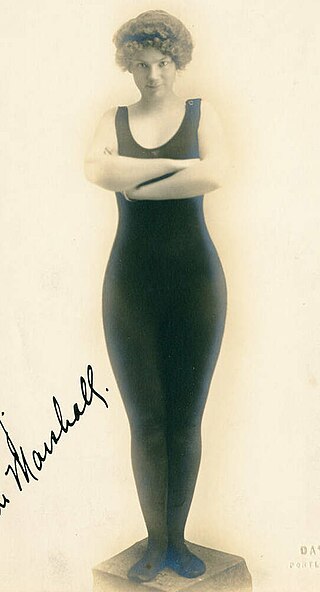
Vivian Augustus Marshall was an American diver, vaudeville performer and film actress. Born in California, Marshall's family moved to Oregon during her youth and she gained notoriety for her aquatic skills while a member of the Multnomah Athletic Club in Portland and later performed public stunt dives from heights of 70 feet and above. She also performed a signature stunt called the "fire dive", in which she would douse her baiting suit in wood alcohol, light it with a match and perform a high dive into the water to extinguish the flames. Marshall worked for vaudeville producer Alexander Pantages and acted in motion pictures in Los Angeles, California. She was married to actor Otto Fries and they had two children, Sherwood Marshall and Ottilie Vivian.

May Tully was a Canadian actress, writer, director, and producer in theatre and film, and, according to sportswriter Damon Runyon, "perhaps the greatest woman baseball fan that ever lived."

