
Fear is an intensely unpleasant emotion in response to perceiving or recognizing a danger or threat. Fear causes psychological changes that may produce behavioral reactions such as mounting an aggressive response or fleeing the threat. Fear in human beings may occur in response to a certain stimulus occurring in the present, or in anticipation or expectation of a future threat perceived as a risk to oneself. The fear response arises from the perception of danger leading to confrontation with or escape from/avoiding the threat, which in extreme cases of fear can be a freeze response. The fear response is also implicated in a number of mental disorders, particularly anxiety disorders.

John Broadus Watson was an American psychologist who popularized the scientific theory of behaviorism, establishing it as a psychological school. Watson advanced this change in the psychological discipline through his 1913 address at Columbia University, titled Psychology as the Behaviorist Views It. Through his behaviorist approach, Watson conducted research on animal behavior, child rearing, and advertising, as well as conducting the controversial "Little Albert" experiment and the Kerplunk experiment. He was also the editor of Psychological Review from 1910 to 1915. A Review of General Psychology survey, published in 2002, ranked Watson as the 17th most cited psychologist of the 20th century.
Operant conditioning, also called instrumental conditioning, is a learning process where voluntary behaviors are modified by association with the addition of reward or aversive stimuli. The frequency or duration of the behavior may increase through reinforcement or decrease through punishment or extinction.
Classical conditioning is a behavioral procedure in which a biologically potent stimulus is paired with a neutral stimulus. The term classical conditioning refers to the process of an automatic, conditioned response that is paired with a specific stimulus.

Animal cognition encompasses the mental capacities of non-human animals, including insect cognition. The study of animal conditioning and learning used in this field was developed from comparative psychology. It has also been strongly influenced by research in ethology, behavioral ecology, and evolutionary psychology; the alternative name cognitive ethology is sometimes used. Many behaviors associated with the term animal intelligence are also subsumed within animal cognition.

Edward Chace Tolman was an American psychologist and a professor of psychology at the University of California, Berkeley. Through Tolman's theories and works, he founded what is now a branch of psychology known as purposive behaviorism. Tolman also promoted the concept known as latent learning first coined by Blodgett (1929). A Review of General Psychology survey, published in 2002, ranked Tolman as the 45th most cited psychologist of the 20th century.
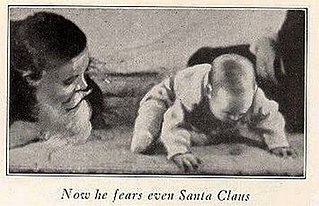
The Little Albert experiment was an unethical study that mid-20th century psychologists interpret as evidence of classical conditioning in humans. The study is also claimed to be an example of stimulus generalization although reading the research report demonstrates that fear did not generalize by color or tactile qualities. It was carried out by John B. Watson and his graduate student, Rosalie Rayner, at Johns Hopkins University. The results were first published in the February 1920 issue of the Journal of Experimental Psychology.
Behaviorism is a systematic approach to understand the behavior of humans and other animals. It assumes that behavior is either a reflex elicited by the pairing of certain antecedent stimuli in the environment, or a consequence of that individual's history, including especially reinforcement and punishment contingencies, together with the individual's current motivational state and controlling stimuli. Although behaviorists generally accept the important role of heredity in determining behavior, they focus primarily on environmental events. The cognitive revolution of the late 20th century largely replaced behaviorism as an explanatory theory with cognitive psychology, which unlike behaviorism views internal mental states as explanations for observable behavior.

Clark Leonard Hull was an American psychologist who sought to explain learning and motivation by scientific laws of behavior. Hull is known for his debates with Edward C. Tolman. He is also known for his work in drive theory.
Conditioned taste aversion occurs when an animal acquires an aversion to the taste of a food that was paired with aversive stimuli. The effect explains that the aversion develops more strongly for stimuli that cause nausea than other stimuli. This is considered an adaptive trait or survival mechanism that enables the organism to avoid poisonous substances before they cause harm. The aversion reduces consuming the same substance in the future, thus avoiding poisoning.
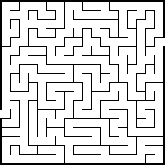
Latent learning is the subconscious retention of information without reinforcement or motivation. In latent learning, one changes behavior only when there is sufficient motivation later than when they subconsciously retained the information.
Behavioral contrast refers to a change in the strength of one response that occurs when the rate of reward of a second response, or of the first response under different conditions, is changed. For example, suppose that a pigeon in an operant chamber pecks a key for food reward. Sometimes the key is red, sometimes green, but food comes with equal frequency in either case. Then suddenly pecking the key when it is green brings food less frequently. Positive contrast is seen when the rate of response to the red key goes up, even though the frequency of reward in red remains unchanged. Likewise, increasing the reward to green tends to reduce the response rate to red. This sort of contrast effect may occur following changes in the amount, frequency, or nature of the reward, and it has been shown to occur with various experimental designs and response measures.
Willard Stanton Small was an experimental psychologist. Small was the first person to use the behavior of rats in mazes as a measure of learning. In 1900 and 1901, he published journal two of three in "Experimental Study of the Mental Processes of the Rat" in the American Journal of Psychology. The maze he used in this study was an adaptation of the Hampton Court Maze, as suggested to him by Edmund Sanford at Clark University.
Purposive behaviorism is a branch of psychology that was introduced by Edward Tolman. It combines the study of behavior while also considering the purpose or goal of behavior. Tolman thought that learning developed from knowledge about the environment and how the organism relates to its environment. Tolman's goal was to identify the complex cognitive mechanisms and purposes that guided behavior. His theories on learning went against the traditionally accepted stimulus-response connections at his time that had been proposed by other psychologists such as Edward Thorndike. Tolman disagreed with John B.Watson's behaviorism, so he initiated his own behaviorism, which became known as purposive behaviorism.
Tryon's Rat Experiment is a psychology experiment conducted by Robert Tryon in 1940 and published in the Yearbook of the National Society for Studies in Education.
The term conditioned emotional response (CER) can refer to a specific learned behavior or a procedure commonly used in classical or Pavlovian conditioning research. It may also be called "conditioned suppression" or "conditioned fear response (CFR)." It is an "emotional response" that results from classical conditioning, usually from the association of a relatively neutral stimulus with a painful or fear-inducing unconditional stimulus. As a result, the formerly neutral stimulus elicits fear. For example, if seeing a dog is paired with the pain of being bitten by the dog, seeing a dog may become a conditioned stimulus that elicits fear.

In behavioral science, a T-maze is a simple forked passage used in animal cognition experiments. It is shaped like the letter T, providing the subject, typically a rodent, with a straightforward choice. T-mazes are used to study how the rodents function with memory and spatial learning through applying various stimuli. Starting in the early 20th century, rodents were used in experiments such as the T-maze. These concepts of T-mazes are used to assess rodent behavior. The different tasks, such as left-right discrimination and forced alternation, are mainly used with rodents to test reference and working memory.
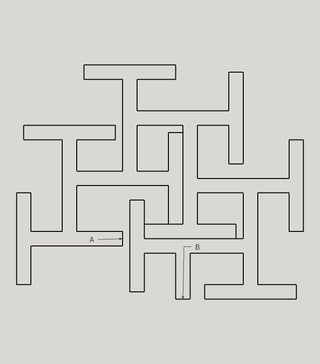
The Cincinnati Water Maze (CWM) is a type of water maze. Water mazes are experimental equipment used in laboratories; they are mazes that are partially filled with water, and rodents are put in them to be observed and timed as they make their way through the maze. Generally two sets of rodents are put through the maze, one that has been treated, and another that has not, and the results are compared. The experimenter uses this type of maze to learn about the subject's cognitive or emotional processes.
Pavlovian-instrumental transfer (PIT) is a psychological phenomenon that occurs when a conditioned stimulus that has been associated with rewarding or aversive stimuli via classical conditioning alters motivational salience and operant behavior. Two distinct forms of Pavlovian-instrumental transfer have been identified in humans and other animals – specific PIT and general PIT – with unique neural substrates mediating each type. In relation to rewarding stimuli, specific PIT occurs when a CS is associated with a specific rewarding stimulus through classical conditioning and subsequent exposure to the CS enhances an operant response that is directed toward the same reward with which it was paired. General PIT occurs when a CS is paired with one reward and it enhances an operant response that is directed toward a different rewarding stimulus.
Association in psychology refers to a mental connection between concepts, events, or mental states that usually stems from specific experiences. Associations are seen throughout several schools of thought in psychology including behaviorism, associationism, psychoanalysis, social psychology, and structuralism. The idea stems from Plato and Aristotle, especially with regard to the succession of memories, and it was carried on by philosophers such as John Locke, David Hume, David Hartley, and James Mill. It finds its place in modern psychology in such areas as memory, learning, and the study of neural pathways.