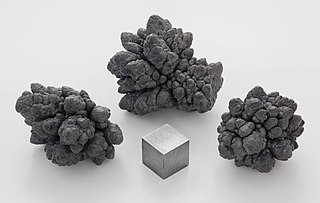
The Southeast Missouri Lead District, commonly called the Lead Belt, is a lead mining district in the southeastern part of Missouri. Counties in the Lead Belt include Saint Francois; Crawford; Dent; Iron; Madison: Reynolds; and Washington. Philip Francois Renault of France led a large exploratory mission in 1719 and started mining operations in Old Mines and Mine La Motte in 1720. The town of Sainte Genevieve was founded as a river port for transportation of lead out of the area. Moses Austin started large-scale mining and smelting at Potosi, originally known as Mine a Breton, and founded Herculaneum as his shipping point on the Mississippi. This lead was originally used as a roofing material. Bonne Terre has large subterranean mines, now used commercially for recreational scuba diving.

The Sullivan Mine is a now-closed conventional–mechanized underground mine located in Kimberley, British Columbia, Canada. The ore body is a complex, sediment-hosted, sedimentary exhalative deposit consisting primarily of zinc, lead, and iron sulphides. Lead, zinc, silver and tin were the economic metals produced. The deposit lies within the lower part of the Purcell Supergroup and mineralization occurred about 1470 million years ago during the late Precambrian (Mesoproterozoic).

Porphyry copper deposits are copper orebodies that are formed from hydrothermal fluids that originate from a voluminous magma chamber several kilometers below the deposit itself. Predating or associated with those fluids are vertical dikes of porphyritic intrusive rocks from which this deposit type derives its name. In later stages, circulating meteoric fluids may interact with the magmatic fluids. Successive envelopes of hydrothermal alteration typically enclose a core of disseminated ore minerals in often stockwork-forming hairline fractures and veins. Because of their large volume, porphyry orebodies can be economic from copper concentrations as low as 0.15% copper and can have economic amounts of by-products such as molybdenum, silver and gold. In some mines, those metals are the main product.
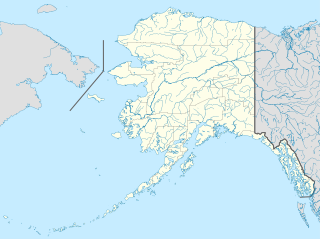
The Red Dog mine is a zinc and lead mine located in a remote region of the Arctic, within the boundaries of the Red Dog Mine census-designated place in the Northwest Arctic Borough of the U.S. state of Alaska.

Gold mining in Alaska, a state of the United States, has been a major industry and impetus for exploration and settlement since a few years after the United States acquired the territory from Russia. Russian explorers discovered placer gold in the Kenai River in 1848, but no gold was produced. Gold mining started in 1870 from placers southeast of Juneau, Alaska.

Gold mining in Nevada, a state of the United States, is a major industry, and one of the largest sources of gold in the world. In 2017 Nevada produced 5,641,538 troy ounces (175,470 kg) of gold worth $7.052 billion, representing 71% of gold produced in the United States and 5.6% of the world's production. Total gold production recorded from Nevada from 1835 to 2017 totals 200,350,000 troy ounces (6,232 t), worth over US$260.5 billion at 2019 values. Much of Nevada's gold production comes from large open pit mining using heap leaching recovery.
Mining in Afghanistan is controlled by the Ministry of Mines and Petroleum, which is headquartered in Kabul with regional offices in other parts of the country. Afghanistan has over 1,400 mineral fields, containing barite, chromite, coal, copper, gold, iron ore, lead, natural gas, petroleum, precious and semi-precious stones, salt, sulfur, talc, and zinc, among many other minerals. Gemstones include high-quality emerald, lapis lazuli, red garnet and ruby. According to a joint study by The Pentagon and the United States Geological Survey, Afghanistan has an estimated US$3 trillion of untapped minerals.

The mineral industry is one of the main sectors of the Armenian economy and in 2017 accounted for 30.1% of its exports.

Tajikistan has rich deposits of gold, silver, and antimony. The largest silver deposits are in Sughd Province, where Tajikistan’s largest gold mining operation also is located. Russia’s Norilsk nickel company has explored a large new silver deposit at Bolshoy Kanimansur. More than 400 mineral deposits of some 70 different minerals have been discovered in Tajikistan, including strontium, tungsten, molybdenum, bismuth, salt, lead, zinc, fluorspar, and mercury. These minerals have been found suitable for mining. Uranium, an important mineral in the Soviet era, remains in some quantity but is no longer extracted. The Tajikistan Aluminium Company (TALCO), an aluminium smelter, is the country's only large-scale production enterprise in the mining sector. Tajikistan hosts the annual Mining World Tajikistan, an international exhibition on mining in Dushanbe.
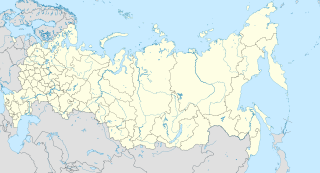
The Kholodninsky mine is one of the largest lead and zinc mines in Russia. The mine is located in south-eastern Russia in Buryatia. The mine has reserves amounting to 519 million tonnes of ore grading 0.65% lead and 3.99% zinc thus resulting 3.37 million tonnes of lead and 21.2 million tonnes of zinc.
The Kostomuksha mine is a large iron mine located in north-western Russia in the Republic of Karelia. Kostomuksha represents one of the largest iron ore reserves in Russia and in the world having estimated reserves of 10 billion tonnes of ore grading 45% iron metal.
The Bugdainskoe mine is a large molybdenum mine located in the south of Russia in Alexandrovo-Zavodsky District, Zabaykalsky Krai. Bugdainskoe represents one of the largest molybdenum reserve in Russia and in the world having estimated reserves of 813 million tonnes of ore grading 0.08% molybdenum, 0.35million oz of gold and 6.2 million oz of silver.
The Sibaysky mine is a large copper mine located in the south Russia in Baymaksky District, Bashkortostan . Sibaysky represents one of the largest copper reserve in Russia and in the world having estimated reserves of 1.48 billion tonnes of ore grading 0.91% copper.
The Uchalinsky mine is a large copper mine located in Russia about 75 km northwest of Yekaterinburg, in Sverdlovsk Oblast. Uchalinsky represents one of the largest copper reserve in Russia and in the world having estimated reserves of 1.94 billion tonnes of ore grading 1.05% copper.
The Tarynnakh mine is a large iron mine located in eastern Russia in Olyokminsky District, Sakha Republic . Tarynnakh represents one of the largest iron ore reserves in Russia and in the world having estimated reserves of 2 billion tonnes of ore grading 28.1% iron metal.
The Algama mine is a large zirconium mine located in Russian Far East in Ayano-Maysky District of Khabarovsk Krai. Algama represents one of the largest zirconium reserves in Russia having estimated reserves of 93.7 million tonnes of ore grading 4.62% zirconium metal. It is located at the southeast edge of the Stanovoy block of the North Asian Craton.
The Sheregesh mine is a large iron mine located in Tashtagolsky District, Kemerovo Oblast, Russia . Sheregesh represents one of the largest iron ore reserves in Russia and in the world having estimated reserves of 184.7 million tonnes of ore grading 35.8% iron metal.
The Salairskoye mine is one of the largest lead mines in Russia. The mine is located in southern Russia in Novosibirsk Oblast. The mine has reserves amounting to 25 million tonnes of ore grading 0.13% lead, 2.42% zinc and 7 million oz of silver.
The Teiskoye mine is a large iron mine located in eastern Russia in Askizsky District, Khakassia. Teiskoye represents one of the largest iron ore reserves in Russia and in the world, having estimated reserves of 136.4 million tonnes of ore grading 29.9% iron metal.
The Turukhanskoye mine is a large iron mine located in central Russia in Turukhansky District, Krasnoyarsk Krai. Turukhanskoye represents one of the largest iron ore reserves in Russia and in the world having estimated reserves of 3 billion tonnes of ore grading 30.3% iron metal.