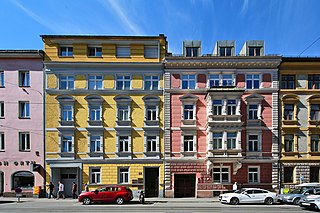
Innsbruck is the capital of Tyrol and the fifth-largest city in Austria. On the River Inn, at its junction with the Wipp Valley, which provides access to the Brenner Pass 30 km (19 mi) to the south, it had a population of 132,493 in 2018.

Tyrol is an Austrian federal state. It comprises the Austrian part of the historical Princely County of Tyrol. It is a constituent part of the present-day Euroregion Tyrol–South Tyrol–Trentino. The capital of Tyrol is Innsbruck.
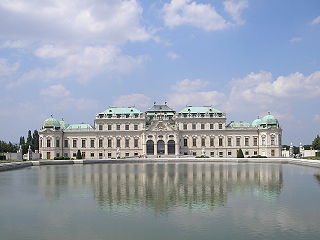
Tourism in Austria forms an important part of the country's economy, accounting for almost 9% of the Austrian gross domestic product. Austria has one guest bed for every six inhabitants, and boasts the highest per capita income from tourism in the Organisation for Economic Co-operation and Development. As of 2007, the total number of tourist overnight stays is roughly the same for summer and winter season, with peaks in February and July/August.
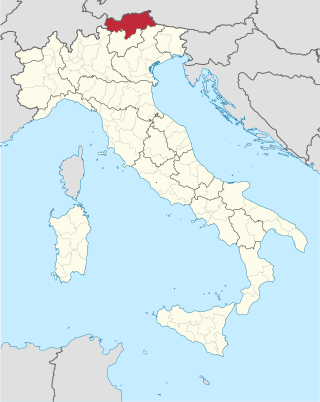
South Tyrol is an autonomous province in northern Italy. An English translation of the official German and Italian names could be the Autonomous Province of Bolzano – South Tyrol, reflecting the multilingualism and different naming conventions in the area. Together with the autonomous province of Trento, South Tyrol forms the autonomous region of Trentino-Alto Adige/Südtirol. The province is the northernmost of Italy, the second largest with an area of 7,400 square kilometres (2,857 sq mi), and has a total population of about 534,000 inhabitants as of 2021. Its capital and largest city is Bolzano.
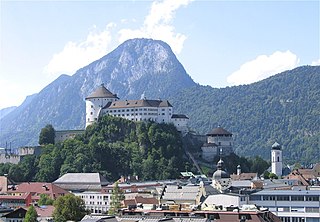
Kufstein is a town in the Austrian state of Tyrol, the administrative seat of Kufstein District. With a population of about 20,000 it is the second largest Tyrolean town after the state capital Innsbruck. The greatest landmark is Kufstein Fortress, first mentioned in the 13th century. The town was the place of origin of the Austrian noble family Kuefstein.

Seefeld in Tirol is an old farming village, now a major tourist resort, in Innsbruck-Land District in the Austrian state of Tyrol with a local population of 3,312. The village is located about 17 km (11 mi) northwest of Innsbruck on a plateau between the Wetterstein mountains and the Karwendel on a historic road from Mittenwald to Innsbruck that has been important since the Middle Ages. It was first mentioned in 1022 and since the 14th century has been a pilgrimage site, benefiting not only from the visit of numerous pilgrims but also from its stacking rights as a trading station between Augsburg and the Venice. Also since the 14th century, Tyrolean shale oil has been extracted in the area. Seefeld was a popular holiday resort even before 1900 and, since the 1930s, has been a well known winter sports centres and amongst the most popular tourist resorts in Austria. The municipality, which has been the venue for several Winter Olympics Games, is the home village of Anton Seelos, the inventor of the parallel turn.

Lans is a town in the district of Innsbruck Land in the Austrian state of Tyrol. The village is located 8 km south of the city of Innsbruck.
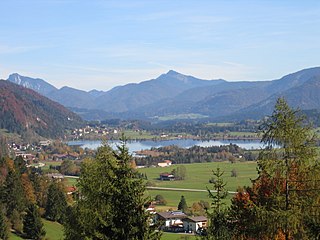
Walchsee is a municipality in the Austrian state of Tyrol in the Kufstein district. It is located in the lower Inn valley and belongs to the "Kaiserwinkl" and the "Untere Schranne".

Aldrans is a municipality in the Innsbruck-Land District, Tyrol (Austria) at an altitude of 760 m (2,490 ft), which had an area of 8.89 km2 (3.43 sq mi) and 2,496 inhabitants as January 2015.

Lake Obernberg is a lake of Tyrol, Austria.

The Fen of Lans is located north above Lake Lans at an altitude of 582 metres in the Paschberg forest. With an area of 8000 m² and a depth of 3 metres the lake is much smaller than its neighbour.
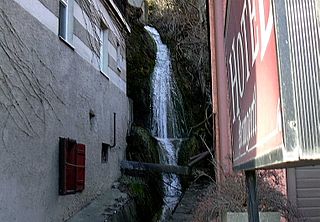
The Tuffbach, also known locally as the Weissbach, is a river of Tyrol, Austria, a tributary of the Inn.

Ampass is a municipality in the Innsbruck-Land District, Tyrol (Austria) situated at an altitude of 651 m, has an area of 7.9 km2 and 1793 inhabitants as January 2015.
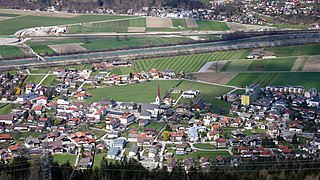
Volders is a municipality in the district of Innsbruck-Land in the Austrian state of Tyrol located 12 km east of Innsbruck on the southern side of the Inn River.

Lake Achen is a lake in Austria, north of Jenbach in Tyrol. Lake Achen is also called "Fjord of the Alps" and "Tyrolean Sea". The largest lake within the federal state, its maximum depth is 133 metres (436 ft). Together with the Achen Valley, it parts the Karwendel mountain range in the west from the Brandenberg Alps in the east.

The Tyrolean Rebellion is a name given to the resistance of militiamen, peasants, craftsmen and other civilians of the County of Tyrol led by Andreas Hofer supported by his wife Anna and a strategic council consisting of Josef Speckbacher, Peter Mayr, Capuchin Father Joachim Haspinger, Major Martin Teimer and Kajetan Sveth, against new legislation and a compulsory vaccination programme concerning smallpox ordered by King Maximilian I of Bavaria, followed by the military occupation of their homeland by troops organised and financed by Napoleon I of the First French Empire and Maximilian I. The broader military context is called the War of the Fifth Coalition.
Tyrol is a historical region in the Alps of Northern Italy and western Austria. The area was historically the core of the County of Tyrol, part of the Holy Roman Empire, Austrian Empire and Austria-Hungary, from its formation in the 12th century until 1919. In 1919, following World War I and the dissolution of Austria-Hungary, it was divided into two modern administrative parts through the Treaty of Saint-Germain-en-Laye:

Amlach power station is a diversionary-run-of-the-river hydroelectricity generating station on the Drava river in Austria. The power station is operated by Tiroler Wasserkraft (TIWAG) on river water flowing between Tassenbach, Strassen, Tyrol and Amlach, near Lienz.
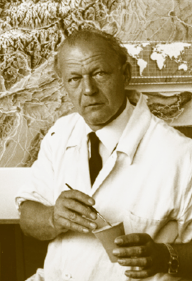
Heinrich Caesar Berann was an Austrian painter and cartographer. He achieved world fame with his panoramic maps that combined modern cartography with classical painting. His work includes maps of Olympic Games sites, of mountainous regions published in the National Geographic Magazine, and four panorama posters of national parks published by the U.S. National Park Service.


