
In biology, taxonomy is the science of defining and naming groups of biological organisms on the basis of shared characteristics. Organisms are grouped together into taxa and these groups are given a taxonomic rank; groups of a given rank can be aggregated to form a super-group of higher rank, thus creating a taxonomic hierarchy. The principal ranks in modern use are domain, kingdom, phylum, class, order, family, genus, and species. The Swedish botanist Carl Linnaeus is regarded as the founder of the current system of taxonomy, as he developed a system known as Linnaean taxonomy for categorizing organisms and binomial nomenclature for naming organisms.
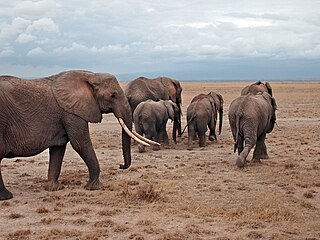
In biology, a taxon is a group of one or more populations of an organism or organisms seen by taxonomists to form a unit. Although neither is required, a taxon is usually known by a particular name and given a particular ranking, especially if and when it is accepted or becomes established. It is not uncommon, however, for taxonomists to remain at odds over what belongs to a taxon and the criteria used for inclusion. If a taxon is given a formal scientific name, its use is then governed by one of the nomenclature codes specifying which scientific name is correct for a particular grouping.

In biology, a monotypic taxon is a taxonomic group (taxon) that contains only one immediately subordinate taxon.

In biology, a type is a particular specimen of an organism to which the scientific name of that organism is formally attached. In other words, a type is an example that serves to anchor or centralize the defining features of that particular taxon. In older usage, a type was a taxon rather than a specimen.

Sorbeoconcha is a taxonomic clade of snails, i.e. gastropods, mainly marine species with gills and opercula, within the clade Caenogastropoda.
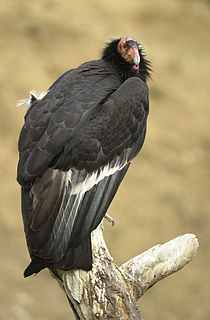
Incertae sedis or problematica are terms used for a taxonomic group where its broader relationships are unknown or undefined. Alternatively, such groups are frequently referred to as "enigmatic taxa". In the system of open nomenclature, uncertainty at specific taxonomic levels is indicated by incertae familiae, incerti subordinis, incerti ordinis and similar terms.

A botanical name is a formal scientific name conforming to the International Code of Nomenclature for algae, fungi, and plants (ICN) and, if it concerns a plant cultigen, the additional cultivar or Group epithets must conform to the International Code of Nomenclature for Cultivated Plants (ICNCP). The code of nomenclature covers "all organisms traditionally treated as algae, fungi, or plants, whether fossil or non-fossil, including blue-green algae (Cyanobacteria), chytrids, oomycetes, slime moulds and photosynthetic protists with their taxonomically related non-photosynthetic groups ."
Wastebasket taxon is a term used by some taxonomists to refer to a taxon that has the sole purpose of classifying organisms that do not fit anywhere else. They are typically defined by either their designated members' often superficial similarity to each other, or their lack of one or more distinct character states or by their not belonging to one or more other taxa. Wastebasket taxa are by definition either paraphyletic or polyphyletic, and are therefore not considered to be valid taxa under strict cladistic rules of taxonomy. The name of a wastebasket taxon may in some cases be retained as the designation of an evolutionary grade, however.
In biology, a homonym is a name for a taxon that is identical in spelling to another such name, that belongs to a different taxon.
In scientific nomenclature, a synonym is a scientific name that applies to a taxon that (now) goes by a different scientific name, although the term is used somewhat differently in the zoological code of nomenclature. For example, Linnaeus was the first to give a scientific name to the Norway spruce, which he called Pinus abies. This name is no longer in use: it is now a synonym of the current scientific name, Picea abies.

In biological classification, taxonomic rank is the relative level of a group of organisms in a taxonomic hierarchy. Examples of taxonomic ranks are species, genus, family, order, class, phylum, kingdom, domain, etc.
Philotrox is an extinct genus of bone crushing omnivorous mammal similar to a dog of the family Canidae which inhabited North America during the Oligocene living from 30.8—26.3 Ma and existed for approximately 4.5 million years.
In biological taxonomy, circumscription is the definition of a taxon, that is, a group of organisms.
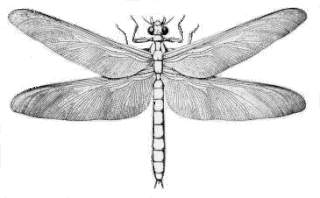
The Odonatoptera are a superorder of ancient winged insects, placed in the Palaeoptera which probably form a paraphyletic group however. The dragonflies and damselflies are the only living members of this group, which was far more diverse in the late Paleozoic and contained gigantic species, including the griffinflies of the order Protodonata. This lineage dates back at least to the Bashkirian, not quite 320 million years ago.
Septatorina is a suborder of parasitic alveolates of the phylum Apicomplexa
Stylocephaloidea is a superfamily of parasitic alveolates of the phylum Apicomplexia
Actinocephalidae is a family of parasitic alveolates of the phylum Apicomplexia
Stylocephalidae is a family of parasitic alveolates of the phylum Apicomplexia
Cephaloidophoridae is a family of parasitic alveolates of the phylum Apicomplexia


