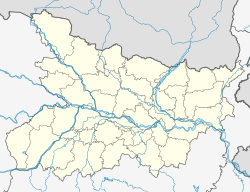
Lehara, also known as Nehra, is a large village and significant commercial hub situated in the Manigachhi block of Darbhanga district in the state of Bihar, India.[2]
The village is administratively divided into two distinct Gram Panchayats to facilitate local governance:
Nehra East (Nehra Purvi): This panchayat manages the eastern section and recently underwent development with the construction of a new Panchayat Sarkar Bhawan.
Nehra West (Nehra Pashchimi): This covers the western administrative area and manages separate state and central development schemes.
The history of Nehra is deeply intertwined with the broader history of the Mithila region and the influence of the Darbhanga Raj. While formal archaeological excavations are limited, the village's historical identity is defined by its landownership patterns and educational foundations.
Estate Influence: Much of the village's early infrastructure and land distribution were managed under the patronage of the Maharaja of Darbhanga.
Rajokhar Pokhar: This historic pond, central to the village, is believed to have been excavated during the reign of the royal family to serve as a perennial water source for the community and religiousrituals.
Pre-Independence educational growth
Unlike many surrounding rural areas, Nehra established itself as a center for learning well before 1947.
High School Nehra (1949): Founded just after independence, this institution was the result of local philanthropic efforts and land donations from prominent village families aimed at modernizing the region through education.
Scholarly Tradition: The village has a long history of producing scholars in Maithili and Sanskrit, contributing to the intellectual movement of Mithilanchal.
Political evolution
Nehra’s history is unique due to its high-profile matrimonial connections, which shifted its status from a quiet agrarian village to a politically significant "VIP Village."
Originally a single administrative block, the village was eventually split into Nehra East and Nehra West to manage its growing population and the complex logistics of the Manigachhi Block.
Education
Nehra serves as an educational hub for the Manigachhi block, with several long-standing government and private institutions.
Jayanand College (J.N. College, Nehra): A government-funded co-educational institution established to provide undergraduate courses in Commerce, Science and Arts. It serves a large student population from Nehra and surrounding villages.
Secondary and senior secondary schools
There are separate large-scale government high schools for boys and girls:
High School Nehra: Established in 1949, it is one of the oldest schools in the district, offering grades 9 to 12. It features a government building, a playground, and a library with over 700 books.
Project Girls High School Nehra: Founded in 1985, it provides dedicated secondary education (grades 9–12) for female students.
Primary and middle schools
The village has a network of schools serving younger students, often categorized by locality:
M.S. Nehra Girls: A government middle school (Grades 1–8) established in 1950.
M.S. Nehra Balak: A central cluster school that oversees approximately 15 other small schools in the area.
Primary School (P.S.) Nehra: A co-educational government primary school (Grades 1–5).
Locality-based Schools: There are several smaller units like NPS Nehra (Yadav Tol) and Ps Rajwara Tole Nehra.
Private institutions
Several private schools offer English-medium education.
J. N. College, Nehra: History
The history of higher education in Nehra is synonymous with Jayanand College (often abbreviated as J.N. College), which transformed the village into a regional academic hub.
Foundation and early history
Establishment: Jayanand College was founded in 1970 through the collective efforts of local visionaries and philanthropists who wanted to provide higher education to the rural youth of the Manigachhi block.
Naming: The college was named in honour of Pt. Jayanand Jha, a respected figure in the region.
Diversification: While it began with a focus on Liberal Arts, the college expanded to include a full Science Faculty, offering undergraduate degrees (B.A., B.Com and B.Sc. Honours) in subjects like Physics, Chemistry, Mathematics, Botany, and Zoology.
Catering to the Hinterland: Historically, the college served as the primary destination for students from nearby villages like Raghopur, Haripur, Bishanpur, Paithan Kabai, and Manigachhi, who previously had to travel to Darbhanga city for higher studies.
Political and social impact
Student Politics: Given the village’s reputation for political awareness, the college has been a breeding ground for local leadership and student activism within the Mithila region.
Modernisation: In recent decades, the college has integrated vocational elements and improved its infrastructure, including a dedicated library and laboratory facilities to meet the standards set by the University Grants Commission (UGC).
Culture
Nehra is deeply rooted in the Mithila cultural heritage, known for its blend of traditional religious practices and a unique social reputation within the district.
The village is known for its traditional celebrations, particularly the Chhath festival held at the local Rajokhar Pokhar, which attracts devotees from across the Mithilanchal region.
Regional identity
The "Paris of Mithilanchal": Locally, Nehra is often affectionately referred to as the “Paris of Mithilanchal”, a nickname that reflects its status as a well-developed, bustling village with urban-like amenities and a vibrant local market.
Social Connectivity The village holds a unique social status as the Sasural (matrimonial home) of multiple high-profile political leaders, leading to its reputation as a well-connected and politically aware community.
Religious landmarks
The village is home to several significant religious sites that serve as centers for communal gatherings:
Rajokhar Pokhar: A large local pond central to the village's identity. It is the primary site for the Chhath Puja festival, where thousands of devotees gather to offer prayers to the Sun God.
Temples: Notable local shrines include the Mahavir Sthan, and several Shiva and Durga temples located within the Nehra West and East administrative areas.
Cuisine: Traditional Maithil food is a staple, with local specialties including Makhana (fox nuts), varieties of river fish, and unique vegetable preparations like Tarua (vegetable fritters).
Annual fairs
Annual fairs (Melas) are common during major festivals like Kartik Purnima, Rama Navami, Janmashtami and Durga Puja, serving as both religious events and vital social-commercial hubs for the surrounding smaller hamlets.
This page is based on this Wikipedia article Text is available under the CC BY-SA 4.0 license; additional terms may apply. Images, videos and audio are available under their respective licenses.



 India
India 