Between 1937 and 1945 the Japanese Imperial Army formed 126 Independent Mixed Brigades, typically composed of various units detached from other formations. Some were composed of separate, independent assets. These brigades were task organized under unified command and were normally used in support roles, as security, force protection, POW and internment camp guards and labor in occupied territories. An Independent Mixed Brigade had between 5,000 and 11,000 troops.
7th Division was an infantry division in the Imperial Japanese Army. Its call-sign was the Bear Division.
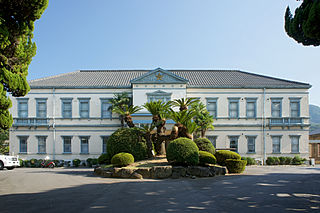
The 11th Division was an infantry division in the Imperial Japanese Army. Its tsūshōgō code name was the Brocade Division, and its military symbol was 11D. The 11th Division was one of six infantry divisions newly raised by the Imperial Japanese Army after the First Sino-Japanese War (1894–1895). The division received its colors on 1 October 1898 and was disbanded in September 1945. Its troops were recruited primarily from communities in the four prefectures of the island of Shikoku. It was originally headquartered in the city of Zentsuji, Kagawa, and its first commander was Lieutenant General Nogi Maresuke.
The 201st Division was an infantry division of the Imperial Japanese Army. Its call sign was the Musashi Division. It was formed 2 April 1945 in Tokyo as a triangular division. It was one of the batch of eight divisions comprising 201st, 202nd, 205th, 206th, 209th, 212th, 214th and 216th divisions created as part of the Japanese reaction on the Battle of Okinawa.
The 202nd Division was an infantry division of the Imperial Japanese Army. Its call sign was the Aoba Division, after the Aoba Castle. It was formed 2 April 1945 in Sendai as a triangular division. It was one of the batch of eight divisions comprising 201st, 202nd, 205th, 206th, 209th, 212th, 214th and 216th divisions created as part of the Japanese reaction on the Battle of Okinawa.
The 57th Division was an infantry division of the Imperial Japanese Army. Its call sign was the Inner Division.It was formed on 10 July 1940 at Hirosaki, Aomori, simultaneously with 51st, 52nd, 54th, 55th, and 56th divisions, as a reserve and provisional unit. Its call-sign “Oku” was taken from the ancient name of the Tohoku region of northern Honshū, "Oshu". The formation nucleus was the headquarters of the 8th Division. Its manpower came from the Aomori, Iwate, Yamagata and Akita prefectures. The 57th division was initially assigned to direct command of Emperor Hirohito, but was transferred to Northern District Army as soon as it formed 2 December 1940.
The 140th Division was an infantry division of the Imperial Japanese Army. Its call sign was the Tokyo protection division. It was formed 28 February 1945 in Fujisawa as a square division. It was a part of the 16 simultaneously created divisions batch numbering from 140th to 160th.
The 142nd Division was an infantry division of the Imperial Japanese Army. Its call sign was the Sendai Protection Division. It was formed 28 February 1945 in Sendai as a square division. It was a part of the 16 simultaneously created divisions batch numbering from 140th to 160th.
The 143rd Division was an infantry division of the Imperial Japanese Army. Its call sign was the Nagoya Protection Division. It was formed 28 February 1945 in Nagoya as a square division. It was a part of the 16 simultaneously created divisions batch numbering from 140th to 160th.
The 72nd Division was an infantry division in the Imperial Japanese Army. Its call sign was the Summon Division. It was created 4 April 1944 in Sendai to replace 43rd division and disbanded in September 1945 in Fukushima. It was a triangular division. The men of the division were drafted through 2nd military district, located in Sendai.

The 42nd Division was an infantry division of the Imperial Japanese Army. Its call sign was the Distinction Division
The 84th Division was an infantry division in the Imperial Japanese Army. Its call sign was the Sudden Division.It was created July 6 1944 in Himeji. It was a triangular division. The divisional backbone was the 54th Division headquarters.
The 93rd Division was an infantry division in the Imperial Japanese Army. Its call sign was the Resolve Division. It was created 6 July 1944 in Kanazawa. The nucleus for the formation was the training camps of the 52nd division. It was a triangular division.
The 151st Division was an infantry division of the Imperial Japanese Army. Its call sign was the Utsunomiya Protection Division. It was formed 28 February 1945 in Utsunomiya as a square division. It was a part of the 16 simultaneously created divisions batch numbering from 140th to 160th.
The 153rd Division was an infantry division of the Imperial Japanese Army. Its call sign was the Kyoto Protection Division. It was formed 28 February 1945 in Kyoto as a square division. It was a part of the 16 simultaneously created divisions batch numbering from 140th to 160th.
The 156th Division was an infantry division of the Imperial Japanese Army. Its call sign was the West Protection Division. It was formed 28 February 1945 in Kurume, Fukuoka as a square division. It was a part of the 16 simultaneously created divisions batch numbering from 140th to 160th.
The 205th Division was an infantry division of the Imperial Japanese Army. Its call sign was the Aki Division, after the Aki District, Hiroshima. It was formed on 2 April 1945 in Hiroshima as a triangular division. It was one of a batch of eight divisions comprising the 201st, 202nd, 205th, 206th, 209th, 212th, 214th and 216th Divisions that were created as part of the Japanese reaction to the Battle of Okinawa.
The 206th Division was an infantry division of the Imperial Japanese Army. Its call sign was the Aso Division, after Mount Aso. It was formed on 2 April 1945 in Kumamoto as a triangular division. It was one of a batch of eight divisions composed of the 201st, 202nd, 205th, 206th, 209th, 212th, 214th and 216th Divisions created as part of the reaction to the Battle of Okinawa.
The 212th Division was an infantry division of the Imperial Japanese Army. Its call sign was the Kikuchi 32601 division, after Kikuchi, Kumamoto. It was formed on 2 April 1945 in Kurume as a triangular division. It was one of a batch of eight divisions composed of the 201st, 202nd, 205th, 206th, 209th, 212th, 214th and 216th Divisions created as part of the reaction to the Battle of Okinawa.
The 216th Division was an infantry division of the Imperial Japanese Army. Its call sign was the Hiei 10251 division, after Mount Hiei. It was formed on 2 April 1945 in Kyoto as a triangular division. It was one of a batch of eight divisions composed of the 201st, 202nd, 205th, 206th, 209th, 212th, 214th and 216th Divisions created as part of the reaction to the Battle of Okinawa.