Related Research Articles

Michael Faraday was an English physicist and chemist who contributed to the study of electromagnetism and electrochemistry. His main discoveries include the principles underlying electromagnetic induction, diamagnetism and electrolysis. Although Faraday received little formal education, as a self-made man, he was one of the most influential scientists in history. It was by his research on the magnetic field around a conductor carrying a direct current that Faraday established the concept of the electromagnetic field in physics. Faraday also established that magnetism could affect rays of light and that there was an underlying relationship between the two phenomena. He similarly discovered the principles of electromagnetic induction, diamagnetism, and the laws of electrolysis. His inventions of electromagnetic rotary devices formed the foundation of electric motor technology, and it was largely due to his efforts that electricity became practical for use in technology.

James Prescott Joule was an English physicist. Joule studied the nature of heat and discovered its relationship to mechanical work. This led to the law of conservation of energy, which in turn led to the development of the first law of thermodynamics. The SI unit of energy, the joule (J), is named after him.
The Treasurer of the Household is a member of the Royal Household of the Sovereign of the United Kingdom. The position is usually held by one of the government deputy Chief Whips in the House of Commons. The current holder of the office is Mark Tami MP.
The year 1836 in science and technology involved some significant events, listed below.

William Sturgeon was an English physicist and inventor who made the first electromagnet and the first practical electric motor.
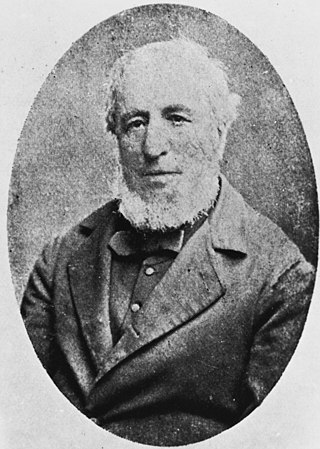
Edward Davy was an English physician, scientist, and inventor who played a prominent role in the development of telegraphy, and invented an electric relay.

William Henry was an English chemist. He was the son of Thomas Henry and was born in Manchester England. He developed what is known today as Henry's Law.
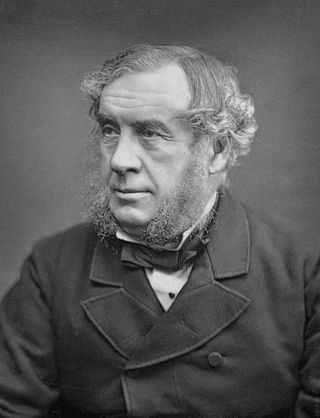
Sir William Robert Grove, FRS FRSE was a Welsh judge and physical scientist. He anticipated the general theory of the conservation of energy, and was a pioneer of fuel cell technology. He invented the Grove voltaic cell.
The Chemical Society was a scientific society formed in 1841 by 77 scientists as a result of increased interest in scientific matters. Chemist Robert Warington was the driving force behind its creation.
The Bakerian Medal is one of the premier medals of the Royal Society that recognizes exceptional and outstanding science. It comes with a medal award and a prize lecture. The medalist is required to give a lecture on any topic related to physical sciences. It is awarded annually to individuals in the field of physical sciences, including computer science.
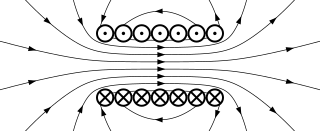
The history of electromagnetic theory begins with ancient measures to understand atmospheric electricity, in particular lightning. People then had little understanding of electricity, and were unable to explain the phenomena. Scientific understanding and research into the nature of electricity grew throughout the eighteenth and nineteenth centuries through the work of researchers such as André-Marie Ampère, Charles-Augustin de Coulomb, Michael Faraday, Carl Friedrich Gauss and James Clerk Maxwell.

John Peter Gassiot FRS [also Gassiott] was an English businessman and amateur scientist. He was particularly associated with public demonstrations of electrical phenomena and the development of the Royal Society.
Charles Vincent Walker FRS was an English electrical engineer and publisher, a major influence on the development of railway telecommunications, he was also the first person to send a submarine telegraph signal.
The Royal Victoria Gallery for the Encouragement of Practical Science was an adult education institution and exhibition gallery in Victorian Manchester, a commercial enterprise intended to educate the general public about science and its industrial applications.
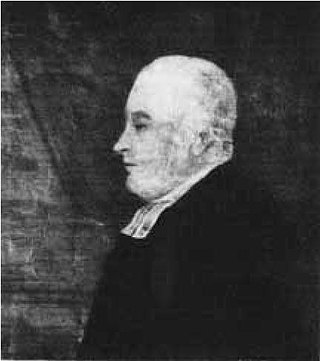
Abraham Bennet FRS was an English clergyman and physicist, the inventor of the gold-leaf electroscope and developer of an improved magnetometer. Alessandro Volta cited Bennet as a key influence on his work, although Bennet's own work was curtailed by the political turbulence of his time.

Henry Letheby was an English analytical chemist and public health officer.
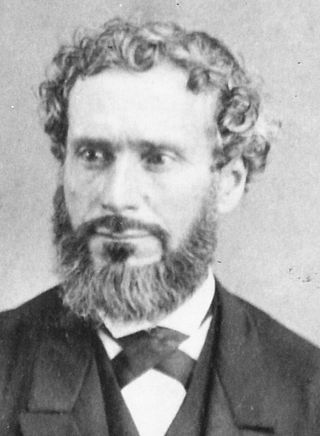
Charles Grafton Page was an American electrical experimenter and inventor, physician, patent examiner, patent advocate, and professor of chemistry.
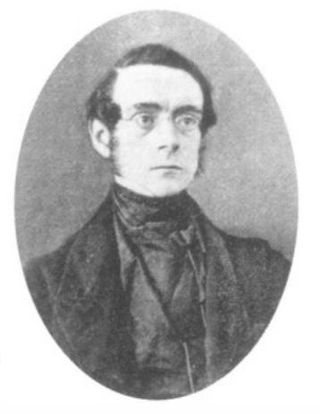
Golding Bird was a British medical doctor and a Fellow of the Royal College of Physicians. He became a great authority on kidney diseases and published a comprehensive paper on urinary deposits in 1844. He was also notable for his work in related sciences, especially the medical uses of electricity and electrochemistry. From 1836, he lectured at Guy's Hospital, a well-known teaching hospital in London and now part of King's College London, and published a popular textbook on science for medical students called Elements of Natural Philosophy.
References
- 1 2 Sturgeon, William (1837). The Annals of Electricity, Magnetism, and Chemistry. Vol. 1. London: Sherwood, Gilbert, and Piper. p. 416.
- ↑ "Clarke, Edward Marmaduke (c.1806–1859), scientific instrument maker". Oxford Dictionary of National Biography. Oxford University Press. Retrieved 3 January 2017.
- ↑ "Edward Clarke, optician and magnetician". London Street Views. Baldwin Hamey. Retrieved 3 January 2017.
- ↑ Secord, James A. (1989). "Extraordinary Experiment: Electricity and the Creation of Life in Victorian England". In Gooding, David; Pinch, Trevor; Schaffer, Simon (eds.). The Uses of Experiment: Studies in the Natural Sciences. Cambridge University Press. p. 362.
- ↑ Walker, Charles V. (1841). The Transactions, and the Proceedings of the London Electrical Society, from 1837 to 1840. London: Smith, Elder & Co. pp. 57–65.
- ↑ Pollock, Thomas (1841). The Transactions, and the Proceedings of the London Electrical Society, from 1837 to 1840. London: Smith, Elder & Co. pp. 145–147.
- ↑ Morus, Iwan Rhys (1993), "Currents from the Underworld: Electricity and the Technology of Display in Early Victorian England", Isis, 84 (1): 50–69, doi:10.1086/356373, JSTOR 235553, S2CID 143983050
- ↑ Minute Books of the London Electrical Society 7 October 1837 (unpaginated). Special Collections MS. 42. Archives of The Institution of Engineering and Technology, London WC2R 0BU
- ↑ “One of the Committee”, ed. (1841). The Transactions, and the Proceedings of the London Electrical Society, from 1837 to 1840. London: Smith, Elder & Co.
- ↑ Walker, Charles V., ed. (1843). Proceedings of the London Electrical Society, During the Sessions 1841-2 and 1842-3. London: Simpkin, Marshall & Co.
- ↑ Morus, Iwan Rhys (1998). Frankenstein's Children: electricity, exhibition, and experiment in early-nineteenth-century London. Princeton: Princeton University Press. p. 120. ISBN 9780691605272.
- ↑ Probably John Strettell Brickwood (ca.1785-1867), Secretary, Public Works Loan Commissioners and council member of the Society for the Illustration and Encouragement of Practical Science
- ↑ Byng was a geologist; a Council member of The Meteorological Society; Fellow of the Royal Astronomical Society; author of Thoughts on the first Rainbow, in connection with certain geological facts (London, 1852); and was involved in the provision of gas lighting on Staines bridge. He was born on 1 February 1799 in Dover. He married Ann Watson on 1 January 1822. They had 6 children. Byng died In Ipswich in 1880
- ↑ Probably Henry English (ca. 1803–1855), mining engineer and founder and editor of the Mining Journal. Also a stockbroker and proprietor of iron mines (1851 census)
- ↑ Surgeon . Holder of a patent (in 1839) for “an apparatus to be applied to the chimnies of gas and other burners or lamps to improve combustion”. Exhibited at the Colosseum in Regents Park.
- ↑ William Leithead, chemist. Supervised the Department of Natural Magic at the Regent’s Park Colosseum and author of Electricity; its nature, operation, and importance in the phenomena of the universe (London, 1837)
- ↑ Lockey (1796-1869) was an early photographer in the Bath area . His negatives were developed using the calotype photographic process, patented by William Henry Fox Talbot.
- ↑ George Mackrell (ca.1792–6 January 1885), merchant of Cloudesley Square, Islington. In 1861 was “Agent to Naval Officers and Officers of East India Service" (1861 census).
- ↑ A builder, noted for constructing the Royal Polytechnic Institution in London in 1837
- ↑ "Horatio Prater". London Remembers. Retrieved 30 January 2017.
- ↑ The Reverend John Shillibeer (1786–3 April 1841) was rector of Stoke Doyle, near Oundle, and Master of the Grammar School at Oundle. He was also an artist
- ↑ Chemist and surgeon (1818–1877). "His interest in chemistry and electricity, inspired by the physicist John Daniell (1790–1845), led him to develop a new battery cell"
- ↑ Probably Ralph Stamper (ca.1795-22 January 1858), chemist and druggist of 140 Leadenhall Street.
- ↑ Anderson, Antony (1988), "The life of an amateur electromagnetician", New Scientist, 120: 74–75