
DoñaMaría Eugenia Ignacia Agustina de Palafox y Kirkpatrick, 19th Countess of Teba, 16th Marchioness of Ardales, known as Eugénie de Montijo, was Empress of the French from her marriage to Emperor Napoleon III on 30 January 1853 until the Emperor was overthrown on 4 September 1870.
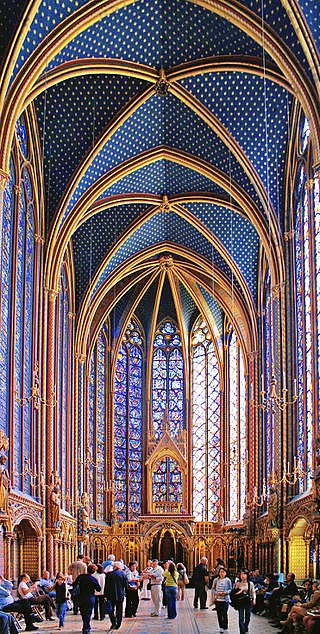
The Sainte-Chapelle is a royal chapel in the Gothic style, within the medieval Palais de la Cité, the residence of the Kings of France until the 14th century, on the Île de la Cité in the River Seine in Paris, France.

Pierre-Joseph Redouté, was a painter and botanist from Belgium, known for his watercolours of roses, lilies and other flowers at the Château de Malmaison, many of which were published as large, coloured stipple engravings. He was nicknamed "the Raphael of flowers" and has been called the greatest botanical illustrator of all time.
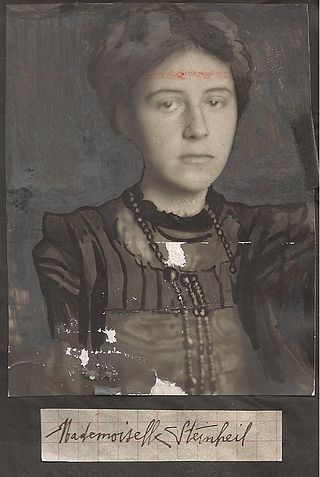
Marguerite Jeanne "Meg" Japy Steinheil, Baroness Abinger was a French woman known for her many love affairs with important men. She was present at the death of President Félix Faure, who was rumored to have died after having a seizure while allegedly having sex with her. She was later tried for the murders of her husband and mother, but was acquitted.

Charles Nagel was a United States politician and lawyer from St. Louis, Missouri. He was Secretary of Commerce and Labor during President William Howard Taft's administration (1909–1913) and was one of the key founders of the United States Chamber of Commerce.

Jean-Louis-Ernest Meissonier was a French Classicist painter and sculptor famous for his depictions of Napoleon, his armies and military themes. He documented sieges and manoeuvres and was the teacher of Édouard Detaille.
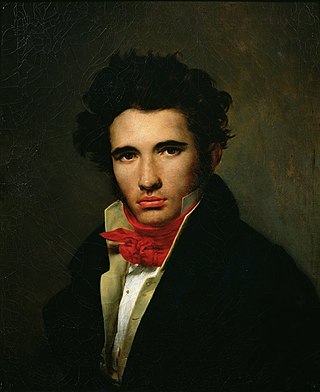
Léon Cogniet was a French history and portrait painter. He is probably best remembered as a teacher, with more than one hundred notable students.

Franz Xaver Winterhalter was a German painter and lithographer, known for his flattering portraits of royalty and upper-class society in the mid-19th century. His name has become associated with fashionable court portraiture. Among his best known works are Empress Eugénie Surrounded by her Ladies in Waiting (1855) and the portraits he made of Empress Elisabeth of Austria (1865).

Charles Haskins Townsend was an American zoologist and naturalist who served as the director of the New York Aquarium, from 1902 to 1937.

Carl August von Steinheil was a German physicist, inventor, engineer and astronomer.
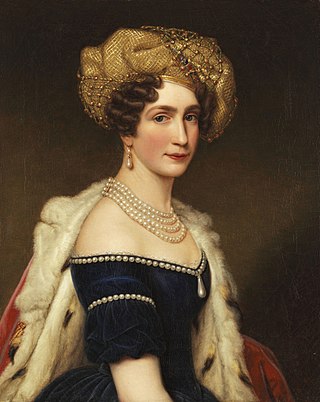
Princess Augusta of Bavaria, Duchess of Leuchtenberg was the second child and eldest daughter of Maximilian I Joseph of Bavaria and Princess Augusta Wilhelmina of Hesse-Darmstadt. By marriage, she was a French princess.

Théophile-Abraham Hamel was a Canadian artist who painted mainly portraits and religious images in 19th-century Quebec.

Charles Louis Müller was a French painter.

Gustav Gröber was a German Romance philologist.
Charles Edward Moldenke was an American Lutheran minister and Egyptologist.

Charles-Théodore Frère was a French Orientalist painter. His younger brother, Pierre-Édouard, and his nephew and namesake, Charles Edouard Frère, were also painters.

The Hôtel du Palais Biarritz is a historic luxury hotel beside the Atlantic beach in the resort town of Biarritz, on the Côte Basque in the French department of Pyrénées-Atlantiques. It was originally built for the Empress Eugénie around 1855 as a summer villa. It was due to the visits of the imperial couple that the village of Biarritz developed into a fashionable resort. In 1880, the villa was sold and converted into a hotel casino. It was devastated by fire in 1903, but was lavishly rebuilt and enlarged within the original walls. For many years the hotel attracted the international elite, including members of the European royalty such as King Edward VII, who paid several extended visits. Although the hotel later fell into disrepair, and closed for a period in the 1950s, it has since been refurbished and is again a luxury hotel. The hotel is managed by Hyatt.
Jean Pierre Victor Huguenin was a French sculptor.

Émile Boeswillwald was a French architect. He succeeded Prosper Mérimée as Inspector General of Historic Monuments and collaborated with Eugène Viollet-le-Duc.

Charles Poerson was a French painter. He is also notable as the father and tutor of the painter Charles-François Poerson.


