Career
For several years, Houghton lived abroad in France, Germany, and Italy. In 1872-75, she was in Europe, where she became interested in the McAll Mission. [1] She spent eight months, during 1904-05, in Syria and Palestine. She also traveled very extensively in United States. [2] [3]
Houghton was literary editor (1888–89), associate editor (1889-98), and editor-in-chief (1899-1902) of the New York Evangelist. From 1902 to 1904, she served as associate editor of the Christian Work, and associate editor and editor of Evangelist. [4] [1] She was also editorially connected with Leslie's Weekly for eight years; and Lippincott's Magazine for three years. [2] [3]
She was the author of The Sabbath Month; Fifine; Faithful to the End; Life of David Livingstone; The Bible in Picture and Story; The Life of Christ in Picture and Story; From Olivet to Patmos, in Picture and Story; Antipas and Other Children; The Log of the Lady Gray; The Life of the Lord Jesus; The Cruise of the Mystery; The Silent Highway; Telling Bible Stories; Hebrew Life and Thought; and The Russian Grandmother's Wonder Tales. She wrote numerous pamphlets on French subjects. [2] [3]
She translated Paul Sabatier's Life of St. Francis of Assisi (New York, 1895); Edmond Stapfer's Jesus Christ (3 vols., 1896-98); Auguste Sabatier's Religions of Authority and Religions of the Spirit (1903); [1] and Georges Cain's The Byways of Paris(Duffield, 1912). Houghton also translated other works from French and German. [2] She collaborated with Mary Houghton on French by reading, a progressive French method. [3]
Houghton lectured on the Bible, Syria and Palestine, France, the McAll Mission, and philanthropic subjects. [2] [3]
In 1892-95, she was connected with the English department of Vassar College. [1]
She served as corresponding secretary of the New York auxiliary of the McAll Mission from 1888, and as a director of the American McAll Association, Philadelphia, since 1896. [1]
In 1889, Houghton became a charter member of the first religious settlement in the United States, the King's Daughters Settlement, later renamed the Jacob A. Riis Settlement of Manhattan. [4] She served as first vice-president from 1889 to 1904. [1]
Houghton was a member of the Woman's Christian Temperance Union; Brotherhood of the Kingdom, New York City and Marlborough, New York; Woman's Press Club of New York City; Meridan Club; [2] and the Story Tellers' League. [3]
Personal life
In Piermont, on December 30, 1856, she married Elihu R. Houghton [4] (died 1898). They had several children: Mary, Augustus Seymour (lawyer), Henry (architect), Daisy, and E. Russell Houghton, M.D. (died 1905). [2] [3]
In religion, she was Episcopalian, [2] [3] belonging to the Broad Church. [1]
Houghton died at her home in Huntington, New York, on August 22, 1920. [4]
This page is based on this
Wikipedia article Text is available under the
CC BY-SA 4.0 license; additional terms may apply.
Images, videos and audio are available under their respective licenses.
 Antipas, son of Chuza and others whom Jesus loved
 Das leben Jesu in bild und erzählung
 Life of David Livingstone
 Handbook of French and Belgian Protestantism
 Jesus Christ Before His ministry
 Jesus Christ During His Ministry
 Life of St. Francis of Assisi
 Our debt to the red man
 Religions of authority and the religion of the spirit
 Telling Bible stories
 The Byways of Paris
 The death and resurrection of Jesus Christ
 The life of the Lord Jesus
 The people of action
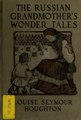 The Russian grandmother's wonder tales
 The Sabbath month
 The silent highway; a story of the McAll mission
 You no longer count (Tu n'es plus rien!)


