Related Research Articles

Bipolar disorder, previously known as manic depression, is a mental disorder characterized by periods of depression and abnormally elevated moods. If the elevated mood is severe or associated with psychosis, it is called mania; if it is less severe, it is called hypomania. During mania, an individual behaves or feels abnormally energetic, happy, or irritable. Individuals often make impulsive decisions with little regard for the consequences. There is usually a reduced need for sleep during manic phases. During periods of depression, individuals may experience crying, a negative outlook on life, and poor eye contact with others. The risk of suicide is high; over a period of 20 years 6% of people died by suicide, while 30-40% engaged in self-harm. Other mental health issues, such as anxiety disorders and substance use disorders, are commonly associated with bipolar disorder.

Major depressive disorder (MDD), also known simply as depression, is a mental disorder characterized by at least two weeks of low mood that is present across most situations. It is often accompanied by low self-esteem, loss of interest in normally enjoyable activities, low energy, and pain without a clear cause. Those affected may also occasionally have false beliefs or see or hear things that others cannot. Some people have periods of depression separated by years in which they are normal, while others nearly always have symptoms present. Major depressive disorder can negatively affect a person's personal life, work life, or education as well as sleeping, eating habits, and general health. About 2–8% of adults with major depression die by suicide, and about 50% of people who die by suicide had depression or another mood disorder.

Mood disorder, also known as mood affective disorders, is a group of conditions where a disturbance in the person's mood is the main underlying feature. The classification is in the Diagnostic and Statistical Manual of Mental Disorders (DSM) and International Classification of Diseases (ICD).
A major depressive episode (MDE) is a period characterized by the symptoms of major depressive disorder. Sufferers primarily have a depressed mood for two weeks or more, and a loss of interest or pleasure in everyday activities, accompanied by other symptoms such as feelings of emptiness, hopelessness, anxiety, worthlessness, guilt and irritability, changes in appetite, problems concentrating, remembering details or making decisions, and thoughts of suicide. Insomnia or hypersomnia, aches, pains, or digestive problems that are resistant to treatment may also be present. The description has been formalized in psychiatric diagnostic criteria such as the DSM-5 and ICD-10.

Monoamine oxidase A, also known as MAO-A, is an enzyme that in humans is encoded by the MAOA gene. This gene is one of two neighboring gene family members that encode mitochondrial enzymes which catalyze the oxidative deamination of amines, such as dopamine, norepinephrine, and serotonin. A mutation of this gene results in Brunner syndrome. This gene has also been associated with a variety of other psychiatric disorders, including antisocial behavior. Alternatively spliced transcript variants encoding multiple isoforms have been observed.

N-Acetylserotonin O-methyltransferase, also known as ASMT, is an enzyme which catalyzes the final reaction in melatonin biosynthesis: converting Normelatonin to melatonin. This reaction is embedded in the more general tryptophan metabolism pathway. The enzyme also catalyzes a second reaction in tryptophan metabolism: the conversion of 5-hydroxy-indoleacetate to 5-methoxy-indoleacetate. The other enzyme which catalyzes this reaction is n-acetylserotonin-o-methyltransferase-like-protein.

Probable G-protein coupled receptor 158 is a protein that in humans is encoded by the GPR158 gene.
G protein-coupled receptor 50 is a protein which in humans is encoded by the GPR50 gene.
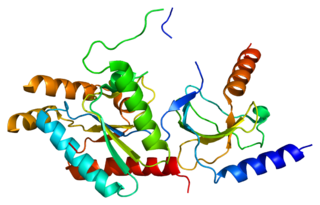
Voltage-dependent L-type calcium channel subunit beta-2 is a protein that in humans is encoded by the CACNB2 gene.
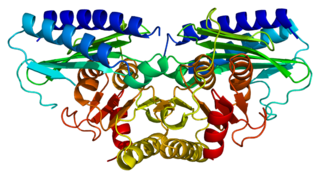
Inositol monophosphatase 2 is a 32 kDa enzyme that in humans is encoded by the IMPA2 gene. IMPA2 dephosphorylates myo-inositol monophosphate to myo-inositol.

Glutamate receptor, ionotropic kainate 3 is a protein that in humans is encoded by the GRIK3 gene.
In genetics, rs7997012 is a gene variation—a single nucleotide polymorphism (SNP)—in intron 2 of the human HTR2A gene that codes for the 5-HT2A receptor. The SNP varies between adenine (A) and guanine (G) DNA bases with the G-allele being most frequent. A research study found it to be related to antidepressant treatment. The research group reported that a polymorphism (rs1954787) on another gene, the GRIK4, has also shown a treatment-response-association in this kind of treatment. In a Japanese study rs7997012 was not associated with neither major depressive disorder nor bipolar disorder.

5-hydroxytryptamine (serotonin) receptor 3B, also known as HTR3B, is a human gene. The protein encoded by this gene is a subunit of the 5-HT3 receptor.
Neuregulin 3 also known as NRG3 is a neural-enriched member of the neuregulin protein family which in humans is encoded by the NRG3 gene. The NRGs are a group of signaling proteins part of the superfamily of epidermal growth factor; EGF like polypeptide growth factor. These groups of proteins possess an 'EGF-like domain' that consists of six cysteine residues and three disulfide bridges predicted by the consensus sequence of the cysteine residues.
Scientific studies have found that different brain areas show altered activity in people with major depressive disorder, and this has encouraged advocates of various theories that seek to identify a biochemical origin of the disease, as opposed to theories that emphasize psychological or situational causes. Factors spanning these causative groups include nutritional deficiencies in magnesium, vitamin D, and tryptophan with situational origin but biological impact. Several theories concerning the biologically based cause of depression have been suggested over the years, including theories revolving around monoamine neurotransmitters, neuroplasticity, neurogenesis, inflammation and the circadian rhythm. Physical illnesses, including hypothyroidism and mitochondrial disease, can also trigger depressive symptoms.

Vortioxetine, sold under the trade names Trintellix among others, is a medication used to treat major depressive disorder. Effectiveness is viewed as similar to that of other antidepressants. In Britain, it is only recommended in people who have not improved sufficiently on two other antidepressants. It is taken by mouth.
The Semel Institute for Neuroscience and Human Behavior is a research institute of the University of California Los Angeles (UCLA). It includes a number of centers, including the "Center for Neurobehavioral Genetics", which uses DNA sequencing, gene expression studies, bioinformatics, and the genetic manipulation of model organisms to understand brain and behavioral phenotypes.
William E. Bunney is a neuroscientist focused on discovering the genes that cause major depressive disorder, schizophrenia, and bipolar disorder. He is a Distinguished Professor with the Department of Psychiatry and Human Behavior and the Della Martin Chair of Psychiatry at the University of California, Irvine. He is also the director of the UC Irvine node of the Pritzker Neuropsychiatric Disorders Research Consortium.
Cognitive genomics is the sub-field of genomics pertaining to cognitive function in which the genes and non-coding sequences of an organism's genome related to the health and activity of the brain are studied. By applying comparative genomics, the genomes of multiple species are compared in order to identify genetic and phenotypical differences between species. Observed phenotypical characteristics related to the neurological function include behavior, personality, neuroanatomy, and neuropathology. The theory behind cognitive genomics is based on elements of genetics, evolutionary biology, molecular biology, cognitive psychology, behavioral psychology, and neurophysiology.

Buprenorphine/samidorphan is a combination formulation of buprenorphine and samidorphan which is under development as an add on to antidepressants in treatment-resistant depression (TRD).
References
- ↑ "Human PubMed Reference:". National Center for Biotechnology Information, U.S. National Library of Medicine.
- ↑ "Entrez Gene: Major depressive disorder 2" . Retrieved 2017-09-15.
 | This article on a gene on human chromosome 15 is a stub. You can help Wikipedia by expanding it. |