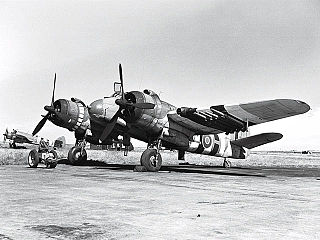
The Bristol Type 156 Beaufighter is a multi-role aircraft developed during the Second World War by the Bristol Aeroplane Company in the United Kingdom. It was originally conceived as a heavy fighter variant of the Bristol Beaufort torpedo bomber. The Beaufighter proved to be an effective night fighter, which came into service with the Royal Air Force (RAF) during the Battle of Britain, its large size allowing it to carry heavy armament and early airborne interception radar without major performance penalties.

The Westland Whirlwind was a British twin-engined heavy fighter developed by Westland Aircraft. A contemporary of the Supermarine Spitfire and Hawker Hurricane, it was the first single-seat, twin-engined, cannon-armed fighter of the Royal Air Force.
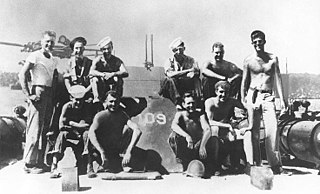
PT-109 was a PT boat last commanded by Lieutenant John F. Kennedy, future United States President, in the Pacific Theater during World War II. His actions to save his surviving crew after the sinking of PT-109 made him a war hero. PT-109's collision with a Japanese Destroyer contributed to Kennedy's long-term back problems and required months of hospitalization at Chelsea Naval Hospital. Kennedy's post-war campaigns for elected office referred often to his service on the PT-109.
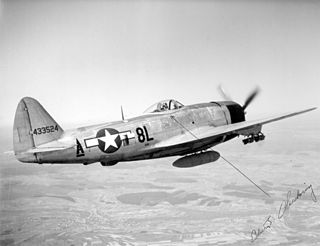
A fighter-bomber is a fighter aircraft that has been modified, or used primarily, as a light bomber or attack aircraft. It differs from bomber and attack aircraft primarily in its origins, as a fighter that has been adapted into other roles, whereas bombers and attack aircraft are developed specifically for bombing and attack roles.
They Were Expendable is a 1945 American war film directed by John Ford and starring Robert Montgomery and John Wayne and featuring Donna Reed. The film is based on the 1942 book by William L. White, relating the story of the exploits of Motor Torpedo Boat Squadron Three, a PT boat unit defending the Philippines against Japanese invasion during the Battle of the Philippines (1941–42) in World War II.

McHale's Navy is an American sitcom starring Ernest Borgnine that aired 138 half-hour episodes over four seasons, from October 11, 1962, to April 12, 1966, on the ABC television network. The series was filmed in black and white and originated from an hour drama entitled Seven Against the Sea, broadcast on April 3, 1962.

The Second Battle of Cárdenas was a secondary naval engagement of the Spanish–American War fought on 11 May 1898 in the port of Cárdenas, Cuba, between an American squadron of 5 ships under Captain Chapman C. Todd and 3 small Spanish vessels under Mariano Mateu. The battle resulted in an unusually costly American reverse that dissuaded the U.S. Navy from undertaking further attacks on the port.
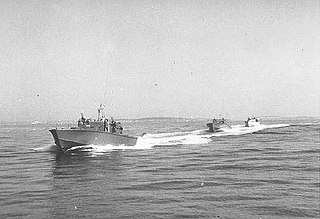
PT-337 was a PT-103-class motor torpedo boat that was sunk in action during the Pacific Theater of World War II in Hansa Bay, New Guinea on March 7, 1944.
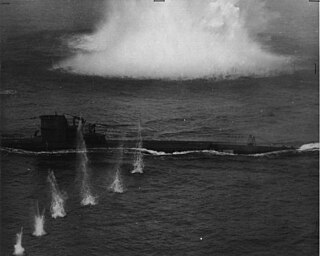
German submarine U-134 was a Type VIIC U-boat of Nazi Germany's Kriegsmarine during World War II. She was laid down on 6 September 1940 by Bremer Vulkan in Bremen-Vegesack as yard number 13 and commissioned on 26 July 1941. In seven patrols, U-134 sank three ships for a total of 12,147 gross register tons (GRT).

Motor Torpedo Boat PT-59 was a PT-20-class Motor Torpedo Boat of the United States Navy, built by the Electric Launch Company of Bayonne, New Jersey. The boat was laid down as Motor Boat Submarine Chaser PTC-27, and was reclassified as BPT-11 when assigned to transfer to Britain under Lend-Lease. However, this was cancelled, and she was reclassified as PT-59 prior to launch on 8 October 1941, and was completed on 5 March 1942.

This is the complete order of battle of Allied and Japanese forces during the Borneo campaign of 1945. As the campaign was fought in three geographically separate areas and the same air and naval units supported more than one of these battles the order of battle is split into the three areas.

No. 78 Squadron was a Royal Australian Air Force (RAAF) fighter squadron of World War II. It was formed in July 1943 as part of expansion of the RAAF's fighter force, and was assigned to mobile striking forces for the duration of the war.
The 37 mm Automatic Gun, M4, known as the T9 during development, was a 37 mm (1.46 in) recoil-operated autocannon designed by Browning Arms Company. The weapon, which was built by Colt, entered service in 1942. It was used in the Bell P-39 Airacobra and P-63 Kingcobra.

Knyaz Suvorov was a Borodino-class pre-dreadnought battleship built for the Imperial Russian Navy in the first decade of the 20th century. Named after the 18th-century Russian general Prince (Knyaz) Alexander Suvorov, the ship was completed after the beginning of the Russo-Japanese War in 1904. She became the flagship of Vice Admiral Zinovy Rozhestvensky, commander of the Second Pacific Squadron that was sent to the Far East a few months after her completion to break the Japanese blockade of Port Arthur. The Japanese captured the port while the squadron was in transit and their destination was changed to Vladivostok. Knyaz Suvorov was sunk during the Battle of Tsushima on 27 May 1905. During the battle, the ship fell out of the main battle line after a shell hit her bridge, killing her helmsman and wounding her captain and Rozhestvensky. She was eventually torpedoed and sunk by Japanese torpedo boats; other than the 20 wounded officers evacuated by a destroyer there were no survivors.

PT-346 was an 80 ft Electric Launch Company (Elco) motor torpedo boat which suffered the worst PT-boat friendly-fire casualties of World War II, with nine men killed and nine wounded by airstrike.
Huckins Yacht Corporation is one of the oldest boat builders in the United States. The company is located on the Ortega River in Jacksonville, Florida, and is run by its third-generation owners, Cindy and Buddy Purcell. Huckins manufactures custom yachts ranging from 40 to 90 feet that combine classic design and traditional workmanship with modern technology and amenities. It has built a total of 457 yachts during its 80 years of operation, crafting vessels one at a time.
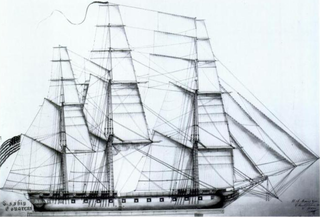
The West Indies Squadron, or the West Indies Station, was a United States Navy squadron that operated in the West Indies in the early nineteenth century. It was formed due to the need to suppress piracy in the Caribbean Sea, the Antilles and the Gulf of Mexico region of the Atlantic Ocean. This unit later engaged in the Second Seminole War until being combined with the Home Squadron in 1842. From 1822 to 1826 the squadron was based out of Saint Thomas Island until the Pensacola Naval Yard was constructed.
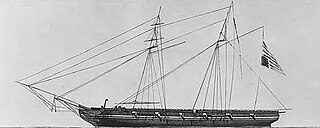
The West Indies Anti-Piracy Operations refer to the United States Navy presence in the Antilles, and surrounding waters, which fought against pirates. Between 1817 and 1825, the American West Indies Squadron constantly pursued pirates on sea and land, primarily around Cuba and Puerto Rico. After the capture of Roberto Cofresi in 1825, acts of piracy became rare and the operation was considered a success although limited occurrences went on until slightly after the start of the 20th-century.
Piso Point is a former Japanese naval base throughout World War II which is located at the eastern portion of the Davao Gulf, across from Davao City, Philippines. It was also a harbor for Japanese suicide boats which had been harassing American shipping in the Davao Gulf. During the liberation of the Philippines from the Japanese on May 14, 1945, many of the Japanese suicide boats were annihilated by the U.S. Navy.