Diriyah, formerly romanized as Dereyeh and Dariyya, is a town and governorate in Saudi Arabia located on the northwestern outskirts of the Saudi capital, Riyadh. Diriyah was the original home of the Saudi royal family, and served as the capital of the Emirate of Diriyah under the first Saudi dynasty from 1727 to 1818. Today, the town is the seat of the Diriyah Governorate—which also includes the villages of Uyayna, Jubayla, and Al-Ammariyyah, among others—and is part of Ar Riyad Province.

Al Ahsa also known as Hajar is the largest governorate in Saudi Arabia's Eastern Province, named after the Al-Ahsa Oasis. In Classical Arabic, 'Ahsa' means the sound of water underground. It has one of the largest oases in the world with world-renowned date palms and, according to one author, the oases of Al-Hasa and Al Ain are the most important in the Arabian Peninsula. The oasis is located about 60 mi (97 km) inland from the Arabian Gulf. All urban areas are located in the traditional oasis of Al-Hasa. In addition to the oasis, the county also includes the giant Empty Quarter desert, making it the largest governorate in Saudi Arabia in terms of area. The Empty Quarter has the world's largest oil fields, and connects Saudi Arabia to Qatar, the UAE, and Oman. The Governorate's population is over 1,100,000. In the past, Al-Ahsa belonged to the historical region known as Bahrain, along with Qatif and the present-day Bahrain islands.

Rustaq is a town and Wilayah (District) in Al Batinah Region of northern Oman. The wilayah is in the Western Hajar Mountains, in the south of the Batinah. Rustaq was once the capital of Oman, during the era of Imam Nasir bin Murshid al Ya'arubi.
The Battle of Autas or Awtas was an early battle involving Muslim forces, fought in the year 630 in Awtas, after the Battle of Hunayn, but prior to the siege of Ta'if. Muhammad came with 12,000 fighters against a coalition of tribes. An ambush took place and a rain of arrows were fired on the Muslims. The Muslims, however, came out victorious.
Al-Ahsa Oasis, also known as al-Ḥasāʾ (الْحَسَاء) or Hajar (هَجَر), is an oasis and historical region in eastern Saudi Arabia. Al-Ahsa Governorate, which makes up much of the country's Eastern Province, is named after it. The oasis is located about 60 km (37 mi) inland from the coast of the Persian Gulf. Al-Ahsa Oasis comprises four main cities and 22 villages. The cities include Al-Mubarraz and Al-Hofuf, two of the largest cities in Saudi Arabia.

Shibin El Qanater, previously known as Shaybin al-Qasr and Scenae Veteranorum is a region (markaz) in Egypt situated in the center of the Qalyubia Governorate. Its population was 423,783 at the 2006 Census and comprises 36 villages.

Obour is a city in the Qalyubia Governorate, about 35 kilometers north-east of Cairo. The city has approximately 700,000 residents. It is named to honor the crossing ("obour") of the Bar Lev Line by the Egyptian Army during Operation Badr in 1973, part of the October War.
Ali bin al-Mugrab Al Uyuni was a Bahrani poet from Al-Hasa, who died in 630 AH or 1232 AD, one of the late known poets among the people of the Arabian Peninsula before the modern era. Percentage due to Al Uyuni built from Abdul Qays, who ruled Ahsa in that period after extracted from Qarmatians. Al Uyuni poet, and is considered his office and explanations which are attached by one of the most important sources on the history of that state.

Dussur is a Saudi government company established in 2014 at Saudi Arabia for the development of strategic industrial investments. As of April 2019, its CEO is Raed Al-Rayes. Its shareholders include Public Investment Fund, Saudi Aramco, and SABIC.
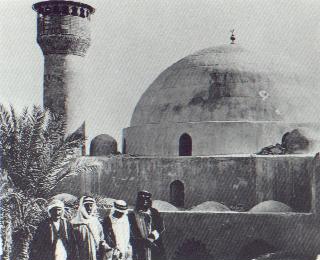
Qasr Ibrahim is a historic fort in the north of Alqoat neighborhood, Hofuf, Al-Ahsa, Eastern Province, Saudi Arabia. It is also called the Dome Palace, AlQoat Palace or Ibrahim Castle and is the region's main architectural heritage site from the Ottoman period. It served as a Turkish military base. It was seized by King Abdul-Aziz Al Saud on April 13, 1913.

Al-Mubarraz is a city located at Al-Ahsa in the Eastern Province of the Kingdom of Saudi Arabia. With a population of 837,000, it is the north gate for Al-Ahsa governorate. Al-Mubarraz has historical importance because it was the rule center for the district between 1669 and 1793, before the Saudi rule . There are some sayings about its origin and it said that its origin back to the second half of the seventh century in Hijri.
Itay El Barud is a city in Egypt.
Kom Hamada is a city in Beheira Governorate in Egypt.

Sahood Fort is situated outside the western walls of Al Mubarraz, Saudi Arabia. The fort is used as barracks for the Saudi Arabian Armed Forces.
Abū ‘Abd al-Raḥmān ‘Abd Allāh ibn Ḥabīb ibn Rabī‘ah al-Sulamī was a blind ḥadīth narrator and qāriʾ born during the lifetime of the Islamic prophet Muḥammad. His father, Ḥabīb ibn Rabī‘ah As-Sulamī, was a companion of Muḥammad. Abū ‘Abdir-Raḥmān As-Sulamī is thought to have died in either AH 73 (692/693 CE) or AH 74 (693/694 CE), in Bishr ibn Marwān province in Al-Kūfah.
Hisham Kamel Abbas Mahmood Algakh is an Egyptian poet who has worked to make Egyptian poetry more accessible to young people and children.

Joseph Labbos was a writer, researcher, and a lecturer at the Lebanese University and Saint Joseph University. He writes about travel literature, biography and the history of religions.

Ilyes Gharbi is a Tunisian broadcaster working for the Carthage Channel. Before that, he worked in the Radio in Mosaique FM, Xpress FM, and in several other channels such as Al-Hiwar Al-Tunisi, Al-Watania 1 and Nessma.
Mohammed Abu Zaid, an Egyptian poet and a novelist. He was born in Sohag Governorate in Upper Egypt. He published his first collection "A Hole in the Air as Tall as My Height" in 2003, published by the General Authority for Cultural Palaces. Then he published a number of collections such as “Praise The Forest " published by the authority of the Egyptian General Book Authority, "People Sitting Around the Water " ," "Mdihamtan", and "A Plague Putting One Leg Over the Other, Looking at the Sky" . He also published a novel entitled "The Impact of the Prophet" published by Dar Sharqiyat, and a children's book entitled "Maryam's Mint" published by the book Qatar Al-Nada, and a book on the art of writing entitled "The Rabbit Out of the Hat" published by the Hindawi Foundation for Education and Culture. He also participated in a number of poetry conferences in Egypt and around the world.
Nuh Ibrahim, he is called "the popular poet of the 1936 revolution" and "student of the Qassam", he was a Palestinian folk poet, a singer, a composer, and a fighter. He was born in Haifa in British Mandate Palestine. He started writing poetry at an early age.


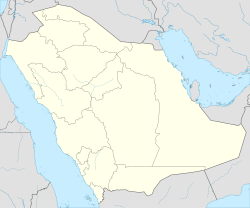

 Saudi Arabia