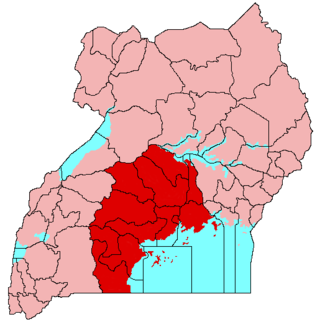
Buganda is a Bantu kingdom within Uganda. The kingdom of the Baganda people, Buganda is the largest of the traditional kingdoms in present-day East Africa, consisting of Uganda's Central Region, including the Ugandan capital Kampala. The 14 million Baganda make up the largest Ugandan region, representing approximately 16% of Uganda's population.
The early history of Uganda comprises the history of Uganda before the territory that is today Uganda was made into a British protectorate at the end of the 19th century. Prior to this, the region was divided between several closely related kingdoms.

Sir Edward Frederick William David Walugembe Mutebi Luwangula Mutesa II was Kabaka, or king, of the Kingdom of Buganda in Uganda from 22 November 1939 until his death. He was the 35th Kabaka of Buganda and the first president of Uganda from 1962 to 1966, when he was overthrown by Milton Obote. The foreign press often referred to him as King Freddie, a name rarely used in Uganda. An ardent defender of Buganda's interests, especially its traditional autonomy, he often threatened to make the kingdom independent both before and after Uganda's independence to preserve it. These firm convictions also later led to conflicts with his erstwhile political ally Milton Obote, who would eventually overthrow him.

Daudi Cwa II was the 34th Kabaka of the Kingdom of Buganda from 1897 until 1939.

Kabaka is the title of the king of the Kingdom of Buganda. According to the traditions of the Baganda, they are ruled by two kings, one spiritual and the other secular.
Kato Kintu Kakulukuku, known in Bunyoro as Kato Kimera was the first kabaka (king) of the Kingdom of Buganda. "Kintu" is an adopted by-name, chosen for Kintu, the name of the first person on earth in Buganda mythology. Kato Kintu gave himself the name "Kintu" to associate himself with the "father of all people", and he may have renamed his wife, from Nantuttululu to Nambi, because that was Kintu's wife's name.
Chwa I Nabakka was Kabaka (King) of the Kingdom of Buganda. He reigned during the mid 14th century. He was the 2nd Kabaka of Buganda.
Kimera was Kabaka of the Kingdom of Buganda between 1374 and 1404. He was the third king of Buganda.
Rashid Kalema Muguluma was Kabaka of the Kingdom of Buganda, from 21 October 1888 until 5 October 1889. He was the 33rd Kabaka of Buganda.
Kayima Sendikaddiwa was Kabaka (King) of the Kingdom of Buganda, between 1494 and 1524. He was the 7th Kabaka of Buganda.
Nakibinge Kagali was Kabaka (King) of the Kingdom of Buganda, between 1524 and 1554 AD. He was the 8th Kabaka of Buganda.
Jemba Busungwe was Kabaka (king) of the Kingdom of Buganda between 1564 and 1584. He was the 10th Kabaka of Buganda. His reign is remembered as being kind and gentle.
Kayemba Kisiki was Kabaka of the Kingdom of Buganda between 1690 and 1704. He was the seventeenth (17th) Kabaka of Buganda.
Kamaanya Kadduwamala was Kabaka of the Kingdom of Buganda from 1814 until 1832. He was the twenty-eighth (28th) Kabaka of Buganda.

Muteesa I Mukaabya Walugembe Kayiira was the 30th Kabaka of the Kingdom of Buganda, from 1856 until 1884.

The Baganda also called Waganda, are a Bantu ethnic group native to Buganda, a subnational kingdom within Uganda. Traditionally composed of 52 clans, the Baganda are the largest people of the Bantu ethnic group in Uganda, comprising 16.5 percent of the population at the time of the 2014 census.
Wasswa Chwamale Mwanga Winyi was a reigning monarch of Bunyoro-Kitara during the period circa 1300 AD. His chief palace was located at Kibulala, Ssingo, where his remains are buried today. When Prince Kalemeera of Buganda, the only son of Ssekabaka Chwa Nabakka, was exiled to Bunyoro, he took refuge at the palace of his paternal uncle, Winyi I at his palace in Kibulala. There he committed more transgressions, fathering Prince Kimera Walusimbi with Lady Wannyana, his uncle's chief wife. Prince Kimera later became the third Kabaka of Buganda.
Katikkiro is the official title of the head of cabinet and government in Buganda under the Kabaka of the Kingdom of Buganda. He is the equivalent of a Prime Minister is some governments but the Katikkiro does not assume office through elections like in other countries. His authority is symbolized by the Ddamula stick which is given to him by the Kabaka as a tool to 'kulamula' in the kingdom on his behalf. Buganda is a traditional kingdom in modern-day Uganda located in the central region of the East African country. The current Katikkiro is Mr. Charles Peter Mayiga of the Mutima clan and was appointed by the current monarch, the Kabaka of Buganda, Muwenda Mutebi II of Buganda in May 2013, replacing Engineer John Baptist Walusimbi.
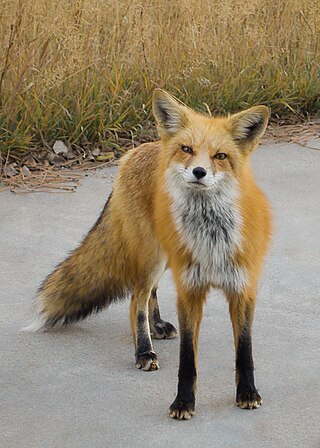
Kibe Clan is among the many clans in Buganda Kingdom. Kibe is a Luganda name which means fox. The Kibe Clan existed during the reign of King Kintu. The Head of the Clan is called Muyige. The Clan seat for Muyige is found at Wantaayi in Kyaggwe(Present Mukono District). The Kibe Clan people first settled in Busujju before they went to Kyaggwe(presently Mukono district).
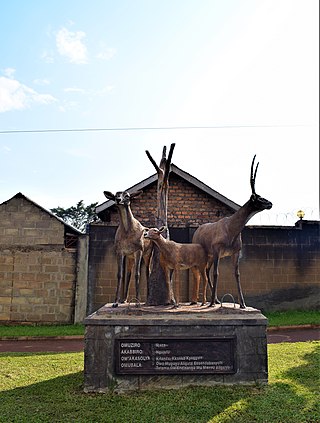
Njaza Clan is among the many clans in the present day Buganda Kingdom.Njaza is a Luganda word meaning reedbuck. It is one of the five clans that are indigenous to Buganda before the coming of Kintu. The members of the five clans are referred to as the originals(Bannansangwa). The five other original clans were the Ffumbe, Ngeye, Lugave, and Nnyonyi Nnyange. They originated from Bunyoro and settled at Kiwawu in Busujju. From there, they moved and settled in the areas of Mabira Forest in Kyaggwe(currently Mukono District).

