Related Research Articles

Burundi's relations with its neighbours have often been affected by security concerns. During the Burundian Civil War, hundreds of thousands of Burundian refugees have at various times crossed to neighboring Rwanda, Tanzania, and the Democratic Republic of the Congo. Some Burundian rebel groups have used neighboring countries as bases for insurgent activities. The 1993 embargo placed on Burundi by regional states hurt diplomatic relations with its neighbors; relations have improved since the 1999 suspension of these sanctions.

Cape Verde follows a policy of nonalignment and seeks cooperative relations with all friendly states. Angola, Brazil, the People's Republic of China, Cuba, France, Germany, Portugal, Senegal, Russia, South Korea and the United States maintain embassies in Praia.

In the 19th century France built a new French colonial empire second only to the British Empire. It was humiliated in the Franco-Prussian War of 1870–71, which marked the rise of Germany to dominance in Europe. France allied with Great Britain and Russia and was on the winning side of the First World War. Although it was initially easily defeated early in the Second World War, Free France, through its Free French Forces and the Resistance, continued to fight against the Axis powers as an Allied nation and was ultimately considered one of the victors of the war, as the allocation of a French occupation zone in Germany and West Berlin testifies, as well as the status of permanent member of the United Nations Security Council. It fought losing colonial wars in Indochina and Algeria. The Fourth Republic collapsed and the Fifth Republic began in 1958 to the present. Under Charles de Gaulle it tried to block American and British influence on the European community. Since 1945, France has been a founding member of the United Nations, of NATO, and of the European Coal and Steel Community. As a charter member of the United Nations, France holds one of the permanent seats in the Security Council and is a member of most of its specialized and related agencies.

Gabon has followed a non-aligned policy, advocating dialogue in international affairs and recognizing both parts of divided countries. Since 1973, the number of countries establishing diplomatic relations with Gabon has doubled. In inter-African affairs, Gabon espouses development by evolution rather than revolution and favors regulated free enterprise as the system most likely to promote rapid economic growth. Concerned about stability in Central Africa and the potential for intervention, Gabon has been directly involved with mediation efforts in Chad, Central African Republic, Republic of Congo, Angola, and former Zaire. In December 1999, through the mediation efforts of President Bongo, a peace accord was signed in the Republic of Congo between the government and most leaders of an armed rebellion. President Bongo has remained involved in the continuing Congolese peace process. Gabon has been a strong proponent of regional stability, and Gabonese armed forces played an important role in the UN Peacekeeping Mission to the Central African Republic (MINURCA).

The United States, Venezuela, Cuba, and the People's Republic of China have embassies in Grenada. Grenada has been recognized by most members of the United Nations and maintains diplomatic missions in the United Kingdom, the United States, Venezuela, and Canada.
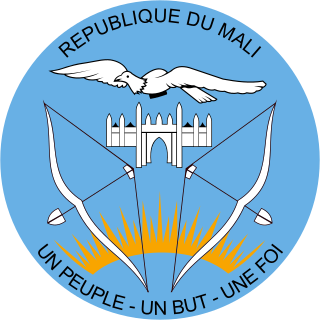
Following independence in 1960, Mali initially followed a socialist path and was aligned ideologically with the communist bloc. Mali's foreign policy orientation became increasingly pragmatic and pro-Western over time. Since the institution of a democratic form of government in 1992, Mali's relations with the West in general and the United States in particular have improved significantly. U.S.-Malian relations are described by the U.S. Department of State as "excellent and expanding," especially given Mali's recent record of democratic stability in the volatile area of West Africa and its avowed support of the war on terrorism. Mali is reported to be one of the largest recipients of U.S. aid in Africa.
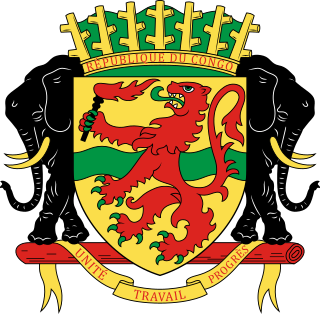
For the two decades preceding the Republic of the Congo's 1991 National Conference, the country was firmly in the socialist camp, allied principally with the Soviet Union and other Eastern bloc nations. Educational, economic, and foreign aid links between Congo and its Eastern bloc allies were extensive, with the Congolese military and security forces receiving significant Soviet, East German, and Cuban assistance.
Foreign relations of Somalia are handled primarily by the President as the head of state, the Prime Minister as the head of government, and the Minister of Foreign Affairs of the Federal Government.
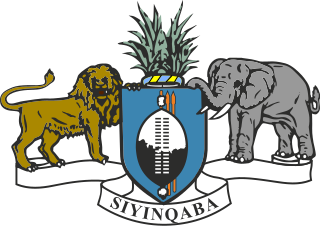
Eswatini is a member of the United Nations, the Commonwealth of Nations, the African Union, the Common Market for Eastern and Southern Africa, and the Southern African Development Community. Currently, the Kingdom of Eswatini maintains 11 embassies and High Commissions along with 15 consulates and other representations around the world, while there are five embassies and High Commissions in Eswatini as well as 14 consulates and other representations.
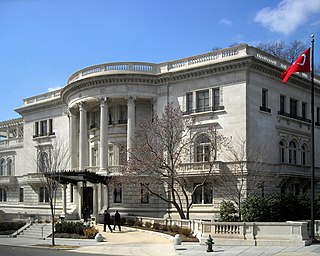
Foreign relation of Turkey refers to diplomatic and trade associations between Turkey and other countries of the world. Turkey has diplomatic relation with 189 Member states of the United Nations as of December 2024.

Since its independence from France in 1962, Algeria has pursued an activist foreign policy. In the 1960s and 1970s, Algeria was noted for its support of Third World policies and independence movements. Since its independence, Algeria has been a member of the Arab League, the African Union and of the United Nations.

The Republic of Guinea-Bissau follows a nonaligned foreign policy and seeks friendly and cooperative relations with a wide variety of states and organizations. France, Portugal, Angola, Brazil, Egypt, Nigeria, Libya, Cuba, the Palestine Liberation Organization, Ghana, and Russia have diplomatic offices in Bissau.
Oswaldo de Rivero is a Peruvian diplomat serving as the Ambassador to the United States. He served as Permanent Representative of Peru to the United Nations in New York City, and had previously held the post as Peru's ambassador to the World Trade Organization. Previously in his career, he held posts in London and Moscow, and Geneva. He studied law at the Universidad Católica in Lima and later earned a master's degree in international relations from Peru's Academia Diplomática. He carried out Postgraduate studies at the Graduate Institute of International Studies, Geneva. He has authored books on international development, which have been translated into several languages.
The 1955 Austrian State Treaty ended the four-power occupation and recognized Austria as an independent and sovereign state. In October 1955, the Federal Assembly passed a constitutional law in which "Austria declares of her own free will her perpetual neutrality." The second section of this law stated that "in all future times Austria will not join any military alliances and will not permit the establishment of any foreign military bases on her territory." Since then, Austria has shaped its foreign policy on the basis of neutrality.

Democratic Republic of Congo formerly known as Zaire is a country located in central Africa. Its the second largest country in Africa and 11th in the world.
Kewal Singh Choudhary (1915–1991) was an Indian diplomat, Foreign Secretary and India's ambassador to the USSR, Indian High Commissioner to Pakistan and USA. He was a 1955 recipient of the Indian civilian honour of Padma Shri.
References


- ↑ ABC. Audiencias del Jefe de Estado
- ↑ Díario de la República. Torna público ter sido concluído entre o Governo Português e o Governo Turco um acordo para a abolição recíproca de vistos em passaportes
- ↑ Soulioti, Stella. Fettered Independence Cyprus, 1878 - 1964 . Minneapolis, Minn: Modern Greek Studies, Univ. of Minnesota, n.d. p. 73
- ↑ Foreign Relations of the United States. United States Department of State / Foreign relations of the United States, 1952-1954. The Geneva Conference (1952-1954)
- ↑ Marmara, Rinaldo. John XXIII, friend of the Turks . Ankara: s.n, 2000. p. iii
- ↑ Boletín Oficial del Estado. DECRETO 869/1965
- ↑ Commission de publication des documents diplomatiques français. Documents diplomatiques français: 1968. (1er janvier-29 juin) . Bruxelles: P.I.E.-Peter Lang, 1990. p. 222
 Ambassadors of Turkey to Portugal Ambassadors of Turkey to Portugal  | |
|---|---|
|
|

| International | |
|---|---|
| National | |
| People | |
