
Calotype or talbotype is an early photographic process introduced in 1841 by William Henry Fox Talbot, using paper coated with silver iodide. Paper texture effects in calotype photography limit the ability of this early process to record low contrast details and textures. The term calotype comes from the Ancient Greek καλός, "beautiful", and τύπος, "impression".
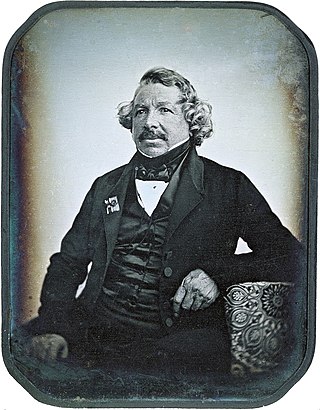
Daguerreotype was the first publicly available photographic process; it was widely used during the 1840s and 1850s. "Daguerreotype" also refers to an image created through this process.
Louis-Jacques-Mandé Daguerre was a French artist and photographer, recognized for his invention of the eponymous daguerreotype process of photography. He became known as one of the fathers of photography. Though he is most famous for his contributions to photography, he was also an accomplished painter, scenic designer, and a developer of the diorama theatre.

In art history, the French term objet d’art describes an ornamental work of art, and the term objets d’art describes a range of works of art, usually small and three-dimensional, made of high-quality materials, and a finely-rendered finish that emphasises the aesthetics of the artefact. Artists create and produce objets d’art in the fields of the decorative arts and metalwork, porcelain and vitreous enamel; figurines, plaquettes, and engraved gems; ivory carvings and semi-precious hardstone carvings; tapestries, antiques, and antiquities; and books with fine bookbinding.

Ormolu is the gilding technique of applying finely ground, high-carat gold–mercury amalgam to an object of bronze, and for objects finished in this way. The mercury is driven off in a kiln leaving behind a gold coating. The French refer to this technique as "bronze doré"; in English, it is known as "gilt bronze". Around 1830, legislation in France had outlawed the use of mercury for health reasons, though use continued to the 1900s.

Amasa Hewins was an American portrait, genre and landscape painter. He also exported fine paintings, antiques, and objet d'art from Italy to Boston during the 1850s, selling most of it through private dealers and at auctions in New York City and Boston.
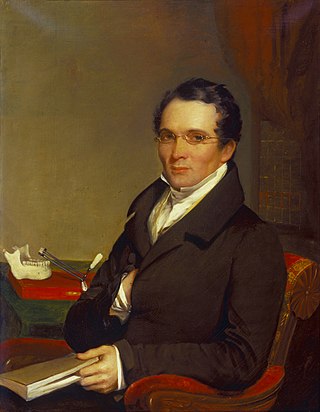
Dr. Samuel A. Bemis (1793–1881) was one of the earliest photographers in the United States. A small number of his daguerreotypes have survived.

John Adams Whipple was an American inventor and early photographer. He was the first in the United States to manufacture the chemicals used for daguerreotypes. He pioneered astronomical and night photography. He was a prize-winner for his extraordinary early photographs of the moon and he was the first to produce images of stars other than the sun. Among those was the star Vega and the Mizar-Alcor stellar sextuple system, which was thought to be a double star until 2009.

Southworth & Hawes was an early photographic firm in Boston, 1843–1863. Its partners, Albert Sands Southworth (1811–1894) and Josiah Johnson Hawes (1808–1901), have been hailed as the first great American masters of photography, whose work elevated photographic portraits to the level of fine art. Their images are prominent in every major book and collection of early American photography.

Mintons was a major company in Staffordshire pottery, "Europe's leading ceramic factory during the Victorian era", an independent business from 1793 to 1968. It was a leader in ceramic design, working in a number of different ceramic bodies, decorative techniques, and "a glorious pot-pourri of styles - Rococo shapes with Oriental motifs, Classical shapes with Medieval designs and Art Nouveau borders were among the many wonderful concoctions". As well as pottery vessels and sculptures, the firm was a leading manufacturer of tiles and other architectural ceramics, producing work for both the Houses of Parliament and United States Capitol.

John Prescott Bigelow was an American politician, who served as a member of the Massachusetts House of Representatives, Secretary of State of Massachusetts, and most prominently as the twelfth mayor of Boston, Massachusetts from 1849 to 1851. Bigelow was born in Groton, Massachusetts, in Middlesex County.
James Henry Blake was the City Marshal of Boston from 1840–1845. He was a son of Edward Blake and Sarah (Parkman) Blake and nephew of George Parkman. The Parkmans and Blakes were two prominent families of the Boston Brahmins who were well respected merchants.

Josiah Johnson Hawes (1808–1901) was a photographer in Boston, Massachusetts. He and Albert Southworth established the photography studio of Southworth & Hawes, which produced numerous portraits of exceptional quality in the 1840s–1860s.

John Plumbe Jr. was a Welsh-born American entrepreneurial photographer, gallerist, publisher, and an early advocate of an American transcontinental railroad in the mid-19th century. He established a franchise of photography studios in the 1840s in the U.S., with additional branches in Paris and Liverpool. He created a lithographic process for reproducing photographic images, called the "plumbeotype."
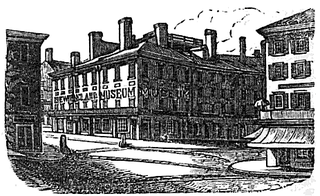
The New England Museum in Boston, Massachusetts, was established at 76 Court Street by Ethan A. Greenwood, Peter B. Bazin, John Dwight and Samuel Jackson. It featured displays of fine art, natural history specimens, wax figures, and other curiosities. Bands of musicians typically performed there during public hours.
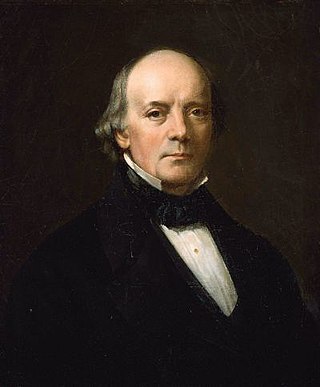
Harding's Gallery in Boston, Massachusetts, exhibited works by European and American artists in the 1830s-1840s. The building on School Street also housed a newspaper press; the Mercantile Library Association; the Boston Artists' Association; and artists' studios. The building's name derived from painter Chester Harding, who kept his studio there.
William Dean Whiting was an American silversmith and jeweler. He was the founder of the Whiting Manufacturing Company, and "one of the most prominent jewelry manufacturers" in the United States according to the Boston Globe.
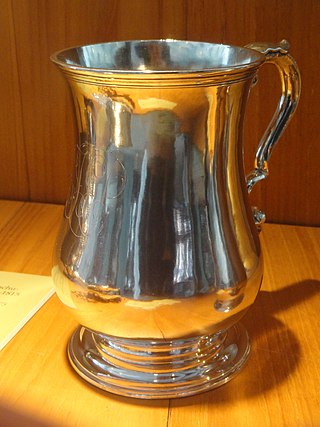
Joseph Loring was an American silversmith, active in Boston.

Samuel Peck (1813–1879), was an American 19th-century photographer, artist, businessperson, photo case manufacturer, and gallery owner. He was based in New Haven, Connecticut and produced daguerrotypes before moving into the manufacture of cases for daguerrotypes as, Samuel Peck & Co..

Roswell Gleason was an American manufacturer and entrepreneur who rose from apprentice tinsmith to owner of a large manufacturing concern that initially produced pewter objects for domestic and religious use, and later added Britannia ware and silver-plated goods to its catalog. He was instrumental in bringing the process of silver electroplating to America, creating a new market for less expensive substitutes for luxury goods.

