Computing is any goal-oriented activity requiring, benefiting from, or creating computing machinery. It includes the study and experimentation of algorithmic processes, and the development of both hardware and software. Computing has scientific, engineering, mathematical, technological, and social aspects. Major computing disciplines include computer engineering, computer science, cybersecurity, data science, information systems, information technology, and software engineering.
This is a timeline of quantum computing.
Quantum optics is a branch of atomic, molecular, and optical physics dealing with how individual quanta of light, known as photons, interact with atoms and molecules. It includes the study of the particle-like properties of photons. Photons have been used to test many of the counter-intuitive predictions of quantum mechanics, such as entanglement and teleportation, and are a useful resource for quantum information processing.

Anton Zeilinger is an Austrian quantum physicist and Nobel laureate in physics of 2022. Zeilinger is professor of physics emeritus at the University of Vienna and senior scientist at the Institute for Quantum Optics and Quantum Information of the Austrian Academy of Sciences. Most of his research concerns the fundamental aspects and applications of quantum entanglement.
Quantum networks form an important element of quantum computing and quantum communication systems. Quantum networks facilitate the transmission of information in the form of quantum bits, also called qubits, between physically separated quantum processors. A quantum processor is a machine able to perform quantum circuits on a certain number of qubits. Quantum networks work in a similar way to classical networks. The main difference is that quantum networking, like quantum computing, is better at solving certain problems, such as modeling quantum systems.
Unconventional computing is computing by any of a wide range of new or unusual methods. It is also known as alternative computing.

Peter Zoller is a theoretical physicist from Austria. He is professor at the University of Innsbruck and works on quantum optics and quantum information and is best known for his pioneering research on quantum computing and quantum communication and for bridging quantum optics and solid state physics.

Jonathan P. Dowling was an Irish-American researcher and professor in theoretical physics, known for his work on quantum technology, particularly for exploiting quantum entanglement for applications to quantum metrology, quantum sensing, and quantum imaging.

Quantum technology is an emerging field of physics and engineering, encompassing technologies that rely on the properties of quantum mechanics, especially quantum entanglement, quantum superposition, and quantum tunneling. Quantum computing, sensors, cryptography, simulation, measurement, imaging, quantum energy generators and space navigation are all examples of emerging quantum technologies. The development of quantum technologies also heavily impacts established fields such as space exploration, the sustainable energy & cleantech sector, nanomanufacturing, semiconductors and laser technology.
Paul Bruce Corkum is a Canadian physicist specializing in attosecond physics and laser science. He holds a joint University of Ottawa–NRC chair in attosecond photonics. He also holds academic positions at Texas A&M University and the University of New Mexico. Corkum is both a theorist and an experimentalist.

David Jeffery Wineland(born February 24, 1944) is an American Nobel-laureate physicist at the National Institute of Standards and Technology (NIST). His work has included advances in optics, specifically laser-cooling trapped ions and using ions for quantum-computing operations. He was awarded the 2012 Nobel Prize in Physics, jointly with Serge Haroche, for "ground-breaking experimental methods that enable measuring and manipulation of individual quantum systems".
The Nevill Mott Medal and Prize is an award presented in selected years by the Institute of Physics in the United Kingdom, for distinguished research in condensed matter or materials physics. It was first established in 1997 thanks to a donation from Sir Nevill Mott's family. Sir Nevill Mott was one of the outstanding British condensed matter theorists and won a Nobel Prize in Physics in 1977. He died in 1996. The award consists of a silver medal and a prize of £1000.
Muhammad Suhail Zubairy, HI, SI, FPAS, is a University Distinguished Professor as of 2014 in the Department of Physics and Astronomy at the Texas A&M University and is the inaugural holder of the Munnerlyn-Heep Chair in Quantum Optics.
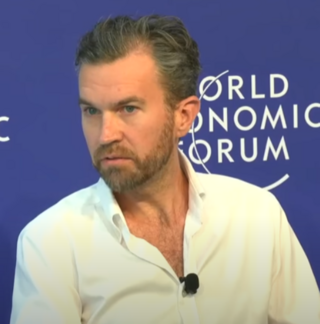
Jeremy O'Brien is a physicist who researches in quantum optics, optical quantum metrology and quantum information science. He co-founded and is CEO of the quantum computing firm PsiQuantum. Formerly, he was Professorial Research Fellow in Physics and Electrical Engineering at the University of Bristol, and director of its Centre for Quantum Photonics.
Ian Alexander Walmsley FRS is Provost of Imperial College London where he is also Chair of Experimental Physics. He was previously pro-vice-chancellor for research and Hooke Professor of Experimental Physics at the University of Oxford, and a professorial fellow at St Hugh's College, Oxford. He is also director of the NQIT hub within the UK National Quantum Technology Programme, which is led by the University of Oxford. He is also a Fellow of the Institute of Physics, the American Physical Society and the Optical Society of America.

Gerard James Milburn is an Australian theoretical quantum physicist notable for his work on quantum feedback control, quantum measurements, quantum information, open quantum systems, and Linear optical quantum computing.

Nicolas Gisin is a Swiss physicist and professor at the University of Geneva, working on the foundations of quantum mechanics, quantum information, and communication. His work includes both experimental and theoretical physics. He has contributed work in the fields of experimental quantum cryptography and long-distance quantum communication over standard telecom optical fibers. He also co-founded ID Quantique, a company that provides quantum-based technologies.

Jun Ye is a Chinese-American physicist at JILA, National Institute of Standards and Technology, and the University of Colorado Boulder, working primarily in the field of atomic, molecular, and optical physics.
Continuous-variable (CV) quantum information is the area of quantum information science that makes use of physical observables, like the strength of an electromagnetic field, whose numerical values belong to continuous intervals. One primary application is quantum computing. In a sense, continuous-variable quantum computation is "analog", while quantum computation using qubits is "digital." In more technical terms, the former makes use of Hilbert spaces that are infinite-dimensional, while the Hilbert spaces for systems comprising collections of qubits are finite-dimensional. One motivation for studying continuous-variable quantum computation is to understand what resources are necessary to make quantum computers more powerful than classical ones.
In quantum computing, quantum memory is the quantum-mechanical version of ordinary computer memory. Whereas ordinary memory stores information as binary states, quantum memory stores a quantum state for later retrieval. These states hold useful computational information known as qubits. Unlike the classical memory of everyday computers, the states stored in quantum memory can be in a quantum superposition, giving much more practical flexibility in quantum algorithms than classical information storage.


