
Orbita is a Latvian Russian-language poetry and multimedia art collective founded in Riga, Latvia in 1999.
Orbita is a Latvian Russian-language poetry and multimedia art collective founded in Riga, Latvia in 1999.
Orbita was originally founded by five members: Semyon Khanin, Artur Punte, Vladimir Svetlov, Sergej Timofejev, and Zhorzh Uallik. At present, all founders (excluding Zhorzh Uallik) are active in the group. Additionally, Sergej Timofejev has called designer Vladimir Lejbgam the honorary "sixth member" of Orbita, due to their many successful collaborations. [1] The group is also affiliated with a myriad of other Latvian and Russian artists and creatives spanning many genres and such forms of art as photography, composition, visual art. [2] Orbita is heavily involved in Latvian literary and visual culture. In fact, nearly all of the poetry presented by Orbita is published in Russian-Latvian bilingual editions. [2] The group organized five "Word in Motion" multimedia poetry festivals between 2001 and 2011.
They also founded a press, active since 2000. [3] Orbita has published 5 eponymously-titled almanacs, containing poetry and art, along with a collection of short prose works entitled Проза/Proza. [4] [5] They've also published poetry by the collective's own members, poetry by other Latvian poets and authors, photography editions, and poetry anthologies. [6]
Orbita's works often utilize the internet and software to disseminate poetry in innovative forms. [7] Famously, they set up a poetry-based pirate radio station called "Marx FM," which broadcast in Riga until it was taken down in 2014. [8] In В Римчике/ In Rimi Supermarket/ Rimčikā, Alexander Zapol and Daniil Cherkassky produced an altered Google Translate window, which edited entered text and used a distinct human voice to read the new text out loud. [9]
Experimenting with performance and perception has always been a part of Orbita's mission: their first performance was a poetry reading delivered from a boat, which ended with them sailing away from reporters. [10] There have also been performances which rely entirely on their location, such as "Like Thronging Beasts," which used the squeaking chairs in the Riga Circus to accompany the spoken words. The group has immortalized some of their performances on CDs and DVDs, as well as on their Vimeo account. Also on their Vimeo are their numerous works of video poetry, which were featured in a retrospective at the Riga International Biennale of Contemporary Art in 2018.
To celebrate Riga as the EU's European Capital of Culture for 2014, Orbita presented the "Riga Poetry Map," a participatory installation inviting Riga's artists to add to it. [11] Their installation "2 Sonnets from Laputa" was featured in the 2015 Venice Biennale Collateral program. [12] The following year, the group went on tour in the United States to promote the release of "Hit Parade: The Orbita Group," a collection of Russian/English translations. [13] In 2018, Orbita's installations were featured in two Latvian festivals: the Riga International Biennial of Contemporary Art and Survival Kit 10.0. [14] [15] Additionally, that year Orbita mounted a solo exhibition titled "Where Does The Poetry (or "Do Poems") Come From?" [16] They also created an installation called "leraks_tīts" for the Latvian Museum of Literature, which incorporated technology to play a fake pre-war poetry reading. [17] These exhibits, and others, focus on how poetry can be "delivered" to a reader. "The Twinkling Crystal of Revelation," for instance, projected the words of a poem on moving fan blades in the international art show "My Heart is a Tiger." In 2020, they collaborated with the National Library of Latvia to create "2020: A Prospective on Eternity," which ran until June of that year. [18]
Orbita also facilitates the installation and exhibition of other artists with the "Word in Motion" festivals, which have been held five times between 2001 and 2011.
As a group, Orbita is known for its use of free verse, which is quite distinct from classical and even the majority of contemporary Russian-language poetry. Orbita is also known for their extensive ventures into video poetry and performance poetry. [19]
Much of the group's work observes and explores many themes relating to geography, borders, and the movement (both temporally and metaphorically) between these borders. [19]
Orbita has been cited as an influential force in the shaping of contemporary Latvian poetry. [20] The group has been well-received not only in Latvia, but in many other European and North American countries as well. [20] This reception includes things like exhibition and publishing of the group's works in festivals across these countries.
As a group, Orbita has received the following awards:
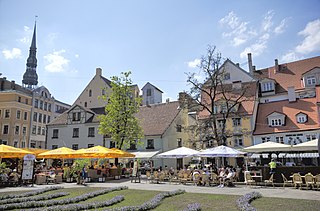
Riga is the capital and largest city of Latvia. Home to 605,802 inhabitants, the city accounts for a third of Latvia's total population. The population of Riga metropolitan area, which stretches beyond the city limits, is estimated at 860,142. The city lies on the Gulf of Riga at the mouth of the Daugava river where it meets the Baltic Sea. Riga's territory covers 307.17 km2 (118.60 sq mi) and lies 1–10 m (3.3–32.8 ft) above sea level, on a flat and sandy plain.
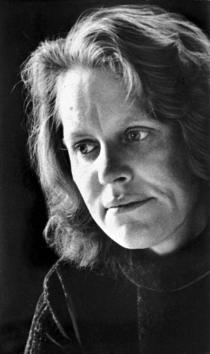
Vizma Belševica was a Latvian poet, writer and translator. She was nominated for the Nobel Prize in Literature.
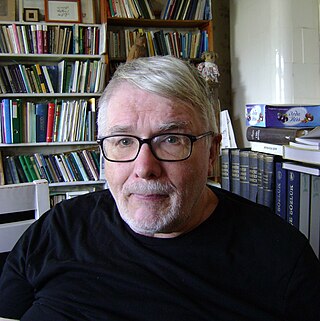
Uldis Bērziņš was a Latvian poet and translator.
Imants Tillers, is an Australian artist, curator and writer. He lives and works in Cooma, New South Wales.

Juris Kronbergs was a Latvian-Swedish poet and translator who lived in Stockholm.

Māra Zālīte is a Latvian writer and cultural worker.

Skanste is a neighbourhood located in the center of Riga, the capital of Latvia, and is currently becoming the most modern part of Riga. Geographically, the neighborhood is situated in the northern part of the railway ring on the right bank of the Daugava, bordering the Sarkandaugava, Brasa, Centrs, and Pētersala-Andrejsala neighborhoods.

Helēna Demakova is a Latvian art historian, curator of art exhibitions, and politician. She served as Culture Minister of Latvia from 2004 until 2009 and was a Member of the 9th Saeima and lecturer at the Art Academy of Latvia.
The Kuryokhin Center, or more extended the Sergey Kuryokhin Center for Modern Art, is a non-profit cultural centre in Saint Petersburg, Russia. The centre was founded in 2004 and named after the Russian avant garde composer Sergey Kuryokhin. The main space of the centre has a capacity of 2000 people. The venue is located in an old cinema building.
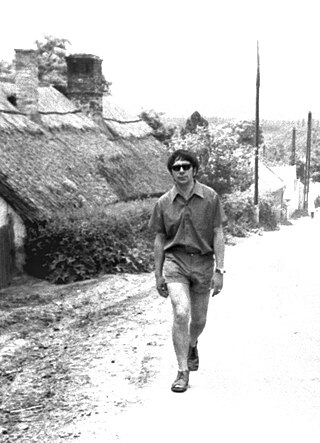
Māris Čaklais was a Latvian poet, writer, and journalist.

Tatyana Palchuk Rikane is a Latvian Russian artist.
Krišjānis Zeļģis is a Latvian poet and brewer.

Karl Johansson was a Latvian-Soviet avant-garde artist.
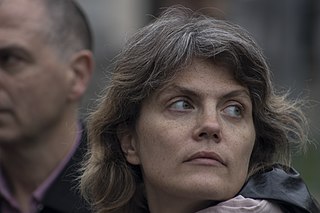
Inga Gaile is a Latvian poet, novelist, and playwright.

Anna Bērzkalne was a Latvian teacher and folklorist who founded the Archives of Latvian Folklore in 1924 and headed the organization for its first five years. Her analysis of Latvian folk ballads was awarded the Krišjānis Barons Prize in 1933. She was the first Latvian to earn a degree in Folkloric Studies and is recognized as one of the central figures in developing folkloric study as an academic discipline in Latvia.
Niklāvs Strunke (1894–1966) was a Latvian painter and graphic artist. One of the most original artists of the Latvian modernist generation, he also worked in stained glass and scenography. He wrote about art.. Born 6 October 1894 in Gostynin, Russian Empire, to the family of a non-commissioned officer in the army of the Russian Empire. In 1903 he moved to Valmiera to live with his father's sister, and in 1909 he graduated from Liepiņš Progymnasium there. He moved to St. Petersburg with his father, and studied 1909–11 at the school of the Imperial Society for the Encouragement of the Arts under Nikolai Roerich and Ivan Bilibin.
Kristaps Gulbis is a Latvian sculptor and artist known for numerous contemporary art projects in more than 25 countries. His works have been exhibited at the Venice Biennale, the Museum of Modern Art in Hokaido, Japan, and at metropolitan sites in London, Paris, Rome, Berlin, Riga, Moscow and other European cities, as well as in New York, Seoul, and Kaohsiung, Taiwan. The visual art projects curated, directed and managed by Gulbis have been set in England, Hungary, Germany, Latvia, Estonia and elsewhere in Europe.
Monta Kroma was a Latvian writer, best known for her pioneering modernist poetry. She is considered one of the most influential 20th-century Latvian poets, and one of the most unusual and radical of the Soviet era.
Polina Vladimirovna Kanis is a Russian artist, winner of the Kandinsky Prize (2011) and the Sergey Kuryokhin Prize (2016). She graduated from the Rodchenko Art School (Moscow) in 2011. Her work has been presented in numerous solo and group exhibitions, film festivals and film screenings, including a solo exhibition at the Haus der Kunst Munich (2017)., the VISIO program at Palazzo Strozzi in Florence (2019), the parallel program of the Manifesta 10, in 2015 at the Ural Industrial Biennale of Contemporary Art, Garage Museum of Contemporary Art, the VI Moscow International Biennale of Young Art (2015), the Moscow International Experimental Film Festival, the Hamburg Short Film Festival (2019) and many others. Her films are in the collections of numerous museums and foundations, including the Fonds régional d'art contemporain Bretagne, Fondazione In Between Art Film, Rome, Foundation Kadist, Paris, etc. Kanis was an artist-in-residence at the Rijksakademie van beeldende kunsten programs in Amsterdam (2017-2018) and ISCP New York (2020).
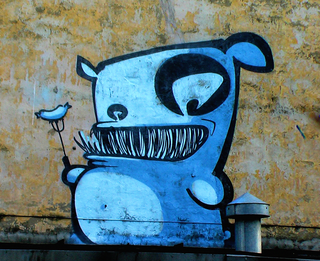
KIWIE is a pseudonymous Latvian street artist who has based his artistic style on a multiform repetition of one specific image – KIWIE monster character. He has been active since 2006.
{{cite web}}: CS1 maint: archived copy as title (link)