
Pasar Tono is a small town in the East Timor exclave of Oecussi-Ambeno. It is located inland from Lifau, on the Tono River. The town of Padiae lies just to the north. [1]
Pasar Tono is a small town in the East Timor exclave of Oecussi-Ambeno. It is located inland from Lifau, on the Tono River. The town of Padiae lies just to the north. [1]
Pasar Tono is a cultural landmark in East Timor. The market showcases the rich heritage of the Timorese people through its offerings of traditional crafts and foods. It serves as a gathering place for various community events, festivals, and celebrations, reinforcing social bonds among residents. [2]
Beyond its cultural impact, Pasar Tono contributes significantly to the local economy by providing a space for small-scale vendors and farmers to sell their products. Many families rely on the income generated from their stalls at the market. The market also supports traditional agricultural practices by connecting local farmers directly with consumers, promoting the sale of fresh and organic products.
Located inland from Lifau along the Tono River, Pasar Tono is strategically positioned for accessibility. Its proximity to major roads and public transportation facilitates easy access for vendors and shoppers alike. The market typically operates daily, with peak activity during weekends when more vendors and customers participate.
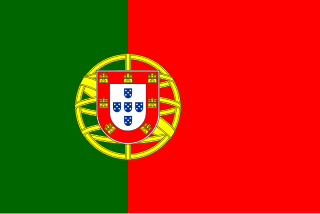
Portuguese Timor was a colonial possession of Portugal that existed between 1702 and 1975. During most of this period, Portugal shared the island of Timor with the Dutch East Indies.

Tōno is a city in Iwate Prefecture, Japan. As of 1 January 2020, the city had an estimated population of 26,378, and a population density of 31.6 persons per km2 in 10,759 households. The total area of the city is 825.97 square kilometres (318.91 sq mi). Tōno is known as "The City of Folklore" for its rural nature, its preservation of traditional culture and especially for the collection of folktales, Tōno Monogatari, written by Kunio Yanagita in 1910.
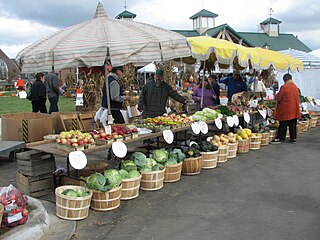
A farmers' market is a physical retail marketplace intended to sell foods directly by farmers to consumers. Farmers' markets may be indoors or outdoors and typically consist of booths, tables or stands where farmers sell their produce, live animals and plants, and sometimes prepared foods and beverages. Farmers' markets exist in many countries worldwide and reflect the local culture and economy. The size of the market may be just a few stalls or it may be as large as several city blocks. Due to their nature, they tend to be less rigidly regulated than retail produce shops.

Pasar malam is a Malay word that literally means "night market". A pasar malam is a street market in Indonesia, Malaysia, Brunei and Singapore that opens in the evening, usually in residential neighbourhoods. Pasar malams are culturally very similar to night markets in Asian countries such as China, Thailand, Taiwan, Vietnam, South Korea and India.

Benue State is one of the North Central states in Nigeria with a population of about 4,253,641 in the 2006 census. The state was created in 1976 and was among the seven states created at that time. The state derives its name from the Benue River initially called Ber-nor, a compound word in Tiv language which means river or lake of hippopotamus the name Ber-nor was corrupted to BENUE by colonial masters, the river is the second largest river in Nigeria after the River Niger. The state borders Nasarawa State to the North; Taraba State to the East; Kogi State to the West; Enugu State to the South-West; Ebonyi and Cross-Rivers State to the South; and has an international border with Cameroon to the South-East. It is inhabited predominantly by the Tiv, Idoma and Igede people. Minority ethnic groups in Benue are Etulo, Igbo, hausa and Jukun people etc. Its capital is Makurdi. Benue is a rich agricultural region; common crops cultivated in the state include oranges, yams, mangoes, sweet potatoes, cassava, soya bean, guinea corn, flax, sesame, rice, groundnuts and palm trees.
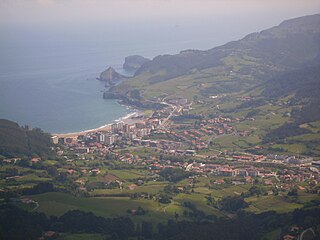
Bakio is a municipality in the province of Biscay, Basque Country, Spain.

A wet market is a marketplace selling fresh foods such as meat, fish, produce and other consumption-oriented perishable goods in a non-supermarket setting, as distinguished from "dry markets" that sell durable goods such as fabrics, kitchenwares and electronics. These include a wide variety of markets, such as farmers' markets, fish markets, and wildlife markets. Not all wet markets sell live animals, but the term wet market is sometimes used to signify a live animal market in which vendors slaughter animals upon customer purchase, such as is done with poultry in Hong Kong. Wet markets are common in many parts of the world, notably in China, Southeast Asia, and South Asia. They often play critical roles in urban food security due to factors of pricing, freshness of food, social interaction, and local cultures.

Pasar Minggu is a district in the administrative city of South Jakarta, Indonesia. The area is known for its traditional Sunday market, famous for the fruit market. Historically, Pasar Minggu is a fruit cultivation area developed by the Dutch government during the colonial period. The central point of the cultivation area is the traditional market of Pasar Minggu, located in what is now the lower-division Pasar Minggu subdistrict. Teak forest could also be found in the Pasar Minggu district, notably around the Jati Padang subdistrict. Most of these areas have been converted into residential areas as Jakarta grows southward.

A marketplace, market place, or just market, is a location where people regularly gather for the purchase and sale of provisions, livestock, and other goods. In different parts of the world, a marketplace may be described as a souk, bazaar, a fixed mercado (Spanish), itinerant tianguis (Mexico), or palengke (Philippines). Some markets operate daily and are said to be permanent markets while others are held once a week or on less frequent specified days such as festival days and are said to be periodic markets. The form that a market adopts depends on its locality's population, culture, ambient, and geographic conditions. The term market covers many types of trading, such as market squares, market halls, food halls, and their different varieties. Thus marketplaces can be both outdoors and indoors, and in the modern world, online marketplaces.

Selayang is a town in Gombak District, Selangor, Malaysia.

The Tono River is the principal river of Oecusse, an exclave of East Timor. The river and its major tributaries flow generally north, through the centre of the exclave, into the Savu Sea, reaching the sea near Lifau. Its alluvial flood plain in Pante Macassar administrative post is the main rice-producing place in Oecusse.

Padiae is a small town in the East Timor exclave of Oecussi-Ambeno. It is located inland from Lifau, on the Tono River. The town of Pasar Tono lies just to the south.

Lifau is a village and suco in the East Timor exclave of Oecusse District. The village is located west of the mouth of the Tono River. 1,938 people live in the suco.
Surantih is a settlement in Sutera, Pesisir Selatan district, Pesisir Selatan regency, West Sumatra province in Indonesia.

Oecusse, also known as Oecusse-Ambeno and formerly just Ambeno, officially the Special Administrative Region Oecusse-Ambeno, is an exclave, municipality and the only Special Administrative Region (SAR) of East Timor.

The Gambir Fair was a fair held in 1906 and yearly from 1921 until 1942 in the Koningsplein, Batavia, Dutch East Indies to celebrate the birthday of Queen Wilhelmina of the Netherlands. After the Japanese occupied the Indies, the fair was no longer held. However, after a failed attempt in 1952, in 1968 it was reinstated as the Jakarta Fair.
Farmers' markets are markets in which producers sell directly to consumers. While farmers' markets do not have a measurable impact on the United States economy as a whole, many studies have found that farmers' markets impact state and municipal economies as well as vendors, local businesses, and consumers. These impacts are measured using the IMPLAN Input-Output Model and the Sticky Economic Evaluation Device (SEED), in addition to other methods. The economic impacts that are most frequently measured include effects on the revenue and income of local growers and local businesses, the effects on job creation, and the effects on other sectors of state and local economies. Some obstacles that may reduce impact or create negative economic effects include over-saturation, socioeconomic barriers, the opportunity cost of farmers' markets, and the projected unsustainable growth of farmers' markets in the United States.

The Kitchener Farmer's Market is one of the oldest continuous local farmer's markets in Canada. The market is located in Kitchener, Ontario, and reflects the continued relationship of Kitchener with the Mennonite community and farmers that continues to exist in the area.
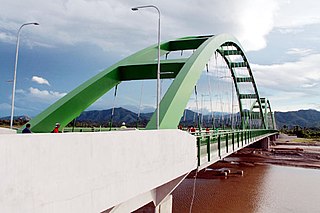
The Noefefan Bridge is a two-lane road bridge over the Tono River in the suco of Lifau, a village in Oecusse, the East Timorese exclave on the north western coast of Timor. As of 2017, when the bridge was inaugurated, it was the largest bridge ever built in East Timor. It connects several isolated communities west of the river with Pante Macassar to its east.

Fort Santo António de Lifau was a Portuguese fort once built by the mouth of the Tono River, in Lifau, district of Oecusse, in East-Timor, the first fort built by the Portuguese Crown, where only forts maintained by Dominican missionaries and Portuguese merchants previously existed.