Related Research Articles
Max Rostal was a violinist and a viola player. He was Austrian-born, but later took British citizenship.

Jenő Takács was a Hungarian composer and pianist.
Harald Genzmer was a German composer of classical music and an academic.
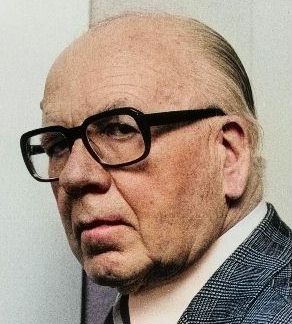
Wolfgang Fortner was a German composer, academic composition teacher and conductor.

Leopold van der Pals was a Danish/Dutch modernist composer who developed a personal and lyrical style in composing by involving elements of late romanticism, expressionism and impressionism.
Hans Vogt was a German composer and conductor.
Walter Rudolph Niemann was a German composer, arranger, and music critic.

Günter Kochan was a German composer. He studied with Boris Blacher and was a master student for composition with Hanns Eisler. From 1967 until his retirement in 1991, he worked as professor for musical composition at the Hochschule für Musik "Hanns Eisler". He taught master classes in composition at the Academy of Music and the Academy of Arts, Berlin. He was also secretary of the Music Section of the Academy of Arts from 1972 to 1974 and vice-president of the Association of Composers and Musicologists of the GDR from 1977 to 1982. Kochan is one of eleven laureates to have been awarded the National Prize of the GDR four times. In addition, he received composition prizes in the US and Eastern Europe. He became internationally known in particular for his Symphonies as well as the cantata Die Asche von Birkenau (1965) and his Music for Orchestra No. 2 (1987). His versatile oeuvre included orchestral works, chamber music, choral works, mass songs and film music and is situated between socialist realism and avant-garde.
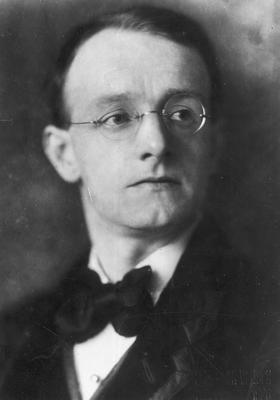
Fidelio Friedrich "Fritz" Finke was a Bohemian-German composer.
Gerhard Wohlgemuth was a German composer and literary editor. He wrote several film scores.
Karl Ottomar Treibmann was a German composer and music educator. From 1981 until his retirement in 2001, he was professor of music theory and Tonsatz at the Leipzig University. He was one of the representatives of modernity in the German Democratic Republic, whose great major works can be found in the areas of opera, symphony and chamber music.
Hans Jürgen Wenzel was a German conductor and composer. He was chairman of the Verband der Komponisten und Musikwissenschaftler der DDR and professor for musical composition at the Hochschule für Musik Carl Maria von Weber Dresden.
Karl Johannes Max Strub was a German violin virtuoso and eminent violin pedagogue. He gained a Europe-wide reputation during his 36 years of activity as primarius of the Strub Quartet. Stations as concertmaster led him from the 1920s to the operas of Stuttgart, Dresden and Berlin. Appointed Germany's youngest music professor at the Hochschule für Musik Franz Liszt, Weimar in 1926, he followed calls to the Berlin University of the Arts and, after the Second World War to the Hochschule für Musik Detmold. Strub was a connoisseur of the classical-romantic repertoire, but also devoted himself to modern music, among others he gave the world premiere of Hindemith's Violin Sonata No. 2 in D major. He promoted the music of Hans Pfitzner. Strub played on a Stradivari violin until 1945; numerous recordings from the 1930s/40s document his work.
The Hanns Eisler Prize was an East-German music award, named after the composer Hanns Eisler. It was awarded by Radio DDR – with advisory participation of the music section of the Akademie der Künste der DDR in Berlin (East) and the Verband der Komponisten und Musikwissenschaftler der DDR (VDK) – and on the occasion of his 70th birthday on 6 July 1968, the first time in the ballroom of the Alten Rathaus. The Hanns Eisler Prize was endowed with 10,000 marks and was one of the most renowned music prizes in the German Democratic Republic.
Nathan "Noto" Notowicz was a German musicologist and composer.
Gustav Schmahl was a German violinist and university lecturer. He was the only student of David Oistrach from the GDR. Schmahl worked at times as concertmaster of the Rundfunk-Sinfonieorchester Berlin and from 1973 to 1984 as rector of the University of Music and Theatre Leipzig.
Erhard (Eberhard) Ragwitz is a German musicologist, composer, and lecturer. From 1986 to 1989, he was the rector of the Hochschule für Musik "Hanns Eisler".
Fritz Reuter was a German musicologist, music educator, composer and Kapellmeister. Reuter was one of the most important German music educators of the 20th century. After studying music and musicology in Dresden and Leipzig, with Teichmüller, Riemann, Schering and Abert, he received his doctorate in 1922. In 1945, he was appointed Kapellmeister at the Volksoper in Dresden. In 1949, he was appointed as the first professor of music education at a German university. He was also director of institutes at the Martin Luther University of Halle-Wittenberg and the Humboldt University Berlin. In 1955, he was one of the initiators of the first Hallische Musiktage.
Horst Irrgang was a German composer, conductor and musicologist.
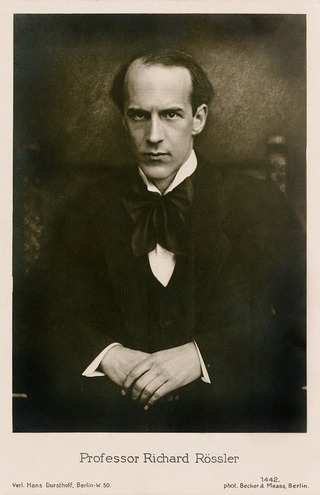
Richard Rössler, also Roessler or Rößler was a Baltic German pianist, organist, composer and music educator. In 1910, he married the pianist Dora Charlotte Mayer (1887–1951), a Württemberg pastor's daughter who had studied in Berlin with Ernst von Dohnányi and Max Bruch. The couple had three children.
References
- 1 2 Fred K. Prieberg: Musik im anderen Deutschland on WorldCat
- ↑ Dietrich Brennecke, Hannelore Gerlach, Mathias Hansen (ed.): Musiker in unserer Zeit. Members of the Music Section of the GDR Academy of Arts. Leipzig 1979, p. 17.
- 1 2 Alan Pedigo: International encyclopedia of violin-keyboard sonatas and composer biographies. Booneville 1995, p. 153.
- ↑ Bettina Hinterthür: Noten nach Plan. Die Musikverlage in der SBZ, DDR. Zensursystem, zentrale Planwirtschaft und deutsch-deutsche Beziehungen bis Anfang der 1960er Jahre. Stuttgart 2006, p. 265.
- ↑ Musik und Gesellschaft 18 (1968), p. 740.
- ↑ Jörg Clemen, Steffen Lieberwirth: Mitteldeutscher Rundfunk. Die Geschichte des Sinfonieorchesters. Altenburg 1999, p. 186.
- ↑ Erika Tschernig (ed.): Unsere Kultur. DDR-Zeittafel 1945–1987. Berlin 1989, p. 174.
- ↑ Fred K. Prieberg: Paragraphen und ein Erster Sekretär sorgen für Ordnung . In Die Zeit, 18 June 1965.
- ↑ Bulletin. Musikrat der DDR 5/6 (1968), p. XLVII.
- ↑ Musik und Gesellschaft 18 (1968), p. 93


