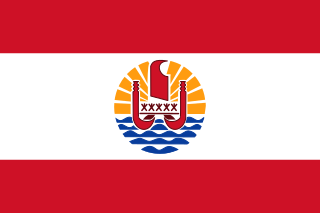
French Polynesia is an overseas collectivity of France and its sole overseas country. It comprises 121 geographically dispersed islands and atolls stretching over more than 2,000 kilometres (1,200 mi) in the South Pacific Ocean. The total land area of French Polynesia is 3,521 square kilometres (1,359 sq mi), with a population of 278,786 of which at least 205,000 live in the Society Islands and the remaining population lives in the rest of the archipelago.

Tahiti is the largest island of the Windward group of the Society Islands in French Polynesia. It is located in the central part of the Pacific Ocean and the nearest major landmass is Australia. Divided into two parts, Tahiti Nui and Tahiti Iti, the island was formed from volcanic activity; it is high and mountainous with surrounding coral reefs. Its population was 189,517 in 2017, making it by far the most populous island in French Polynesia and accounting for 68.7% of its total population; the 2022 Census recorded a population of 191,779.

Pōmare II, was the second king of Tahiti between 1782 and 1821. He was installed by his father Pōmare I at Tarahoi, 13 February 1791. He ruled under regency from 1791 to 1803.
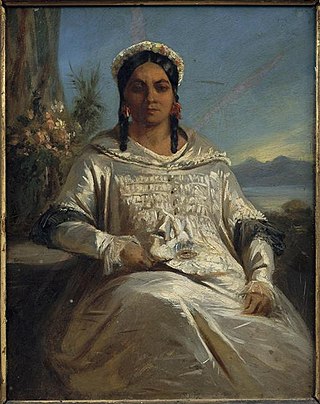
Pōmare IV, more properly ʻAimata Pōmare IV Vahine-o-Punuateraʻitua, was the Queen of Tahiti between 1827 and 1877. She was the fourth monarch of the Kingdom of Tahiti.

Raiatea or Ra'iatea is the second largest of the Society Islands, after Tahiti, in French Polynesia, in the South Pacific Ocean. The island is widely regarded as the "centre" of the eastern islands in ancient Polynesia and it is likely that the organised migrations to the Hawaiian Islands, New Zealand and other parts of East Polynesia started at Raiatea.

The Austral Islands are the southernmost group of islands in French Polynesia, an overseas country of the French Republic in the South Pacific. Geographically, they consist of two separate archipelagos, namely in the northwest the Tupua'i islands consisting of the Îles Maria, Rimatara, Rūrutu, Tupua'i Island proper and Ra'ivāvae, and in the southeast the Bass Islands composed of the main island of Rapa Iti and the small Marotiri. Inhabitants of the islands are known for their pandanus fiber weaving skills. The islands of Maria and Marotiri are not suitable for sustained habitation. Several of the islands have uninhabited islets or rocks off their coastlines. Austral Islands' population is 6,965 on almost 150 km2 (58 sq mi). The capital of the Austral Islands administrative subdivision is Tupua'i.
The Society Islands are an archipelago in the South Pacific Ocean that includes the major islands of Tahiti, Moʻorea, Raiatea, Bora Bora and Huahine. Politically, they are part of French Polynesia, an overseas country of the French Republic. Geographically, they form part of Polynesia.

Henry Nott (1774–1844) was a British Protestant Christian missionary who lived and worked in Tahiti, in the Society Islands in Polynesia.

The Tahitians are the Indigenous Polynesian people of Tahiti and thirteen other Society Islands in French Polynesia. The numbers may also include the modern population in these islands of mixed Polynesian and French ancestry. Indigenous Tahitians are one of the largest Polynesian ethnic groups, behind the Māori, Samoans and Hawaiians.

The Kingdom of Tahiti or the Tahitian Kingdom was a Polynesian monarchy founded by paramount chief Pōmare I, who, with the aid of British missionaries and traders, and European weaponry, unified the islands of Tahiti, Moʻorea, Teti‘aroa, and Mehetiʻa. The kingdom eventually annexed the Tuamotus, and the Austral Islands.
The Pōmare dynasty was the reigning family of the Kingdom of Tahiti between the unification of the islands by Pōmare I in 1788 and Pōmare V's cession of the kingdom to France in 1880. Their influence once spanned most of the Society Islands, the Austral Islands and the Tuamotu Archipelago.

The Kingdom of Bora Bora was established during the early 19th century with the unification of the island of Bora Bora and official recognition by France and the United Kingdom in 1847 through the Jarnac Convention. It was one of a number of independent Polynesian states in the Society Islands, alongside Tahiti, Huahine and Raiatea in the 19th century, which all shared a similar language and culture and whose rulers were interrelated by marriage. Besides Bora Bora, the Kingdom encompassed the islands of Tupai, Maupiti, Maupihaa, Motu One, and Manuae. The Kingdom was finally annexed to France in 1888 and its last queen Teriimaevarua III was replaced by a French vice-resident in 1895.

Hawaiʻi–Tahiti relations refers to the historical relationship between the independent Kingdom of Hawaiʻi and the Kingdom of Tahiti. Relations included one treaty, proposed marriage alliances and exchanges of trade and diplomatic representatives from the early 1800s to 1880.
Tehaʻapapa I was a Queen regnant of the island of Huahine. She was the ruler of that island during the time Captain Cook visited the island and an ancestor of Queen Teha'apapa II.

Teriitaria II or Teri'itari'a II, later known as Pōmare Vahine and Ari'ipaea Vahine, baptized Taaroamaiturai, became Queen consort of Tahiti when she married King Pōmare II and later, she ruled as Queen of Huahine and Maiao in the Society Islands.

Tamatoa IV, also named Moe'ore Teri'itinorua Teari'inohora'i (1797–1857) was the king of Raiatea and Tahaa from 1831 to 1857.
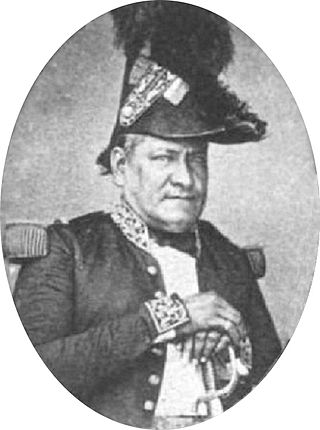
Tenaniʻa Ariʻifaʻaite a Hiro was a Prince consort of Tahiti. He was son of Hiro from Huahine and Teihotu alias Ta'avea daughter of Tamatoa III of Raiatea. He became second consort of his first cousin, Pōmare IV, Queen of Tahiti, who was likewise a maternal granddaughter of Tamatoa III. From their union were born:
- A boy, died of dysentery
- Henry Pōmare ., died of dysentery
- Ariʻiaue Pōmare, Crown Prince of Tahiti, Ariʻi of Afaʻahiti.
- Pōmare V, succeeded as King of Tahiti.
- Teriʻimaevarua II, succeeded as Queen of Bora Bora.
- Tamatoa V, succeeded as King of Raiatea.
- Victoria Pōmare-vahine.
- Punuariʻi Teriʻitapunui Pōmare, Ariʻi of Mahina and President of the Tahitian High Court.
- Teriʻitua Tuavira Pōmare, Ariʻirahi of Hitiaʻa, called the "Prince of Joinville".
- Tevahitua Pōmare.

The Franco-Tahitian War or French–Tahitian War (1844–1847) was a conflict between the Kingdom of France and the Kingdom of Tahiti and its allies in the South Pacific archipelago of the Society Islands in modern-day French Polynesia.

Missionary Day is an official holiday in French Polynesia, an overseas collectivity of France. It is celebrated annually on 5 March, to mark the arrival of the London Missionary Society (LMS) missionaries in 1797 when their ship Duff landed at Matavai Bay. It is a non-working holiday.

The annexation of the Leeward Islands or the Leewards War was a series of diplomatic and armed conflicts between the French Third Republic and the native kingdoms of Raiatea-Tahaa, Huahine and Bora Bora, which resulted in the conquest of the Leeward Islands, in the South Pacific archipelago of the Society Islands in modern-day French Polynesia.