Related Research Articles

Holyrood Abbey is a ruined abbey of the Canons Regular in Edinburgh, Scotland. The abbey was founded in 1128 by King David I. During the 15th century, the abbey guesthouse was developed into a royal residence, and after the Scottish Reformation the Palace of Holyroodhouse was expanded further. The abbey church was used as a parish church until the 17th century, and has been ruined since the 18th century. The remaining walls of the abbey lie adjacent to the palace, at the eastern end of Edinburgh's Royal Mile. The site of the abbey is protected as a scheduled monument.

The Royal Mile is a succession of streets forming the main thoroughfare of the Old Town of the city of Edinburgh in Scotland. The term was first used descriptively in W M Gilbert's Edinburgh in the Nineteenth Century (1901), "...with its Castle and Palace and the royal mile between", and was further popularised as the title of a guidebook, published in 1920.

John Campbell, 1st Baron Campbell, PC, QC, FRSE was a British Liberal politician, lawyer and man of letters.

Andrew Combe was a Scottish physician and phrenologist.
James Moncreiff, 1st Baron Moncreiff of Tullibole LLD was a Scottish lawyer and politician.
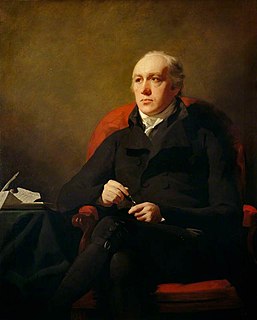
Rt Hon Lord Charles Hope FRSE was a Scottish politician and judge.

George Joseph Bell was a Scottish advocate and legal scholar. From 1822 to 1843 he was Professor of Scots Law at the University of Edinburgh. He was succeeded by John Shank More.
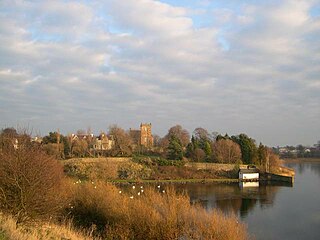
Duddingston is a former village in the east of Edinburgh, Scotland, next to Holyrood Park.

Sir David Rae, Lord Eskgrove, 1st Baronet FRSE FSA (1724–1804) was a Scottish advocate and judge.

Robert Pont (1529–1606) was a Scottish minister, judge and reformer. He was a church minister and commissioner and a Senator of the College of Justice. Pont was born at Culross, and educated at St. Andrews and on the Continent in Reformation principles. His translation of the Helvetian Confession was ordered to be printed by the General Assembly. Pont's legal skill allowed him to be made Provost of Trinity College, and through the influence of Morton, but with the consent of the Assembly, he accepted a seat in the Court of Session in 1572. Working for the church he assisted in the preparation of the Second Book of Discipline. He protested so prominently against the Black Acts that he was compelled for a time to take refuge in England. On returning with Angus and other Protestant Lords, he resumed his ministerial duty at St. Cuthbert's. Among other writings, he prepared for the Assembly three sermons against sacrilege and also published also a revised edition of the Psalms, and a Latin treatise on the "Union of the two Kingdoms," in 1604. He died in 1606.

Charles Neaves, Lord Neaves FRSE (1800–1876) was a Scottish advocate, judge, theologian and writer. He served as Solicitor General (1852), as a judge of the Court of Session, the supreme court of Scotland (1854), and as Rector of the University of St Andrews (1872).

Alexander Smith Kinnear, 1st Baron Kinnear, was a Scottish advocate and judge. He served as Lord of Council and Session (1882–1913), and was appointed to the Privy Council in 1911.

Prof William Sharpey FRS FRSE LLD was a Scottish anatomist and physiologist. He is described as the "father of British physiology".
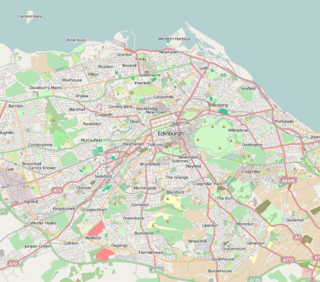
The Palace of Holyroodhouse, commonly referred to as Holyrood Palace or Holyroodhouse, is the official residence of the British monarch in Scotland. Located at the bottom of the Royal Mile in Edinburgh, at the opposite end to Edinburgh Castle, Holyroodhouse has served as the principal royal residence in Scotland since the 16th century, and is a setting for state occasions and official entertaining.
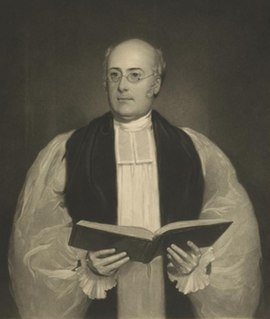
Michael Russell was the first Bishop of Glasgow and Galloway from 1837 to his death in 1848.

Thomas ThomsonFRSE FSA Scot was a Scottish advocate, antiquarian and archivist who served as Principal Clerk of Session (1828–1852) and as secretary of the literary section of the Royal Society of Edinburgh (1812–20).

George Moir FRSE (1800–1870) was a Scottish advocate and author, amateur artist and early photographer.

Aeneas James George Mackay was a Scottish lawyer and academic, known as a legal and historical writer.
Patrick Shaw was a Scottish lawyer and legal writer.
References
- ↑ "Edinburgh Post Office annual directory,1832-1833". National Library of Scotland. Retrieved 20 January 2018.
 This article incorporates text from a publication now in the public domain : "Halkerston, Peter". Dictionary of National Biography . London: Smith, Elder & Co. 1885–1900.

   | This Scottish law-related biographical article is a stub. You can help Wikipedia by expanding it. |