Related Research Articles

Queensland is a state in northeastern Australia, the second-largest and third-most populous of the Australian states. It is bordered by the Northern Territory, South Australia and New South Wales to the west, south-west and south respectively. To the east, Queensland is bordered by the Coral Sea and the Pacific Ocean; to its north is the Torres Strait, separating the Australian mainland from Papua New Guinea, and the Gulf of Carpentaria to the north-west. With an area of 1,723,030 square kilometres (665,270 sq mi), Queensland is the world's sixth-largest subnational entity; it is larger than all but 16 countries. Due to its size, Queensland's geographical features and climates are diverse, including tropical rainforests, rivers, coral reefs, mountain ranges and sandy beaches in its tropical and sub-tropical coastal regions, as well as deserts and savanna in the semi-arid and desert climatic regions of its interior.

Peter Charles Doherty is an Australian immunologist and Nobel laureate. He received the Albert Lasker Award for Basic Medical Research in 1995, the Nobel Prize in Physiology or Medicine jointly with Rolf M. Zinkernagel in 1996 and was named Australian of the Year in 1997. In the Australia Day Honours of 1997, he was named a Companion of the Order of Australia for his work with Zinkernagel. He is also a National Trust Australian Living Treasure. In 2009 as part of the Q150 celebrations, Doherty's immune system research was announced as one of the Q150 Icons of Queensland for its role as an iconic "innovation and invention".

The University of the Sunshine Coast is a public university based on the Sunshine Coast, Queensland, Australia. After opening with 524 students in 1996 as the Sunshine Coast University College, it was later renamed the University of the Sunshine Coast in 1999.
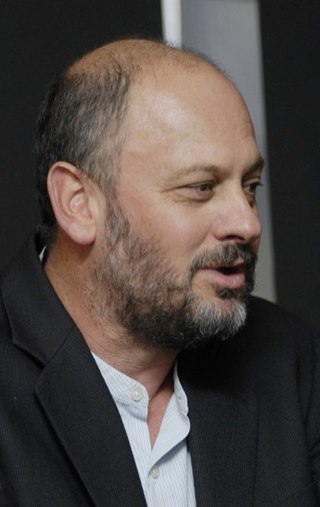
Timothy Fridtjof Flannery is an Australian mammalogist, palaeontologist, environmentalist, conservationist, explorer, author, science communicator, activist and public scientist. He was awarded Australian of the Year in 2007 for his work and advocacy on environmental issues. He is the Geneva Graduate Institute’s Fondation Segré Distinguished Visiting Professor.
Catalyst is an Australian science journalism television program broadcast by the Australian Broadcasting Corporation (ABC). The program is currently the only science show on primetime television in Australia. Launched in 2001, it replaced Quantum which had ceased the previous year. Catalyst was regularly broadcast on ABC TV at 8:30 pm on Tuesdays and repeated at 6:00 pm on Sundays.

South East Queensland (SEQ) is a bio-geographical, metropolitan, political and administrative region of the state of Queensland in Australia, with a population of approximately 3.8 million people out of the state's population of 5.1 million. The area covered by South East Queensland varies, depending on the definition of the region, though it tends to include Queensland's three largest cities: the capital city Brisbane; the Gold Coast; and the Sunshine Coast. Its most common use is for political purposes, and covers 35,248 square kilometres (13,609 sq mi) and incorporates 11 local government areas, extending 240 kilometres (150 mi) from Noosa in the north to the Gold Coast and New South Wales border in the south, and 140 kilometres (87 mi) west to Toowoomba. It is the third largest urban area in Australia by population.
Chlamydia pecorum, also known as Chlamydophila pecorum is a species of Chlamydiaceae that originated from ruminants, such as cattle, sheep and goats. It has also infected koalas and swine. C. pecorum strains are serologically and pathogenically diverse.
Mark Francis McArdle is an Australian politician and former Deputy Leader of the Opposition in Queensland. He was a Member of the Legislative Assembly of Queensland between 2004 and 2020, representing the electorate of Caloundra on the Sunshine Coast. Initially a Liberal Party member, in 2007 he became the party leader and the following year oversaw a merger with the National Party that produced the Liberal National Party.

The Eureka Prizes are awarded annually by the Australian Museum, Sydney, to recognise individuals and organizations who have contributed to science and the understanding of science in Australia. They were founded in 1990 following a suggestion by science journalist Robyn Williams.
Koala retrovirus (KoRV) is a retrovirus that is present in many populations of koalas. It has been implicated as the agent of koala immune deficiency syndrome (KIDS), an AIDS-like immunodeficiency that leaves infected koalas more susceptible to infectious disease and cancers. The virus is thought to be a recently introduced exogenous virus that is also integrating into the koala genome. Thus the virus can transmit both horizontally and vertically. The horizontal modes of transmission are not well defined but are thought to require close contact.
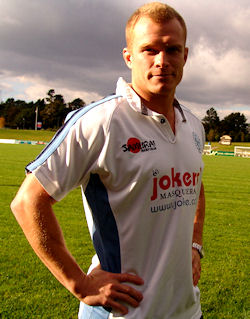
Tim Walsh is an Australian rugby union coach and a former professional player. He is currently head coach of the Australian women's sevens team and was previously head coach of the Australian men's sevens team. Walsh played as a fly-half for the Queensland Reds in Super Rugby, and for several professional teams in England and Italy. He is a former captain of the Australian men's sevens team.
Wide Bay–Burnett is a region of the Australian state of Queensland, located between 170–400 km (110–250 mi) north of the state capital, Brisbane. The area's population growth has exceeded the state average over the past 20 years, and it is forecast to grow to more than 430,000 by 2031. It is the subject of the Draft Wide Bay–Burnett Regional Plan, which aims to facilitate this growth while protecting over 90% of the region from urban development.

Booroobin is a rural locality split between the City of Moreton Bay and the Sunshine Coast Region in Queensland, Australia. In the 2021 census, Booroobin had a population of 258 people.
Elizabeth "Liz" Harry is Professor of Biology and Director of the ithree institute at the University of Technology, Sydney, Australia (UTS).

Rebecca Nicole Johnson is an Australian scientist (geneticist) and science communicator. Since April 2015, Johnson has been Director and Chief Scientist of the Australian Museum Research Institute (AMRI), Sydney, the first female to be appointed to the role since the establishment of the Australian Museum in 1827. She is also head of the Australian Museum's Australian Centre for Wildlife Genomics, a wildlife forensics laboratory based at the Australian Museum.
Professor Peter Collignon AM is a professor of microbiology at the Australian National University. Collignon has worked for the World Health Organization, studying the use of antibiotics in food animals, and the rise of drug resistant pathogens. Collignon is director of the Infectious Diseases Unit and Microbiology at the Canberra Hospital, and is a fellow of the Royal College of Pathologists of Australasia.
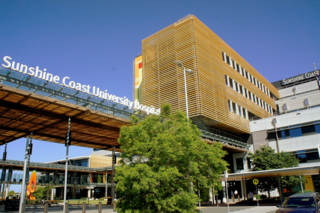
The Sunshine Coast University Hospital is a hospital on the Sunshine Coast, Queensland, Australia. It is affiliated with the University of the Sunshine Coast and Griffith University.
Timothy Vincent Fairfax is an Australian philanthropist, pastoralist and a member of the Fairfax family. He leads a charitable foundation called the Tim Fairfax Family Foundation, created in 2008.

Rockhampton Zoo is a zoo in the Australian city of Rockhampton, Queensland.
Celine Frere is a Swiss evolutionary biologist. In 2017, she was named one of Australia's first "Superstars of STEM" by Science & Technology Australia. She is known for co-founding USC's Detection Dogs for Conservation initiative, training sniffer dogs to aid in research and conversation efforts around endangered and protected species.
References
- 1 2 3 "Eight new Queensland Greats in 2022". The Queensland Cabinet and Ministerial Directory . Queensland Government. 6 June 2022. Retrieved 8 June 2022.
- ↑ Smail, Stephanie (29 October 2014). "Chlamydia breakthrough: Queensland scientists vaccinate koalas against deadly disease". AM . Australian Broadcasting Corporation . Retrieved 9 June 2022.
- ↑ "Saving Koalas - Peter Timms". ABC Science . Australian Broadcasting Corporation. 26 March 2012. Retrieved 9 June 2022.
- 1 2 "Peter Timms biography" (PDF). Conference Series. 2017. Retrieved 9 June 2022.
- 1 2 "Staff: Professor Peter Timms". University of the Sunshine Coast . Retrieved 9 June 2022.
- ↑ "Koala chlamydia vaccine research features in documentary". University of the Sunshine Coast. 16 February 2021. Retrieved 9 June 2022.
- ↑ Flannery, Tim (16 February 2021). "Are We Killing Our Koalas". Catalyst . Australian Broadcasting Corporation. Retrieved 9 June 2022.
- ↑ "'Queensland Great': the professor who's on a quest to save one of our most loved animals". Sunshine Coast News. 9 June 2022. Retrieved 9 June 2022.
| International | |
|---|---|
| National | |
| Academics | |
| Other | |

 | This article about an environmental activist or conservationist is a stub. You can help Wikipedia by expanding it. |