
Raglan (; is a village and community in Monmouthshire, south east Wales, United Kingdom. It is located some 9 miles south-west of Monmouth, midway between Monmouth and Abergavenny on the A40 road very near to the junction with the A449 road. The fame of the village derives from Raglan Castle, built for William ap Thomas and now maintained by Cadw. The community includes the villages of Llandenny and Pen-y-clawdd. Raglan itself has a population of 1,183.

Troy House is a Welsh historic house, on a "ducal" scale, north-east of Mitchel Troy, Monmouthshire. The original house belonged to Blanche Herbert, Lady Troy, of the Herbert family of Raglan Castle, who owned great estates in South Wales as Marquesses of Worcester and later Dukes of Beaufort. The present structure, overlooking the River Trothy was constructed from 1681 to 1684 as a wedding present for Charles Somerset by his father, Henry Somerset, 1st Duke of Beaufort. Troy House is a Grade II* listed building.

The Beaufort Arms Hotel, Agincourt Square, Monmouth, Monmouthshire, south-east Wales is a former coaching inn dating from the early eighteenth century, though the frontage may have been modified by the prolific early Victorian architect George Vaughan Maddox in the 1830s. A stone cornice on the central block still carries the inscription "The Beaufort Arms". It is a Grade II* listed building as of 27 June 1952. It is one of 24 buildings on the Monmouth Heritage Trail.

George Vaughan Maddox was a nineteenth-century British architect and builder, whose work was undertaken principally in the town of Monmouth, Wales, and in the wider county. Working mainly in a Neo-Classical style, his extensive output made a significant contribution to the Monmouth townscape. The architectural historian John Newman considers that Monmouth owes to Maddox "its particular architectural flavour. For two decades from the mid-1820s he put up a sequence of public buildings and private houses in the town, in a style deft, cultured, and only occasionally unresolved." The Market Hall and 1-6 Priory Street are considered his "most important projects".
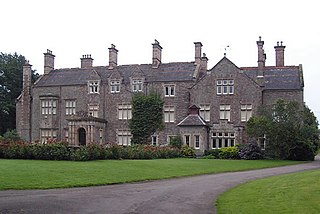
Cefn Tilla Court, Llandenny, Monmouthshire, Wales, is a country house dating from the mid-19th century. Its origins date from 1616. During the English Civil War, the court was the headquarters of Thomas Fairfax during the siege of Raglan Castle and the terms of the castle's surrender were signed at the house in 1646. By the early 19th century, the court was derelict. In 1856 it was sold by Crawshay Bailey to the Memorial Committee established to commemorate the life of FitzRoy Somerset, 1st Baron Raglan, British commander during the Crimean War. The house was completely rebuilt by Thomas Henry Wyatt and donated to Lord Raglan's heir, Richard Somerset as a memorial to his father. The house is a Grade II* listed building.

Monmouthshire is a county and principal area of Wales. It borders Torfaen and Newport to the west; Herefordshire and Gloucestershire to the east; and Powys to the north. The largest town is Abergavenny, with other large settlements being Chepstow, Monmouth, and Usk. The present county was formed under the Local Government (Wales) Act 1994, and comprises some sixty percent of the historic county. Between 1974 and 1996, the county was known by the ancient title of Gwent, recalling the medieval Welsh kingdom. The county is 850 km2 in extent, with a population of 95,200 as of 2020.
Monmouthshire is a county and principal area of Wales. It borders Torfaen and Newport to the west; Herefordshire and Gloucestershire to the east; and Powys to the north. The largest town is Abergavenny, with the other major towns being Chepstow, Monmouth, and Usk. The county is 850 km2 in extent, with a population of 95,200 as of 2020. The present county was formed under the Local Government (Wales) Act 1994, and comprises some sixty percent of the historic county. Between 1974 and 1996, the county was known by the ancient title of Gwent, recalling the medieval Welsh kingdom. In his essay on local government in the fifth and final volume of the Gwent County History, Robert McCloy suggests that the governance of "no county in the United Kingdom in the twentieth century was so transformed as that of Monmouthshire".

Little Pitt Cottage is a medieval house in Llanarth, Monmouthshire, South Wales. It was designated a Grade II* listed building in 1956, its listing record describing it as a "fine and exceptionally intact timber-framed house".

The Old Court, Llangattock Lingoed, Monmouthshire is a medieval hall house dating from the late 15th century, with additions from the 17th and 19th centuries. "Of unusual sophistication", it is a Grade II* listed building.

14 Beaufort Square in Chepstow, Monmouthshire, Wales, is a townhouse of medieval origins. The present building was mainly constructed in the early 19th century. It is a Grade II* listed building.

Trostrey Court House, Trostrey, Monmouthshire is a late 16th century gentry house. The current building replaced an earlier medieval court. The house played a role in the English Civil War when it was seized by the forces of Thomas Fairfax during the siege of Raglan Castle. In the 18th century the estate was sold to Valentine Morris, owner of nearby Piercefield House. In the 19th century the court was owned by the Fluyders, but let to tenant farmers. It remains a private house and working estate. The court is a Grade II* listed building.

Howick Farmhouse, in the hamlet of Howick, near Itton, Monmouthshire is a farmhouse dating from the mid-16th century. It is a Grade II* listed building. Its associated barns and stable block have their own Grade II listings.
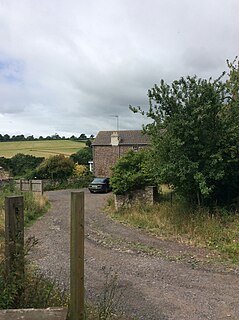
Newhouse Farmhouse, Llanvetherine, Monmouthshire is a farmhouse dating from the late-16th century. It is a Grade II* listed building. Its associated barns and stable block have their own Grade II listings.
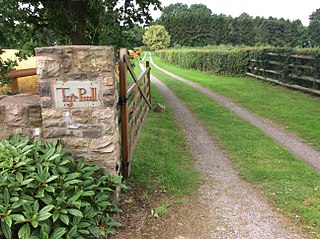
Pwll, Tregare, Monmouthshire is a medieval cruck-house dating from the late 14th century, with additions in the 17th century. An "extremely rare survival", the house was derelict by the mid-20th century, and was reconstructed in the mid-1990s. It is a Grade II* listed building.

The Cwm, Llantrisant, Monmouthshire is a farmhouse dating from the 16th century. Expanded in both the 17th and 18th centuries, The Cwm is a Grade II* listed building, its listing describing it as "a substantial farmhouse of distinctive T-plan".
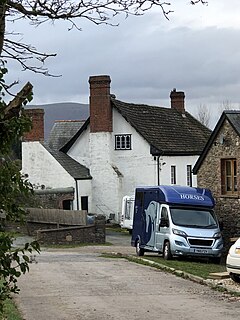
Wern-ddu farmhouse, Llantilio Pertholey, Monmouthshire is a farmhouse of 17th century origins. It has been significantly altered in the 18th, 19th and 20th centuries and the Monmouthshire antiquarian, Sir Joseph Bradney recorded that it had "suffered so much by continual alterations that it shows but little of its antiquity". It is a Grade II* listed building.

Blaengavenny Farmhouse, Llanvihangel Crucorney, Monmouthshire is a farmhouse of late medieval origins. It is a Grade II listed building. Its adjacent barn and granary have separate Grade II listings.

Chapel Farmhouse and its attached outbuilding, Llanarth, Monmouthshire is a house dating from the 16th century. Greatly enlarged in the 17th century, it remains a private house. It is a Grade II* listed building.
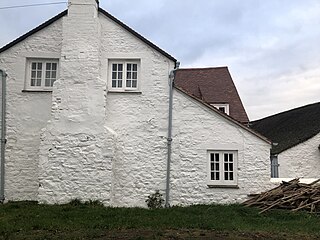
Pwllyrhwyad, Llanarth, Monmouthshire is a cottage dating from the 16th century with some later additions. It is a Grade II* listed building.

Lower Celliau,, Llangattock Lingoed, Monmouthshire is a farmhouse dating from the 16th century. It is a Grade II* listed building. The adjacent barn and shelter, and cowhouse and stable have their own Grade II listings.


