Related Research Articles

Arthur Robert Jensen was an American psychologist and writer. He was a professor of educational psychology at the University of California, Berkeley. Jensen was known for his work in psychometrics and differential psychology, the study of how and why individuals differ behaviorally from one another.
Discussions of race and intelligence – specifically, claims of differences in intelligence along racial lines – have appeared in both popular science and academic research since the modern concept of race was first introduced. With the inception of IQ testing in the early 20th century, differences in average test performance between racial groups were observed, though these differences have fluctuated and in many cases steadily decreased over time. Further complicating the issue, modern science has shown race to be a social construct rather than a biological reality, and intelligence has no undisputed definition. The validity of IQ testing as a metric for human intelligence is itself disputed. Today, the scientific consensus is that genetics does not explain differences in IQ test performance between groups, and that observed differences are environmental in origin.
Nature versus nurture is a long-standing debate in biology and society about the relative influence on human beings of their genetic inheritance (nature) and the environmental conditions of their development (nurture). The alliterative expression "nature and nurture" in English has been in use since at least the Elizabethan period and goes back to medieval French. The complementary combination of the two concepts is an ancient concept. Nature is what people think of as pre-wiring and is influenced by genetic inheritance and other biological factors. Nurture is generally taken as the influence of external factors after conception e.g. the product of exposure, experience and learning on an individual.
Biological determinism, also known as genetic determinism, is the belief that human behaviour is directly controlled by an individual's genes or some component of their physiology, generally at the expense of the role of the environment, whether in embryonic development or in learning. Genetic reductionism is a similar concept, but it is distinct from genetic determinism in that the former refers to the level of understanding, while the latter refers to the supposedly causal role of genes. Biological determinism has been associated with movements in science and society including eugenics, scientific racism, and the debates around the heritability of IQ, the basis of sexual orientation, and sociobiology.
Twin studies are studies conducted on identical or fraternal twins. They aim to reveal the importance of environmental and genetic influences for traits, phenotypes, and disorders. Twin research is considered a key tool in behavioral genetics and in related fields, from biology to psychology. Twin studies are part of the broader methodology used in behavior genetics, which uses all data that are genetically informative – siblings studies, adoption studies, pedigree, etc. These studies have been used to track traits ranging from personal behavior to the presentation of severe mental illnesses such as schizophrenia.
The Pioneer Fund is an American non-profit foundation established in 1937 "to advance the scientific study of heredity and human differences". The organization has been classified as a hate group and has been described as racist and white supremacist in nature. One of its first projects was to fund the distribution in US churches and schools of Erbkrank, a Nazi propaganda film about eugenics.
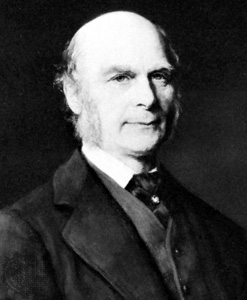
Human behaviour genetics is an interdisciplinary subfield of behaviour genetics that studies the role of genetic and environmental influences on human behaviour. Classically, human behavioural geneticists have studied the inheritance of behavioural traits. The field was originally focused on determining the importance of genetic influences on human behaviour. It has evolved to address more complex questions such as: how important are genetic and/or environmental influences on various human behavioural traits; to what extent do the same genetic and/or environmental influences impact the overlap between human behavioural traits; how do genetic and/or environmental influences on behaviour change across development; and what environmental factors moderate the importance of genetic effects on human behaviour. The field is interdisciplinary, and draws from genetics, psychology, and statistics. Most recently, the field has moved into the area of statistical genetics, with many behavioural geneticists also involved in efforts to identify the specific genes involved in human behaviour, and to understand how the effects associated with these genes changes across time, and in conjunction with the environment.
Hereditarianism is the doctrine or school of thought that heredity plays a significant role in determining human nature and character traits, such as intelligence and personality. Hereditarians believe in the power of genetics to explain human character traits and solve human social and political problems. Hereditarians adopt the view that an understanding of human evolution can extend the understanding of human nature.
Thomas J. Bouchard Jr. is an American psychologist known for his behavioral genetics studies of twins raised apart. He is professor emeritus of psychology and director of the Minnesota Center for Twin and Adoption Research at the University of Minnesota. Bouchard received his PhD from the University of California, Berkeley in 1966.
The Minnesota Center for Twin and Family Research is a series of behavioral genetic longitudinal studies of families with twin or adoptive offspring conducted by researchers at the University of Minnesota. It seeks to identify and characterize the genetic and environmental influences on the development of psychological traits.
Research on the heritability of IQ inquires into the degree of variation in IQ within a population that is due to genetic variation between individuals in that population. There has been significant controversy in the academic community about the heritability of IQ since research on the issue began in the late nineteenth century. Intelligence in the normal range is a polygenic trait, meaning that it is influenced by more than one gene, and in the case of intelligence at least 500 genes. Further, explaining the similarity in IQ of closely related persons requires careful study because environmental factors may be correlated with genetic factors.

"Mainstream Science on Intelligence" was a public statement issued by a group of researchers led by psychologist Linda Gottfredson. It was published originally in The Wall Street Journal on December 13, 1994, as a response to criticism of the book The Bell Curve by Richard Herrnstein and Charles Murray, which appeared earlier the same year. The statement defended Herrnstein and Murray's controversial claims about race and intelligence, including the claim that average intelligence quotient (IQ) differences between racial and ethnic groups may be at least partly genetic in origin. This view is now considered discredited by mainstream science.

Robert Joseph Plomin is an American/British psychologist and geneticist best known for his work in twin studies and behavior genetics. A Review of General Psychology survey, published in 2002, ranked Plomin as the 71st most cited psychologist of the 20th century. He is the author of several books on genetics and psychology.

Nancy L. Segal is an American evolutionary psychologist and behavioral geneticist, specializing in the study of twins. She is the Professor of Developmental Psychology and Director of the Twin Studies Center, at California State University, Fullerton. Segal was a recipient of the 2005 James Shields Award for Lifetime Contributions to Twin Research from the Behavior Genetics Association and International Society for Twin Studies.

Irving Isadore Gottesman was an American professor of psychology who devoted most of his career to the study of the genetics of schizophrenia. He wrote 17 books and more than 290 other publications, mostly on schizophrenia and behavioral genetics, and created the first academic program on behavioral genetics in the United States. He won awards such as the Hofheimer Prize for Research, the highest award from the American Psychiatric Association for psychiatric research. Lastly, Gottesman was a professor in the psychology department at the University of Minnesota, where he received his Ph.D.
Behavioural genetics, also referred to as behaviour genetics, is a field of scientific research that uses genetic methods to investigate the nature and origins of individual differences in behaviour. While the name "behavioural genetics" connotes a focus on genetic influences, the field broadly investigates the extent to which genetic and environmental factors influence individual differences, and the development of research designs that can remove the confounding of genes and environment. Behavioural genetics was founded as a scientific discipline by Francis Galton in the late 19th century, only to be discredited through association with eugenics movements before and during World War II. In the latter half of the 20th century, the field saw renewed prominence with research on inheritance of behaviour and mental illness in humans, as well as research on genetically informative model organisms through selective breeding and crosses. In the late 20th and early 21st centuries, technological advances in molecular genetics made it possible to measure and modify the genome directly. This led to major advances in model organism research and in human studies, leading to new scientific discoveries.
Adoption studies are one of the classic research methods of behavioral genetics. The method is used alongside twin studies to identify the roles of genetic and environmental variables.
Barbara Stoddard Burks was an American psychologist known for her research on the nature-nurture debate as it pertained to intelligence and other human traits. She has been credited with "...pioneer[ing] the statistical techniques which continue to ground the trenchant nature/nurture debates about intelligence in American psychology."
Wendy Johnson is an American differential psychologist and professor of psychology at the University of Edinburgh. She holds the chair in Differential Development in the Department of Psychology and Centre for Cognitive Ageing and Cognitive Epidemiology at the University of Edinburgh.
Howard Francis Taylor is an American sociologist and Professor of Sociology Emeritus at Princeton University, where he was formerly the director of the African-American Studies program. He is known for his 1980 book The IQ Game, in which he reanalyzed data from several previous reared-apart twin studies of the heritability of IQ. The book concluded, controversially, that the influence of genes on individual differences in IQ scores was small.
References
- ↑ "Rose, Richard J., 1935-". Library of Congress Name Authority File. Retrieved 2018-10-06.
- ↑ Segal, Nancy L. (2012-06-18). Born Together—Reared Apart: The Landmark Minnesota Twin Study. Harvard University Press. p. 355. ISBN 9780674065154.
- ↑ "Richard J. Rose Biography" (PDF). University of Oulu. Retrieved 2018-10-05.
- ↑ "Historical table of BGA Meetings". Behavior Genetics Association. Retrieved 2018-10-05.
- ↑ "Teen drinking predicts adult alcoholism". Futurity. 2011-02-16. Retrieved 2018-10-05.
- ↑ "New light on genes and IQ from twin studies". New Scientist. Reed Business Information. 1979-09-20. p. 868. Retrieved 2018-10-05.
- ↑ Chen, Edwin (1979-12-09). "TWINS REARED APART: A LIVING LAB". The New York Times. Retrieved 2018-10-05.
- ↑ "Rose receives honorary doctorate". PsychNotes. 2009. Retrieved 2018-10-05.


