Related Research Articles
Anti-psychiatry, sometimes spelled antipsychiatry, is a movement based on the view that psychiatric treatment can be often more damaging than helpful to patients. The term anti-psychiatry was coined in 1912, and the movement emerged in the 1960s, highlighting controversies about psychiatry. Objections include the reliability of psychiatric diagnosis, the questionable effectiveness and harm associated with psychiatric medications, the failure of psychiatry to demonstrate any disease treatment mechanism for psychiatric medication effects, and legal concerns about equal human rights and civil freedom being nullified by the presence of diagnosis. Historical critiques of psychiatry came to light after focus on the extreme harms associated with electroconvulsive therapy and insulin shock therapy. The term "anti-psychiatry" is in dispute and often used to dismiss all critics of psychiatry, many of whom agree that a specialized role of helper for people in emotional distress may at times be appropriate, and allow for individual choice around treatment decisions.
Edwin Fuller Torrey, is an American psychiatrist and schizophrenia researcher. He is associate director of research at the Stanley Medical Research Institute (SMRI) and founder of the Treatment Advocacy Center (TAC), a nonprofit organization whose principal activity is promoting the passage and implementation of outpatient commitment laws and civil commitment laws and standards in individual states that allow people diagnosed with severe mental illness to be involuntarily hospitalized and treated throughout the United States.
Biological psychiatry or biopsychiatry is an approach to psychiatry that aims to understand mental disorder in terms of the biological function of the nervous system. It is interdisciplinary in its approach and draws on sciences such as neuroscience, psychopharmacology, biochemistry, genetics, epigenetics and physiology to investigate the biological bases of behavior and psychopathology. Biopsychiatry is the branch of medicine which deals with the study of the biological function of the nervous system in mental disorders.

Insulin shock therapy or insulin coma therapy was a form of psychiatric treatment in which patients were repeatedly injected with large doses of insulin in order to produce daily comas over several weeks. It was introduced in 1927 by Austrian-American psychiatrist Manfred Sakel and used extensively in the 1940s and 1950s, mainly for schizophrenia, before falling out of favour and being replaced by neuroleptic drugs in the 1960s.

Robert Whitaker is an American journalist and author, writing primarily about medicine, science, and history. He is the author of five books, three of which cover the history or practice of modern psychiatry. He has won numerous awards for science writing, and in 1998 he was part of a team writing for the Boston Globe that was shortlisted for the 1999 Pulitzer Prize for Public Service for a series of articles questioning the ethics of psychiatric research in which unsuspecting patients were given drugs expected to heighten their psychosis. He is the founder and publisher of Mad in America, a webzine critical of the modern psychiatric establishment.

Heinz Edgar Lehmann was a German-born Canadian psychiatrist best known for his use of chlorpromazine for the treatment of schizophrenia in 1950s and "truly the father of modern psychopharmacology."
Loren Richard Mosher was an American psychiatrist, clinical professor of psychiatry, expert on schizophrenia and the chief of the Center for Studies of Schizophrenia in the National Institute of Mental Health (1968–1980). Mosher spent his professional career advocating for humane and effective treatment for people diagnosed as having schizophrenia and was instrumental in developing an innovative, residential, home-like, non-hospital, non-drug treatment model for newly identified acutely psychotic persons.

Psychiatry is the medical specialty devoted to the diagnosis, prevention, and treatment of deleterious mental conditions. These include various matters related to mood, behaviour, cognition, perceptions, and emotions.
This is a timeline of the modern development of psychiatry. Related information can be found in the Timeline of psychology and Timeline of psychotherapy articles.

Jean Delay was a French psychiatrist, neurologist, writer, and a member of the Académie française.
The Critical Psychiatry Network (CPN) is a psychiatric organization based in the United Kingdom. It was created by a group of British psychiatrists who met in Bradford, England in January 1999 in response to proposals by the British government to amend the Mental Health Act 1983. They expressed concern about the implications of the proposed changes for human rights and the civil liberties of people with mental health illness. Most people associated with the group are practicing consultant psychiatrists in the United Kingdom's National Health Service (NHS), among them Dr Joanna Moncrieff. A number of non-consultant grade and trainee psychiatrists are also involved in the network.

Jeffrey Alan Lieberman is an American psychiatrist who specializes in schizophrenia and related psychoses and their associated neuroscience (biology) and pharmacological treatment. He was principal investigator for CATIE, the largest and longest independent study ever funded by the United States National Institute of Mental Health to examine existing pharmacotherapies for schizophrenia. He was president of the American Psychiatric Association from May 2013 to May 2014.

Honorio Delgado Espinosa was a gifted teacher, a creative researcher, a humanist, a philosopher, a linguist, and scholar whose work covered almost 50 years of the 20th-century history of Latin American psychiatry. Born in Arequipa, Peru, Delgado graduated from Lima's School of Psychology at the National University of San Marcos.

The lunatic asylum, insane asylum or mental asylum was an institution where people with mental illness were confined. It was an early precursor of the modern psychiatric hospital.
Henry Brill was an American psychiatrist and educator. A native of Bridgeport, Connecticut, he earned both his undergraduate and medical degrees from Yale University. After receiving his M.D. in 1932, he began a career in the New York state psychiatric system, culminating in the directorship of Pilgrim Psychiatric Center in Brentwood, NY from 1958 to 1976. At its height in the mid-1950s, Pilgrim was the largest mental institution in the world, with a census of 13,875 patients. Brill also served as Deputy Commissioner of the New York State Department of Mental Hygiene from 1959 to 1964.

David William Oaks is a civil rights activist and co-founder and former executive director of Eugene, Oregon-based MindFreedom International.
Psychiatry is, and has historically been, viewed as controversial by those under its care, as well as sociologists and psychiatrists themselves. There are a variety of reasons cited for this controversy, including the subjectivity of diagnosis, the use of diagnosis and treatment for social and political control including detaining citizens and treating them without consent, the side effects of treatments such as electroconvulsive therapy, antipsychotics and historical procedures like the lobotomy and other forms of psychosurgery or insulin shock therapy, and the history of racism within the profession in the United States.
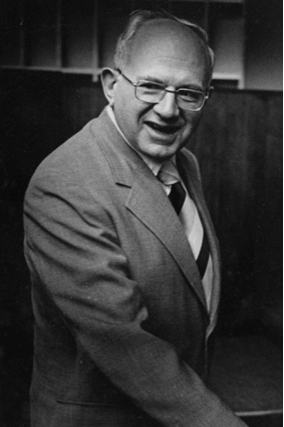
Albert Kurland was a psychiatrist and neuropsychopharmacologist at the Spring Grove State Hospital and the Maryland State Psychiatric Research Center. He was also affiliated with Johns Hopkins University as a research professor. He was a prolific researcher, conducting many studies on anti-psychotics, completing early research on the treatment of alcoholics using psychedelics, and making integral contributions to the research unit at the Spring Grove State Hospital.
Irvin M. Cohen, M.D. (1922–2019) was a psychiatrist specializing in psychopharmacology, recognized for his role in the early use of chlorpromazine in the treatment of schizophrenia, the development of the first benzodiazepine (Librium) treatments in depressive patients, and in the adoption of lithium to treat bipolar disorder.

Thomas A. Ban was a Hungarian-born Canadian psychiatrist, psychopharmacologist, academic, researcher and theorist.
References
- 1 2 3 4 "Psychiatrist Ruth Kajander was a pioneer in schizophrenia treatment". The Globe and Mail. 2019-11-24. Retrieved 2023-04-27.
- ↑ "Ruth KAJANDER Obituary (1924 - 2019) - Legacy Remembers". Legacy.com. Retrieved 2023-04-27.
- ↑ "John Griffith's 1993 Letter to the Editor, "A Historical Oversight"". inhn.org. Retrieved 2023-05-02.
- ↑ Stip, Emmanuel (March 2015). "Who Pioneered the Use of Antipsychotics in North America?". Canadian Journal of Psychiatry. Revue Canadienne de Psychiatrie. 60 (3 Suppl 2): S5–S13. ISSN 0706-7437. PMC 4418623 . PMID 25886681.
- ↑ Wasylenki, Donald; Court, John PM; Ostaff, Katherine (2008). A Century of Learning, A Century of Caring: Department of Psychiatry Centenary History, 1907 – 2007. University of Toronto Department of Psychiatry.
- ↑ "Too Much Pop Psychology, Not Enough Science in Serious Mental Illness". HuffPost. 2011-07-06. Retrieved 2023-05-02.