
Leet, also known as eleet or leetspeak, is a system of modified spellings used primarily on the Internet. It often uses character replacements in ways that play on the similarity of their glyphs via reflection or other resemblance. Additionally, it modifies certain words based on a system of suffixes and alternate meanings. There are many dialects or linguistic varieties in different online communities.

Wednesday is the day of the week between Tuesday and Thursday. According to international standard ISO 8601, it is the third day of the week. In countries which have Friday as their holiday, Wednesday is the fifth day of the week. In countries which use the Sunday-first convention, and in both the Islamic and Jewish calendars, Wednesday is the fourth day of the week.
In linguistics, a calque or loan translation is a word or phrase borrowed from another language by literal word-for-word or root-for-root translation. When used as a verb, "to calque" means to borrow a word or phrase from another language while translating its components, so as to create a new lexeme in the target language. For instance, the English word "skyscraper" led to calques in dozens of other languages. Another notable example is the Latin weekday names, which came to be associated by ancient Germanic speakers with their own gods following a practice known as interpretatio germanica: the Latin "Day of Mercury", Mercurii dies, was borrowed into Late Proto-Germanic as the "Day of Wōđanaz" (*Wodanesdag), which became Wōdnesdæg in Old English, then "Wednesday" in Modern English.
Bey is a Turkic title for a chieftain, and an honorific, traditionally applied to people with special lineages to the leaders or rulers of variously sized areas in the numerous Turkic kingdoms, emirates, sultanates and empires in Central Asia, South Asia, and The Middle East, such as the Ottomans, Timurids or the various khanates and emirates in Central Asia and the Eurasian Steppe. The feminine equivalent title was begum. The regions or provinces where "beys" ruled or which they administered were called beylik, roughly meaning "governorate" and/or "region". However the exact scope of power handed to the beks varied with each country, thus there was no clear-cut system, rigidly applied to all countries defining all the possible power and prestige that came along with the title.
This glossary of names for the British include nicknames and terms, including affectionate ones, neutral ones, and derogatory ones to describe British people, and more specifically English, Welsh, Scottish and Northern Irish people. Many of these terms may vary between offensive, derogatory, neutral and affectionate depending on a complex combination of tone, facial expression, context, usage, speaker and shared past history.

Lox is a fillet of brined salmon, that may or may not be smoked. Lox is frequently served on a bagel with cream cheese, and often garnished with tomato, sliced onion, cucumbers, and capers.
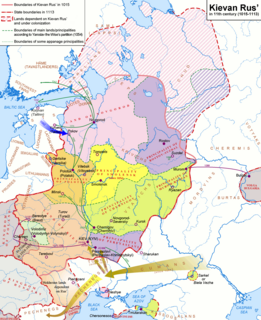
Chud or Chude is a term historically applied in the early East Slavic annals to several Baltic Finns in the area of what is now Estonia, Karelia and Northwestern Russia.

The Siebengebirge(German pronunciation ), occasionally Sieben Mountains or Seven Mountains, are a hill range of the German Central Uplands on the east bank of the Middle Rhine, southeast of Bonn.

The replacing of loanwords in Turkish is part of a policy of Turkification of Atatürk. The Ottoman Turkish language had many loanwords from Arabic and Persian, but also European languages such as French, Greek, and Italian origin—which were officially replaced with their Turkish counterparts suggested by the Turkish Language Association as a part of the cultural reforms—in the broader framework of Atatürk's Reforms—following the foundation of the Republic of Turkey.
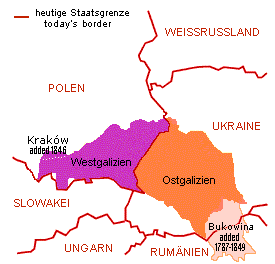
Eastern Galicia is a geographical region in Western Ukraine, having also essential historic importance in Poland.
Sri Lanka, officially the Democratic Socialist Republic of Sri Lanka, is an island country in the northern Indian Ocean which has been known under various names over time.
Kothar-wa-Khasis is an Ugaritic god whose name means "Skillful-and-Wise" or "Adroit-and-Perceptive" or "Deft-and-Clever". Another of his names, Hayyan hrs yd means "Deft-with-both-hands" or "of skillful hands. Kothar is smith, craftsman, engineer, architect, and inventor. He is also a soothsayer and magician, creating sacred words and incantations, in part because there is an association in many cultures of metalworking deities with magic. The divine name Ka-sha-lu in texts from Ebla suggests that he was known in Syria as early as the late third millennium BCE.
Charu is a word derived from Sanskrit that refers to something beautiful, graceful and pure in a spiritual sense.
Dara is a given name used for both males and females, with more than one origin. Dara is found in the Bible's Old Testament Books of Chronicles. Dara [דרע] was a descendant of Judah. . Dara was one of four men noted for great wisdom, but exceeded by King Solomon. In Persian Dara is a masculine name and a variant of Darius. In contemporary Persian, it means "rich", "well-off" and "well-to-do". In Hebrew Dara means compassion or pearl of wisdom. In Urdu, the name is given to baby boys and its meaning is "Possessor" or "sovereign" and "Halo"(of the moon). It can also mean "sovereign" or "lord", a meaning shared with the Sikh language. In Parsi, Dara means "Bell" or "Pendant"
The Darzi caste are a community of Hindus and Muslims, both found in India and Pakistan. A small number are also found in the Terai region of Nepal. Darzi means tailor. They are also known as Kshatriya Darji in Hindus and Idrisi in Muslim Community. The Darzi or Darji are a community of tailors, numbering around more than 73548009 people in India. Darzi are largely a landless or less land community whose main occupation is tailoring. The profession of tailoring is being done by both communities. In the Hindu community, the Darzi are known as Hindu Darzi who have mainly Gotras of Kshatriya varna. In the Muslim community, the Darzi caste is also known as Idrisi. The Idrisi community of Uttar Pradesh are those Turkic Muslim tribes of the 13th century who were settled in Delhi and different states of India. These castes are enlisted in central and state caste lists for Other Backward Class (OBC) in India.

Alu chat is a street food originating from the Indian subcontinent, it is popular in North India, West Bengal in Eastern India, Pakistan, parts of Sylhet Division of Bangladesh and Trinidad and Tobago. It is prepared by frying potatoes in oil and adding spices and chutney. It can also be prepared with unfried boiled potatoes and also adding fruits along with spices, lime juice and chutney.

