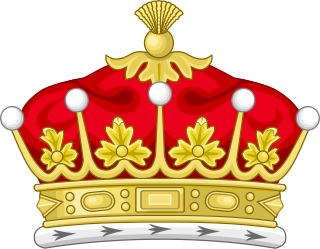
Earl of Chichester is a title that has been created three times, twice in the Peerage of England and once in the Peerage of the United Kingdom. The current title was created in the Peerage of the United Kingdom in 1801 for Thomas Pelham, 2nd Baron Pelham of Stanmer.
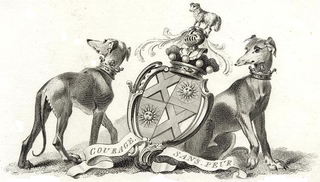
Viscount Gage, of Castle Island in the County of Kerry of the Kingdom of Ireland, is a title in the Peerage of Ireland. It was created in 1720 for Thomas Gage, along with the subsidiary title of Baron Gage, of Castlebar in the County of Mayo, also in the Peerage of Ireland. In 1744 he also succeeded his cousin as eighth Baronet, of Firle Place. The titles remain united. The Gage family descends from John Gage, who was created a baronet, of Firle Place in the County of Sussex, in the Baronetage of England on 26 March 1622. His great-grandson, the seventh Baronet, represented Seaford in Parliament. He was succeeded by his first cousin, Thomas Gage, 1st Viscount Gage, the eighth Baronet. He sat as a Member of Parliament for Minehead and Tewkesbury and also served as Governor of Barbados. In 1720, 24 years before succeeding in the baronetcy, he was raised to the Peerage of Ireland as Baron Gage and Viscount Gage. His second son was the military commander the Hon. Thomas Gage.

There have been three baronetcies created for members of the Bacon family, all in the Baronetage of England. As of 2008, one creation is extinct and two of the creations are extant. The extant titles have been merged since 1755.
There have been 19 baronetcies created for persons with the surname Campbell, seven in the Baronetage of Nova Scotia and twelve in the Baronetage of the United Kingdom.
There have been five baronetcies created for persons with the surname Clarke, two in the Baronetage of England and three in the Baronetage of the United Kingdom. Two of the creations are extant as of 2010.

There have been ten baronetcies created for persons with the surname Browne, six in the Baronetage of Great Britain, three in the Baronetage of Ireland and one in the Baronetage of Nova Scotia. Only one creation is extant as of 2010. Three of the creations were for members of the Browne family headed by the Viscount Montagu.
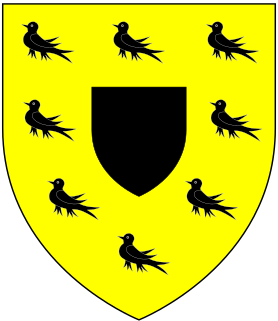
Viscount Tyrconnel was a title in the Peerage of Ireland. It was created in 1718 for Sir John Brownlow, 5th Baronet, Member of Parliament for Grantham and Lincolnshire. He was made Baron Charleville, in the County of Cork, at the same time, also in the Peerage of Ireland. The Brownlow Baronetcy, of Humby in the County of Lincoln, was created in the Baronetage of England on 27 July 1641 for William Brownlow. His grandson, the third Baronet, represented Grantham in Parliament. The latter had no surviving male issue and was succeeded by his younger brother, the fourth Baronet. He sat as Member of Parliament for Peterborough and Bishop's Castle. He was succeeded by his son, the aforementioned fifth Baronet, who was elevated to the Peerage of Ireland as Viscount Tyrconnel. The three titles became extinct on Lord Tyrconnel's death in 1754. The Brownlow estates were passed on to the late Viscount's nephew, Sir John Cust, 3rd Baronet, whose son was created Baron Brownlow in 1776.

There have been two baronetcies created for members of the Knightley family, one in the Baronetage of England and one in the Baronetage of Great Britain. Both creations are extinct. The Knightley family originated at the Staffordshire manor of Knightley, acquired by them shortly after the Norman Conquest of 1066. In 1415 Sir Richard Knightley purchased the manor of Fawsley in Northamptonshire, where the senior line of the family became seated.
There have been ten baronetcies created for persons with the surname Mackenzie, seven in the Baronetage of Nova Scotia and three in the Baronetage of the United Kingdom. Four of the creations are extant as of 2010.
There have been four baronetcies for persons with the surname Blake, one in the Baronetage of Ireland, two in the Baronetage of Great Britain and one in the Baronetage of the United Kingdom. Two of the creations are extant as of 2010. The Blake Baronetcy, of Menlough in the County of Galway, was created in the Baronetage of Ireland on 10 July 1622 for Valentine Blake, Mayor of Galway in 1611 and 1630 and a member of the Irish House of Commons for Galway. His grandfather Thomas Blake had preceded him as Mayor. The second Baronet was a member of the Irish Parliament for Galway Borough. The third Baronet represented both County Galway and Galway Borough in Parliament. The sixth Baronet was a member of the Irish House of Commons for County Galway. He was the first Catholic gentlemen of distinction to join William of Orange. The twelfth Baronet represented Galway Borough in the British House of Commons. The fourteenth Baronet was high sheriff of County Galway in 1872. See also the Blake Baronetcy of Twizell Castle below.

Sir William Strickland, 4th Baronet, of Boynton, East Riding of Yorkshire, was an English landowner and Whig politician, who sat in the House of Commons from 1708 to 1735. He was a Government Minister in Sir Robert Walpole's administration.
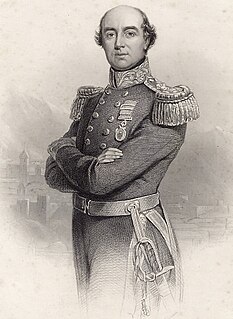
There have been twenty baronetcies created for persons with the surname Williams, eight in the Baronetage of England, three in the Baronetage of Great Britain and nine in the Baronetage of the United Kingdom. Only five of the creations are extant as of 2017..
There have been eight baronetcies created for persons with the surname Graham, two in the Baronetage of Nova Scotia, two in the Baronetage of England, one in the Baronetage of Great Britain and three in the Baronetage of the United Kingdom.
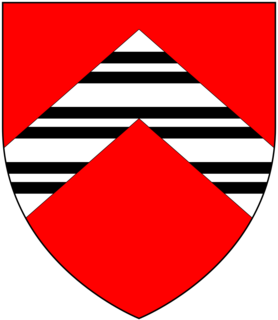
There have been two baronetcies created for different branches of the Throckmorton family, 6th cousins, both descended from Sir John Throckmorton, Under-Treasurer of England temp. King Henry VI (1422–1461). Both titles, which were in the Baronetage of England, are now extinct. The Throckmortons, originally of Throckmorton near Pershore, Worcestershire, trace their history back to the 12th century. In 1409 Sir John de Throckmorton, Under-Treasurer of England, married Eleanor Spinney, daughter and heiress of Guy Spinney of Coughton, Warwickshire, where the senior branch of the family, which bore the junior baronetcy, became established. The Coughton estate included in 1968 a dower house named "Spiney House, Coughton", named after that family. Both branches were mostly determined Roman Catholics and members of the senior line were involved in or connected with pre-reformation plots and conspiracies including the Throckmorton Plot of 1583 and the Gunpowder Plot of 1605.
There have been four baronetcies created for persons with the surname Musgrave, one in the Baronetage of England, one in the Baronetage of Nova Scotia, one in the Baronetage of Ireland and one in the Baronetage of the United Kingdom. As of 2014 two of the creations are extant.
There have been three baronetcies created for persons with the surname Foulis, one in the Baronetage of England and two in the Baronetage of Nova Scotia.

There have been two baronetcies created for members of the Barnardiston family, both in the Baronetage of England. Both creations are extinct.
John Sambrooke (c.1692–1734) was a British a merchant and politician who sat in the House of Commons from 1726 to 1734.
Sir Jeremy Sambrooke, 4th Baronet of Bush Hill, Enfield, Middlesex, was a British landowner and Tory politician who sat in the House of Commons from 1731 to 1740.
Sir Humphrey Monoux, 4th Baronet of Wootton House, Bedfordshire, was a British landowner and Tory politician who sat in the House of Commons from 1728 to 1741
