This article is being considered for deletion in accordance with Wikipedia's deletion policy. Please share your thoughts on the matter at this article's entry on the Articles for deletion page. Feel free to improve the article, but the article must not be blanked, and this notice must not be removed, until the discussion is closed. For more information, particularly on merging or moving the article during the discussion, read the guide to deletion. |
| |
| Established | 1972 |
|---|---|
| Location | |
Director | Fr. Christian Perera, SJ |
Education | Malkanthi Herath |
Sponsor | Sri Lanka Jesuits |
Main organ | Satyodaya Newsletter |
| Affiliations | Jesuit, Catholic |
| Website | Satyodaya |
Satyodaya Centre for Social Research and Encounter was founded by the Jesuits and local diocese in 1972, for the socioeconomic development of peoples residing in the plantation areas of Central and Sabaragamuwa provinces of Sri Lanka. [1]
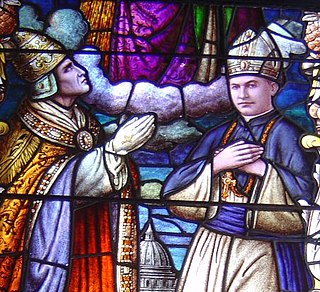
The word diocese is derived from the Greek term dioikesis (διοίκησις) meaning "administration". Today, when used in an ecclesiastical sense, it refers to the ecclesiastical district under the jurisdiction of a bishop.
The Central Province is one of the nine provinces of Sri Lanka, the first level administrative division of the country. The Central Province is primarily in the central mountainous terrain of Sri Lanka. It is the 6th largest province by area and is home to 2.5 million people. It is bordered by North Central Province to the north, Uva Province to the east, North Western Province to the west and Sabaragamuwa Province to the south and west. The province's capital is Kandy.
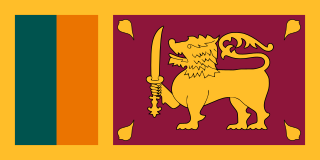
Sri Lanka, officially the Democratic Socialist Republic of Sri Lanka, is an island country in South Asia, located in the Indian Ocean to the southwest of the Bay of Bengal and to the southeast of the Arabian Sea. The island is historically and culturally intertwined with the Indian subcontinent, but is geographically separated from the Indian subcontinent by the Gulf of Mannar and the Palk Strait. The legislative capital, Sri Jayawardenepura Kotte, is a suburb of the commercial capital and largest city, Colombo.
Satyodaya was founded in 1972 by Bishop Leo Nanayakkara, O.S.B., a social activist, [2] and Fr. Paul Caspersz, S.J., [3] an Oxford-trained researcher. They were determined to improve the living standards and secure the rights of the most impoverished peasants and plantation workers in Sri Lanka. It was a time of economic and political turmoil worldwide and progressive reforms were being implemented in Sri Lanka with the nationalization of land and of private schools. [4] In 1974 Satyodaya spawned the Coordinating Secretariat for Plantation Areas (CSPA) in Kandy, and in 1979 Fr. Paul founded the Movement for Inter Racial Justice and Equality (MIRJE). [5]
A bishop is an ordained, consecrated, or appointed member of the Christian clergy who is generally entrusted with a position of authority and oversight.
The Society of Jesus is a scholarly religious congregation of the Catholic Church which originated in sixteenth-century Spain. The members are called Jesuits. The society is engaged in evangelization and apostolic ministry in 112 nations. Jesuits work in education, intellectual research, and cultural pursuits. Jesuits also give retreats, minister in hospitals and parishes, sponsor direct social ministries, and promote ecumenical dialogue.
In devising programs Satyodaya relies on requests from communities, workshops, discussion within the Society of Jesus, and availability of funds. Programs are focused mainly on plantations and adjacent villages. The following areas are included: socio-economic research, training, social mobilization, educational development as well as development on behalf of women and children, environmentally sustainable agriculture, nutrition, and health. [6]
Satyodaya can accommodate 65 in its fully equipped conference hall. It has housing for 32, two to a room, plus a 15-bed dormitory. The library contains 20,000 volumes besides periodicals and research papers. [7]
Satyodaya Newsletter is published quarterly. Books published by the Centre range over a host of topics: The Privatization of the Plantations; Impact of Time and Environment upon Students in Plantation Area Secondary Schools in the districts of Nuwara Eliya and Kandy; Child Labour (on Sri Lanka plantations); Sri Lanka Repatriates in South India; Youth and Development;A Socio-economic Perspective of the Plantation Community in Sri Lanka; New Electoral System for Local Government, proposals; Plantation Sector and the Peace Process; The Peace Process; Dreamboats: Short Stories from the Sri Lankan Plantation; Alcoholism in the Sri Lankan Plantation Community; A New Culture for a New Society. [8]
Coordinates: 7°17′35.49″N80°37′45.94″E / 7.2931917°N 80.6294278°E

A geographic coordinate system is a coordinate system that enables every location on Earth to be specified by a set of numbers, letters or symbols. The coordinates are often chosen such that one of the numbers represents a vertical position and two or three of the numbers represent a horizontal position; alternatively, a geographic position may be expressed in a combined three-dimensional Cartesian vector. A common choice of coordinates is latitude, longitude and elevation. To specify a location on a plane requires a map projection.