Related Research Articles
A currency is a standardization of money in any form, in use or circulation as a medium of exchange, for example banknotes and coins. A more general definition is that a currency is a system of money in common use within a specific environment over time, especially for people in a nation state. Under this definition, the British Pound sterling (£), euros (€), Japanese yen (¥), and U.S. dollars (US$) are examples of (government-issued) fiat currencies. Currencies may act as stores of value and be traded between nations in foreign exchange markets, which determine the relative values of the different currencies. Currencies in this sense are either chosen by users or decreed by governments, and each type has limited boundaries of acceptance; i.e., legal tender laws may require a particular unit of account for payments to government agencies.

Numismatics is the study or collection of currency, including coins, tokens, paper money, medals and related objects.

An automated teller machine (ATM) is an electronic telecommunications device that enables customers of financial institutions to perform financial transactions, such as cash withdrawals, deposits, funds transfers, balance inquiries or account information inquiries, at any time and without the need for direct interaction with bank staff.

In economics, cash is money in the physical form of currency, such as banknotes and coins.
In software engineering, the composite pattern is a partitioning design pattern. The composite pattern describes a group of objects that are treated the same way as a single instance of the same type of object. The intent of a composite is to "compose" objects into tree structures to represent part-whole hierarchies. Implementing the composite pattern lets clients treat individual objects and compositions uniformly.
A virtual economy is an emergent economy existing in a virtual world, usually exchanging virtual goods in the context of an online game, particularly in massively multiplayer online games (MMOs). People enter these virtual economies for recreation and entertainment rather than necessity, which means that virtual economies lack the aspects of a real economy that are not considered to be "fun". However, some people do interact with virtual economies for "real" economic benefit.

A banknote—also called a bill, paper money, or simply a note—is a type of negotiable promissory note, made by a bank or other licensed authority, payable to the bearer on demand. Banknotes were originally issued by commercial banks, which were legally required to redeem the notes for legal tender when presented to the chief cashier of the originating bank. These commercial banknotes only traded at face value in the market served by the issuing bank. Commercial banknotes have primarily been replaced by national banknotes issued by central banks or monetary authorities.

Cheating generally describes various actions designed to subvert rules in order to obtain unfair advantages. This includes acts of bribery, cronyism and nepotism in any situation where individuals are given preference using inappropriate criteria. The rules infringed may be explicit, or they may be from an unwritten code of conduct based on morality, ethics or custom, making the identification of cheating conduct a potentially subjective process. Cheating can refer specifically to infidelity. Someone who is known for cheating is referred to as a cheat in British English, and a cheater in American English.
Wire transfer, bank transfer, or credit transfer, is a method of electronic funds transfer from one person or entity to another. A wire transfer can be made from one bank account to another bank account, or through a transfer of cash at a cash office.
A currency detector or currency validator is a device that determines whether notes or coins are genuine or counterfeit. These devices are used in a wide range of automated machines, such as retail kiosks, supermarket self checkout machines, arcade gaming machines, payphones, launderette washing machines, car park ticket machines, automatic fare collection machines, public transport ticket machines, and vending machines.
Payment cards are part of a payment system issued by financial institutions, such as a bank, to a customer that enables its owner to access the funds in the customer's designated bank accounts, or through a credit account and make payments by electronic transfer with a payment terminal and access automated teller machines (ATMs). Such cards are known by a variety of names, including bank cards, ATM cards, client cards, key cards or cash cards.

Outpost Gallifrey was a fan website for the British science fiction television series Doctor Who. It was active as a complete fansite from 1995 until 2007, then existing solely as a portal to the still-active parts of the site, including its news page and forums until 31 July 2009.
A stock market simulator is computer software that reproduces behavior and features of a stock market, so that a user may practice trading stocks without financial risk. Paper trading, sometimes also called "virtual stock trading", is a simulated trading process in which would-be investors can practice investing without committing money.

Money is any item or verifiable record that is generally accepted as payment for goods and services and repayment of debts, such as taxes, in a particular country or socio-economic context. The primary functions which distinguish money are: medium of exchange, a unit of account, a store of value and sometimes, a standard of deferred payment.
In monetary economics, redenomination is the process of changing the face value of banknotes and coins in circulation. It may be done because inflation has made the currency unit so small that only large denominations of the currency are in circulation. In such cases the name of the currency may change or the original name may be used with a temporary qualifier such as "new". Redenomination may be done for other reasons such as changing over to a new currency such as the Euro or during decimalisation.

A specimen banknote is printed generally in very limited quantities for distribution to central banks to aid in the recognition of banknotes from a country other than their own. In some cases, specimen banknotes are printed in less limited quantities distributed to commercial banks, or even to commercial enterprises and the public at large in order to familiarize users about new designs. In addition, specimen banknotes are sold in some countries to collectors. They have also been distributed by banknote printers as examples of their craftsmanship. Occasionally, specimen banknotes are distributed as gifts to dignitaries or to employees of central banks, often in special presentation albums.
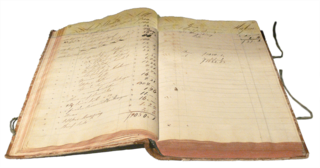
In financial accounting, an asset is any resource owned or controlled by a business or an economic entity. It is anything that can be used to produce positive economic value. Assets represent value of ownership that can be converted into cash . The balance sheet of a firm records the monetary value of the assets owned by that firm. It covers money and other valuables belonging to an individual or to a business.
A payment processor is a system that enables financial transactions, commonly employed by a merchant, to handle transactions with customers from various channels such as credit cards and debit cards or bank accounts. They are usually broken down into two types: front-end and back-end.

Fiat money is a type of currency that is not backed by a precious metal, such as gold or silver. It is typically designated by the issuing government to be legal tender, and is authorized by government regulation. Since the end of the Bretton Woods system in 1971, the major currencies in the world are fiat money.

The 'ten agents of deterioration' are a conceptual framework developed by the Canadian Conservation Institute (CCI) used to categorise the major causes of change, loss or damage to cultural heritage objects. Also referred to as the 'agents of change', the framework was first developed in the late 1980s and early 1990s. The defined agents reflect and systematise the main chemical and physical deterioration pathways to which most physical material is subject. They are a major influence on the applied practice of conservation, restoration, and collection management, finding particular use in risk management for cultural heritage collections.
References
- ↑ "ATM Industry History | ATM Marketplace Research". Archived from the original on 2004-10-12. Retrieved 2006-07-31. – ATMMarketplace.com : A news story about a test money collector
- ↑ – ICWales – News report of fake money used in Doctor Who
- ↑ "Outpost Gallifrey". Archived from the original on 2006-10-21. Retrieved 2006-08-01. – Example of test money used in Doctor Who
- ↑ "Outpost Gallifrey". Archived from the original on 2006-10-21. Retrieved 2006-08-01. – Another example of test money used in Doctor Who


