The John B. Lacson Foundation Maritime University is the first maritime institution in the Philippines to obtain the accreditation of DNV.
Villa de Arevalo commonly known as simply Villa or Arevalo is one of the seven districts of Iloilo City, in the province of Iloilo. It was founded as La Villa Rica de Arévalo by a group of Spanish and Mexican soldiers and their commanding officer who built his mansion along the coastal settlement in 1581. Though formally founded in the said year, Villa de Arevalo dates back its establishment in 1566 when Spanish conquerors established a settlement in the areas between it and the neighboring town of Oton.
The Philippines, officially the Republic of the Philippines, is an archipelagic country in Southeast Asia. Situated in the western Pacific Ocean, it consists of about 7,641 islands that are categorized broadly under three main geographical divisions from north to south: Luzon, Visayas, and Mindanao. The capital city of the Philippines is Manila and the most populous city is Quezon City, both part of Metro Manila. Bounded by the South China Sea on the west, the Philippine Sea on the east and the Celebes Sea on the southwest, the Philippines shares maritime borders with Taiwan to the north, Vietnam to the west, Palau to the east, and Malaysia and Indonesia to the south.
The Dolphin was established in 1960 by the Iloilo Maritime Academy (IMA), the former name of the institution. Nelson Torre, a Radio Telegraph student of IMA became the first editor-in-chief. The publication was named after the sea creature that commonly served as a friend to sailors. Dolphins usually like to show off to passing ships and swim the depths of the oceans for survival, thus 'The Dolphin' was coined as the official name of the publication.[1]
In 1972, the academy was expanded and named as John B. Lacson Colleges Foundation (JBLCF), after its founder Capt. Juan Bautista Lacson. This was followed by the birth of the three units JBLFMU-Arevalo in 1973, JBLCF–Bacolod in 1974, and JBLFMU–Molo in 1976. Despite the changes, the publication remained down-the-line in its service to the institution.[2]
The Dolphin, May 1966
In 1976, the Ministry of Public Information VI (now the Philippine Information Agency Regional Office 6 or simply, PIA-6) organized the first Regional College Press (COPRE) Conference and Awards. The Dolphin won 2nd Best College Magazine in Western Visayas. The following year, it won Best Cover Design for the magazine category.
It remained as the official student publication of the institution until 1986 when the departments were split. Students of the Associate in Marine Engineering (AME) and Bachelor of Science in Customs Administration (BSCA) had JBLCF Beacon as their publication while the students of Bachelor of Science in Marine Transportation (BSMT) had The BSMT Chronicles.
Over time, confusion emerged as to which really is the official student publication of JBLCF. In 1988, the renaissance of The Dolphin prompted the three units to all agree and publish it again. During this year, the publication joined the COPRE where it won 3rd Best Magazine Layout. However, in the mid 90's, the three units went back in publishing separate publications. The Carrier was published by JBLCF-Bacolod while The Seagull was published by JBLFMU-Molo. The Dolphin remained as the official student publication of JBLFMU-Arevalo (alongside The Navigator, the official yearbook of JBLFMU-A). The Harbor Light became the system's official publication which is now published as the JBLFMU system's annual report.
Gradually, The Dolphin started to show diversity as it carried not just maritime related articles but stories relevant to society, politics, and the environment. In 2010, as The Dolphin celebrated its 50th year, Majella Angelie L. Parreño became its first female editor-in-chief. The Dolphin has unfolded its pages as a community paper which served not just the students but the communities linked to John B. Lacson Foundation Maritime University.
Publications
The Dolphin Magazine
The magazine includes documentaries, interviews, feature articles on development communication, technology, health, and tourism. It also includes Filipino articles such as Lutong Atin (Culinary), Kultura (Culture), Sining (Arts), and Makataong Kawilihan (Human Interest). Articles written in Hiligaynon and Karay-a are occasionally included. Across the Miles is a unique section in the magazine which shows post cards from university alumni. The section also existed in the early 90's but it was named Keep in Touch.
The Hiligaynon language, also often referred to by most of its speakers simply as Ilonggo, is an Austronesian regional language spoken in the Philippines by about 9.1 million people, mainly in Western Visayas and Soccsksargen, most of whom belong to the Visayan ethnic group, mainly the Hiligaynons. It is the second-most widely spoken language and a member of the so-named Visayan language family and is more distantly related to other Philippine languages.
The Karay-a language, or Kinaray-a, is an Austronesian regional language spoken by the Karay-a people, mainly in Antique in the Philippines as well as Iloilo and other provinces on the island of Panay. It is one of the Visayan languages, mainly along with Aklanon/Malaynon, Capiznon and Hiligaynon. As of 2015, there is an estimated 1,200,000 speakers of Kinaray-a with almost half of them are from Antique and Iloilo provinces.
Another distinct quality of the magazine are the specifications and layout. It is one of the first college magazines in Western Visayas to publish full colored pages, the first to combine different lamination on its cover such gold stamp (2010); matte and plastic lamination (2012); spot and sand lamination on matte paper (2013); and the first magazine in Western Visayas to use the crystal 3D lamination (2014). In 2013, the first soft-bound version of the magazine was published with 48 full-colored pages. In March 2014, during the second semester of school year 2013-2014, the first journal size version of The Dolphin Magazine was published.
The highest over-all awards received by the magazine are 2nd Best Magazine during the first COPRE in 1976; 3rd Best Magazine, COPRE 2007[3]; 2nd Best Magazine, COPRE 2008[4]; 3rd Best Magazine, COPRE 2011[5]; 4th Best Magazine, COPRE 2014[6]; and 2nd Best Magazine, COPRE 2015. In 2007, it won Best Magazine during the 3rd SanAg Campus Press Awards (organized by the University of San Agustin Publications)[7].
The Dolphin, October 2007
The Dolphin, November 2008
The Dolphin, October 2009
The Dolphin, Vol. 50 No.1
The Dolphin, Oct. 2011, Vol. 51 No.1
The Dolphin, October 2012, Vol. 52 No.1
The Dolphin (Journal Size), March 2014, Vol. 53 No.2
The Dolphin, Oct. 2015, Vol. 55 No.1
The Dolphin, Oct. 2017, Vol. 57 No.1
Inscriptions
Inscriptions is the literary folio of The Dolphin and was first published as a literary section of the magazine. It includes artworks, short stories, poems, and haiku written in English, Filipino, Hiligaynon, and Kinaray-a. Among the highest awards of the folio are 2nd Best Literary Folio during the COPRE 2011, and Best Literary Folio during The Spectrum Fellowship 2012 National Campus Journalism Conference & 2nd National Campus Press Awards (organized by the University of St. La Salle Publications).[8]
Inscriptions 2010
Inscriptions 2011
Inscriptions 2012
Inscriptions 2013
Inscriptions 2014
Inscriptions 2016
The Dolphin Newsletter
The newsletter of The Dolphin includes school news, an editorial, editorial columns, news features, sports features, sports news, and community news. The section To Whom It May Concern includes opinions coming from the students, either anonymously or in pseudonym. While the section Yours Truly provides answers and feedback to selected submissions in the previous To Whom It May Concern. Among the highest awards of the newsletter are Best Newsletter during the COPRE 2012[9]; Best Newsletter during the 2ndCentral Echo Journalism Summit in 2013 (organized by the Central Philippine University Publications); and Best Newsletter, COPRE 2014.[10]
The Dolphin Newsletter, October 2012
The Dolphin Newsletter, March 2014
The Dolphin Newsletter, March 2014 (Sports Page)
Editorial Page
Yours Truly section
To Whom It May Concern section
The Dolphin Tabloid News Fold
The Dolphin Tabloid Features Fold
The Dolphin Tabloid
The tabloid version of The Dolphin was published in the 90's and early 2000's. The last tabloid version was published during the second semester of school year 2012-2013 and was divided into news and features fold.
Balitang Lumba-lumba
A wall newspaper was published by The Dolphin in 2010 but Balitang Lumba-lumba was coined after the promotion of the use of the mother-tongue language. Balitang Lumba-lumba was first published in 2013 with news articles written in Hiligaynon.
Scholarships
The Dolphin offers scholarships for its editorial staff every semester. The editor-in-chief avails 100% tuition fee discount, 75% for associate editor, and 50% for the rest of the staff. New applicants need to pass the screening while the previous staff is subject to retention based on their scores in the retention exam, academic records, and performance in the publication.
The Dolphin's first trophy, 2 Best Magazine, COPRE 1976.
1976 College Press Conference and Awards - PIA VI
2nd Best College Magazine
1988 College Press Conference and Awards - PIA VI
3rd Best Magazine Layout
2004 College Press Conference and Awards - PIA VI
3rd Best Magazine
3rd Best Magazine Cover Design
3rd Best News Page
2007 College Press Conference and Awards - PIA VI
3rd Best Magazine
2nd Best Feature Page
3rd Best Editorial Page
3rd SanAg Campus Press Awards (February 2008)
Best College Magazine (The Dolphin: The Face of Villa)
2008 College Press Conference and Awards - PIA VI
2nd Best Magazine (The Dolphin: The Other Side of Night)
3rd Best Literary Page
2nd Best Magazine Layout
2009 College Press Conference and Awards - PIA VI
Special citation for the published article on climate change ('Warming Up: Today's Global Warming and Its Implications to Society' by Santiago F. Ampalayo III)
SanAg Campus Press Awards (2010)
Best Gender Sensitive Page (for the article 'No More Tears to Cry' by Remon Joe S. Paguntalan, published in The Dolphin Magazine: For Better or For Worse)
Special citation for the published article on tourism ('Nogas Island: A Place to Discover' by Suzienette B. Habagat)
2011 College Press Conference and Awards - PIA VI
2nd Best Literary Folio (Inscriptions: Fantasy and Reality)
3rd Best Magazine (The DolphinMagazine, Vol. 51 No. 1: Uplifting Lives for Tomorrow)
3rd Best Magazine Cover Design
3rd Best Magazine Layout
3rd Best Filipino Page
4th place, Smart Telecommunications Best Online Campus Blog
The Spectrum National Fellowship and National Journalism Conference and Awards (2012)
Best Literary Folio (Inscriptions: Fantasy and Reality)
3rd Best Literary Folio Cover Design
4th Best Magazine (The DolphinMagazine, Vol. 51 No. 1: Uplifting Lives for Tomorrow)
2nd Best Magazine Layout
3rd Best Magazine Cover Design
2nd Best Human Interest Story (for the published article 'Quality Years' by Ivan Calper V. De la Cruz and Rovesalnnie Razzle Clarence B. Dava)
3rd Best Feature (for the published article 'The Granary of Golden Harvests' by Keft S. Sobredo and Erwin G. Tabanda)
2012 College Press Conference and Awards - PIA VI
Best College Newsletter
3rd Best Magazine Layout (The DolphinMagazine Vol. 52 No. 1: Defying Limits to Reach Greater Heights)
5th Best Filipino Page
2nd The Central Echo Journalism Summit (2013)
Best College Newsletter
2013 College Press Conference and Awards - PIA VI
3rd Best Filipino Page (The Dolphin Magazine, Vol. 53 No. 1: Chances and Choices)
4th Best Magazine Layout
5th Best Literary Folio (Inscriptions: The Heart-shaped Box)
2014 College Press Conference and Awards - PIA VI
Best College Newsletter
Best Magazine Cover Design (The Dolphin Magazine Vol. 54 No. 1: Muffled)
Best Filipino Page
4th Best Magazine
Special citation for the published article on climate change ('The Nomads' by Francis Dave L. Selorio)
10th The Spectrum Fellowship and National Journalism Conference and Awards (February 2015)
Best Magazine Cover Design (The Dolphin Magazine Vol. 54 No. 1: Muffled)
Best Literary Folio Cover Design (Inscriptions: Unwritten Pages of the Past)
2nd Best Literary Folio
2015 College Press Conference and Awards - PIA VI
Best Filipino Page (The Dolphin Magazine Vol. 55 No. 1: Motion)
3rd Best Feature Page
2nd Best Magazine
3rd Best College Newsletter
2016 College Press Conference and Awards - PIA VI
5th Best Filipino Page (The Dolphin Magazine Vol. 56 No. 1: Eclipse)
2017 College Press Conference and Awards - PIA VI
2nd Best Magazine Cover (The Dolphin Magazine Vol. 57 No. 1: Balance)
Related Research Articles
Panther may refer to:
Captain is a rank or title for commander of a military unit, commander of a ship or other vessel, or leader of a unit or organization.
Challenger, Challengers, or The Challengers may refer to:
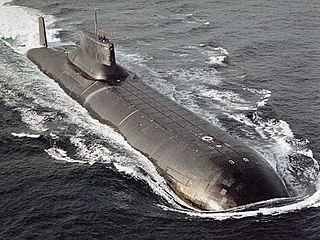
The Project 941 or Akula class submarine is a type of nuclear-powered ballistic missile submarine deployed by the Soviet Navy in the 1980s. With a submerged displacement of 48,000 tonnes, the Typhoons are the largest submarines ever built, able to accommodate comfortable living facilities for the crew when submerged for months on end. The source of the NATO reporting name remains unclear, although it is often claimed to be related to the use of the word "typhoon" ("тайфун") by General Secretary Leonid Brezhnev of the Communist Party in a 1974 speech while describing a new type of nuclear ballistic missile submarine, as a reaction to the United States Navy's new Ohio-class submarine.
The Vikings were seafaring Scandinavians engaged in exploring, raiding and trading in waters and lands outside of Scandinavia from the eighth to eleventh centuries.
Striker or The Strikers may refer to:
Dolphin class may refer to several classes of submarine named after the dolphin:
A falcon is a bird of prey.
A shark is a cartilaginous, usually carnivorous fish.
Dauphin may refer to:
X3 may refer to:
A unicorn is a mythical and heraldic beast which looks like a horse with a horn between its eyes.
Sea devil may refer to:
Seawolf or Sea-wolf may refer to:
Tigre, Tigres or El Tigre may refer to:
Dolphin is a video game console emulator for the GameCube and Wii that runs on Windows, Linux, macOS, and Android.
Pioneer, The Pioneer, or pioneering may refer to:
NMS Delfinul was a Romanian submarine that served in the Black Sea during the Second World War. It was the first submarine of the Romanian Navy, built in Italy under Romanian supervision.
Amazon usually refers to:
The lion is a big cat of the species Panthera leo that inhabits the African continent and one forest in India.
References
↑ Jovero, Richard Joehlan F. (2010). Bricks Made of Words, The Dolphin Vol. 50 No. 1. Iloilo City: JBLFMU-Arevalo. pp.4–5.
This page is based on this Wikipedia article Text is available under the CC BY-SA 4.0 license; additional terms may apply. Images, videos and audio are available under their respective licenses.