Related Research Articles
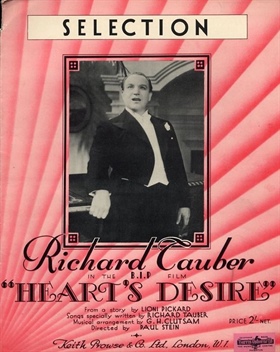
Heart's Desire is a 1935 British musical drama film directed by Paul L. Stein and starring Richard Tauber, Leonora Corbett, Kathleen Kelly, Diana Napier and Frank Vosper. Its plot involves a young opera singer who is discovered in Vienna and brought to London where he rises to stardom. The film was made at Elstree Studios in April/May 1935, and had its charity premiere at the Regal Cinema, Marble Arch, London on 17 October that year. It was part of a cycle of British operetta films.

My Heart Is Calling You is the 1934 French version of a German musical film directed by Carmine Gallone and Serge Véber, written by Ernst Marischka, produced by Arnold Pressburger. The film stars Jan Kiepura, Danielle Darrieux and Lucien Baroux. The music score is by Robert Stolz.
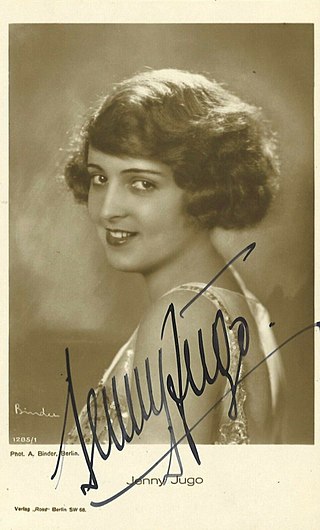
Jenny Jugo was an Austrian actress. She appeared in more than fifty films between 1925 and 1950.
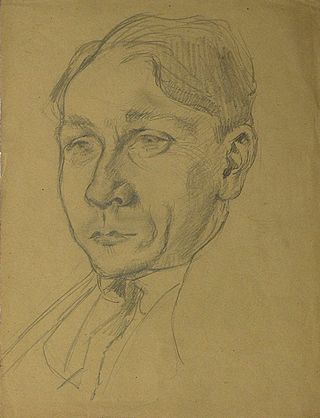
Paul Kemp was a German stage and film actor. Kemp worked as a piano accompaniest for silent films, and then served as an ambulance driver on the Western Front during the First World War. Post-war he moved into acting on the stage in Düsseldorf and Hamburg. His career really took off when he moved to Berlin in 1929, appearing in the hit stage version of the novel Menschen im Hotel by Vicki Baum. He made his film debut in 1930, shortly after the introduction of sound film. He appeared prolifically in German and Austrian films until his death in 1953.

Curt Courant was a German cinematographer who worked on over a hundred films during the silent and early sound eras. Courant worked in several European countries, collaborating with figures such as Alfred Hitchcock and Fritz Lang. As he was of Jewish ancestry, Courant was forced to leave Germany in 1933 and go into exile following the Nazi takeover of power. Courant worked at several of the leading British studios during the mid-1930s. He was the uncle of Willy Kurant who also became a cinematographer.

Two Hearts Beat as One is a 1932 German musical film directed by Wilhelm Thiele and starring Lilian Harvey, Wolf Albach-Retty and Kurt Lilien. It was shot at the Babelsberg Studios in Berlin. The film's sets were designed by the art directors Werner Schlichting and Benno von Arent. A separate French-language version The Girl and the Boy was made, also starring Harvey.
Kurt Herlth (1896–1966) was a German art director known for his designs of film sets. His brother Robert Herlth was also an art director active in the German film industry, and the two men worked together a number of times.
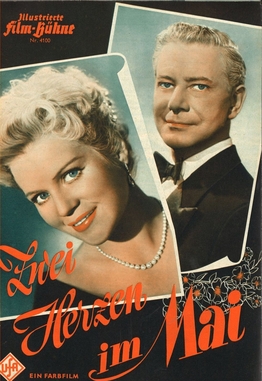
Two Hearts in May is a 1958 West German musical comedy film directed by Géza von Bolváry and starring Dieter Borsche, Kristina Söderbaum, and Walter Giller.
Casanova's Legacy is a 1928 German silent film directed by Manfred Noa and starring Andrée Lafayette, Maly Delschaft and Elizza La Porta.
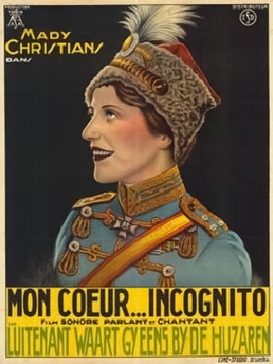
My Heart Incognito is a 1931 comedy film directed by André-Paul Antoine and Manfred Noa and starring Mady Christians. It was made by Germany's Aafa-Film as the French-language version of Lieutenant, Were You Once a Hussar?. Such multi-language versions were common during the early years of sound.
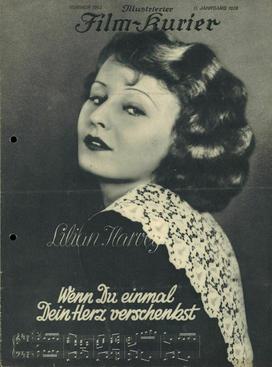
Once You Give Away Your Heart is a 1929 German comedy film directed by Johannes Guter and starring Lilian Harvey, Igo Sym, and Harry Halm. Made at the time of the conversion to sound film, it was released in both sound and silent versions.
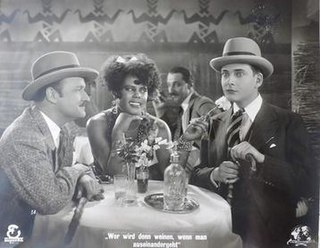
Why Cry at Parting? is a 1929 British-German silent film directed by Richard Eichberg and starring Dina Gralla, Harry Halm and Paul Morgan.

Happy Hearts is a 1932 French comedy film directed by Hanns Schwarz and Max de Vaucorbeil and starring Josseline Gaël, Gabriel Gabrio and Jean Gabin. A separate German-language version Gypsies of the Night was also released.
The Foolish Heart is a 1919 German silent film directed by Erik Lund.
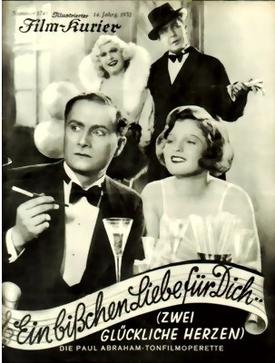
A Bit of Love is a 1932 German comedy film directed by Max Neufeld and starring Lee Parry, Magda Schneider, and Hermann Thimig.
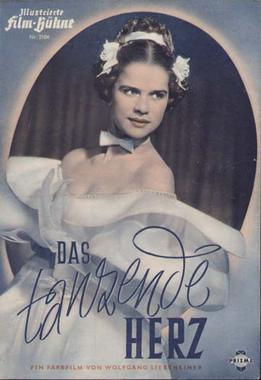
The Dancing Heart is a 1953 West German historical musical comedy film directed by Wolfgang Liebeneiner and starring Gertrud Kückelmann, Gunnar Möller, and Wilfried Seyferth. It was made at the Tempelhof Studios in Berlin. The film was shot using Agfacolor. The film's sets were designed by the art directors Emil Hasler and Walter Kutz.

Have Sunshine in Your Heart is a 1953 West German drama film directed by Erich Waschneck and starring Carl Wery, Liselotte Pulver, and Hans Hessling. It was shot at Göttingen Studios and on location in the Austrian village of St. Gilgen. The film's sets were designed by Gabriel Pellon and Sepp Rothaur.
Heart of Stone is a 1924 German silent film directed by Fred Sauer and starring Fritz Schulz, Grete Reinwald and Frida Richard. The film is based on a fairy tale by Wilhelm Hauff.
You'll Be in My Heart is a 1930 German drama film directed by Max Reichmann and starring Camilla Horn, Fritz Schulz and Victor Varconi.
Hearts Are Trumps is a 1920 German silent film directed by Ewald André Dupont and starring Hermann Vallentin, Hans Mierendorff and Adele Sandrock.
References
- ↑ Bock & Bergfelder p.74

