
William Sydney Porter, better known by his pen name O. Henry, was an American writer known primarily for his short stories, though he also wrote poetry and non-fiction. His works include "The Gift of the Magi", "The Duplicity of Hargraves", and "The Ransom of Red Chief", as well as the novel Cabbages and Kings. Porter's stories are known for their naturalist observations, witty narration, and surprise endings.
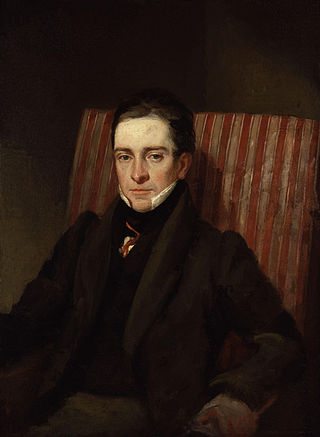
Thomas Hood was an English poet, author and humorist, best known for poems such as "The Bridge of Sighs" and "The Song of the Shirt". Hood wrote regularly for The London Magazine, Athenaeum, and Punch. He later published a magazine largely consisting of his own works. Hood, never robust, had lapsed into invalidism by the age of 41 and died at the age of 45. William Michael Rossetti in 1903 called him "the finest English poet" between the generations of Shelley and Tennyson. Hood was the father of the playwright and humorist Tom Hood (1835–1874) and the children's writer Frances Freeling Broderip (1830–1878).

The poem "In Memoriam A.H.H." (1850) by Alfred, Lord Tennyson, is an elegy for his Cambridge friend Arthur Henry Hallam, who died of cerebral haemorrhage at the age of twenty-two years, in Vienna in 1833. As a sustained exercise in tetrametric lyrical verse, Tennyson's poetical reflections extend beyond the meaning of the death of Hallam, thus, "In Memoriam" also explores the random cruelty of Nature seen from the conflicting perspectives of materialist science and declining Christian faith in the Victorian Era (1837–1901), the poem thus is an elegy, a requiem, and a dirge for a friend, a time, and a place.

Sir Henry Taylor was an English dramatist and poet, Colonial Office official, and man of letters.

Samuel Woodworth was an American author, literary journalist, playwright, librettist, and poet. He is best remembered for the poem "The Old Oaken Bucket" (1817), but he is also the first American to write a historical novel.
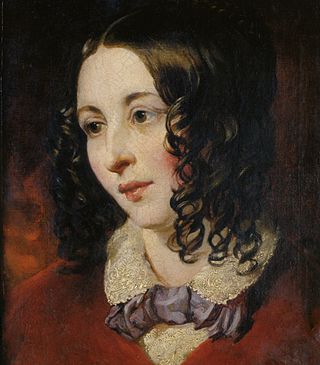
Eliza Cook was an English author and poet associated with the Chartist movement. She was a proponent of political freedom for women, and believed in the ideology of self-improvement through education, something she called "levelling up." This made her hugely popular with the working class public in both England and America.
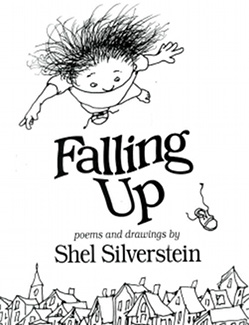
Falling Up is a 1996 poetry collection primarily for children written and illustrated by Shel Silverstein and published by HarperCollins. It is the third poetry collection published by Silverstein, following Where the Sidewalk Ends (1974) and A Light in the Attic (1981), and the final one to be published during his lifetime, as he died just three years after its release. Falling Up was the recipient of the Booklist Editors' Award in 1996.. In 2015, a special edition of the book was published, with 12 new poems.

Jacob Hamblin was a Western pioneer, a missionary for the Church of Jesus Christ of Latter-day Saints, and a diplomat to various Native American tribes of the Southwest and Great Basin. He aided European-American settlement of large areas of southern Utah and northern Arizona, where he was seen as an honest broker between Latter-day Saint settlers and the Natives. He is sometimes referred to as the "Buckskin Apostle", or the "Apostle to the Lamanites". In 1958, he was inducted into the Hall of Great Westerners of the National Cowboy & Western Heritage Museum.
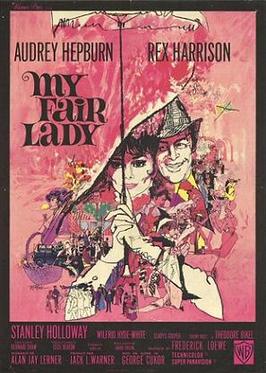
My Fair Lady is a 1964 American musical comedy-drama film adapted from the 1956 Lerner and Loewe stage musical based on George Bernard Shaw's 1913 stage play Pygmalion. With a screenplay by Alan Jay Lerner and directed by George Cukor, the film depicts a poor Cockney flower-seller named Eliza Doolittle who overhears a phonetics professor, Henry Higgins, as he casually wagers that he could teach her to speak English so well she could pass for a duchess in Edwardian London or better yet, from Eliza's viewpoint, secure employment in a flower shop.
"The Face upon the Barroom Floor", aka "The Face on the Floor" and "The Face on the Barroom Floor", is a poem originally written by the poet John Henry Titus in 1872. A later version was adapted from the Titus poem by Hugh Antoine d'Arcy in 1887 and first published in the New York Dispatch.

Frog Dreaming is a 1986 Australian family adventure film written by Everett De Roche and directed by Brian Trenchard-Smith. It starred Henry Thomas, Tony Barry, Rachel Friend and Tamsin West.
— From "The Charge of the Light Brigade" by Alfred Lord Tennyson, first published this year
This article lists all known poems by American author and critic Edgar Allan Poe, listed alphabetically with the date of their authorship in parentheses.

"The Indian's Prayer" is a popular song with music composed by I.B. Woodbury in 1846. The 1833 original lyric, used in altered form, was published as "The Indian's Entreaty" in a Universalist journal by Rev. John Perry, a Pennsylvania minister. The poem was claimed to reflect the likely thoughts of a boy described as having left "some years ago" from "one of many colleges" to return to his native tribe.

"The Lost Leader" is an 1845 poem by Robert Browning first published in his book Dramatic Romances and Lyrics. It berates William Wordsworth for what Browning considered his desertion of the liberal cause, and his lapse from his high idealism. More generally, it is an attack on any liberal leader who has deserted his cause. It is one of Browning's "best known, if not actually best, poems".

Nelly or Nellie Kilpatrick, Helen Kilpatrick or later Nelly Bone (1759–1820). Nelly was possibly Robert Burns's first love and muse as stated by Isabella Burns.

Poems on Slavery is a collection of poems by American poet Henry Wadsworth Longfellow in support of the United States anti-slavery efforts. With one exception, the collection of poems were written at sea by Longfellow in October 1842. The poems were reprinted as anti-slavery tracts two different times during 1843. Longfellow, very conscious of his public persona, published the poems even though he feared it would hurt him commercially. At the time of publication reviews were mixed, but more recently critics have begun to appreciate the collection again, for its political message and for its rhetorical strategies.
Andrew Hardin is an American guitarist and record producer. Andrew's guitar style has been influenced by Roy Buchanan, Clarence White, Ry Cooder, Gabby Pahinui, and Grady Martin, with shades of blues, rock, R&B, country, tropical, and Spanish music.

'Robert Burns's Interleaved Scots Musical Museum' or the 'Interleaved Glenriddell Manuscript' is a set of four octavo volumes of James Johnson's The Scots Musical Museum in which Robert Burns provided additional material to the original publication on interleaved sheets and which he eventually gifted to Captain Robert Riddell (1755–94) of Friars Carse, Dumfries and Galloway, Scotland.

The Geddes Burns is a copy of Robert Burns's 1787 Poems, Chiefly in the Scottish Dialect with twenty-seven extra pages with twelve poems and songs in Burns's handwriting bound in, and a letter to Catholic Bishop John Geddes from the poet, written at Ellisland Farm.


