Party line or Party Line may refer to:
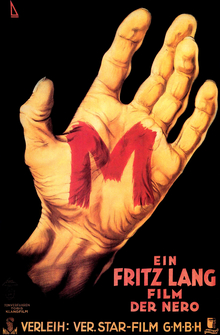
M is a 1931 German mystery thriller film directed by Fritz Lang and starring Peter Lorre in his third screen role as Hans Beckert, a serial killer who targets children. Both Lang's first sound film and an early example of a procedural drama, M centers on the manhunt for Beckert conducted by both the police and organized crime.
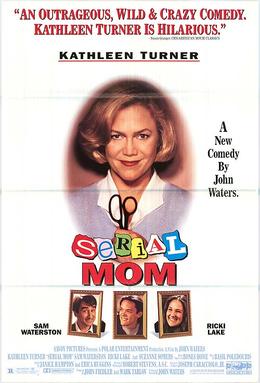
Serial Mom is a 1994 American satirical black comedy crime slasher film directed and written by John Waters and starring Kathleen Turner as the title character along with Sam Waterston as her husband, and Ricki Lake and Matthew Lillard as her children. Patty Hearst, Suzanne Somers, Joan Rivers, Traci Lords, and Brigid Berlin make cameo appearances in the film.
Calling card may refer to:
Homeward Bound may refer to:

Bruce Bennett was an American film and television actor who was a college athlete in football and in intercollegiate and international track-and-field competitions. In 1928, he won the silver medal for the shot put at the Olympic Games in Amsterdam. Bennett's acting career in film and television spanned more than 40 years.

Mae Clarke was an American actress. She is widely remembered for playing Henry Frankenstein's bride Elizabeth, who is chased by Boris Karloff in Frankenstein, and for being on the receiving end of James Cagney's halved grapefruit in The Public Enemy. Both films were released in 1931.
Candyman often refers to a person who performs candy making.
A black box is a device, object, or system whose inner workings are unknown; only the "stimuli inputs" and "output reactions" are known characteristics.

A jungle girl is an archetype or stock character, often used in popular fiction, of a female adventurer, superhero or even a damsel in distress living in a jungle or rainforest setting. A prehistoric depiction is a cave girl.

Mary Alice "Maris" Wrixon was an American film and television actress. She appeared in over 50 films between 1939 and 1951.
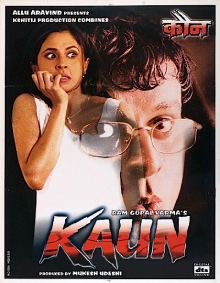
Kaun? (transl. 'Who?') is a 1999 Indian Hindi-language psychological horror film directed by Ram Gopal Varma, written by Anurag Kashyap and starring Urmila Matondkar, Manoj Bajpayee and Sushant Singh. It was shot in 15 days making it one the lowest recorded time to complete and wrap up shoot in Indian cinema history. The film was dubbed into Telugu as Yevaru?. The film was remade into Kannada as Shock (2010).

Brenda Starr, Reporter (1945) was the 25th film serial released by Columbia Pictures. It was inspired by Brenda Starr, Reporter, a popular comic strip created by Dale Messick. The title role was played by Joan Woodbury, who had similar roles in feature films for Columbia and Monogram.

Marjorie Kane was an American film and stage actress born in Chicago. She appeared in more than 60 films between 1929 and 1951, occasionally under the name Babe Kane.
"Double Dare" is the 24th episode of sixth season of the British BBC anthology TV series Play for Today. The episode was a television play that was originally broadcast on 6 April 1976. "Double Dare" was written by Dennis Potter, directed by John Mackenzie, produced by Kenith Trodd, and starred Alan Dobie.
A call girl is a sex worker usually booked by telephone.

Patricia Farr was an American actress who appeared in films of the 1930s and 1940s. Despite being billed as leading lady in at least one of the films in which she appeared, very few details of her life are available.

Barkha Singh is an Indian actress who mainly works in Hindi films and web shows. She began her career as a child artist and worked in films such as Mujhse Dosti Karoge! (2002) and Samay: When Time Strikes (2003). She then worked in television shows including Bhagyalaxmi (2015) and Girls on Top (2016).
This page is based on this
Wikipedia article Text is available under the
CC BY-SA 4.0 license; additional terms may apply.
Images, videos and audio are available under their respective licenses.
