
Katherine MacGregor was an American actress, best known for her role as Harriet Oleson in Little House on the Prairie. She started her career on stage in New York City, in theatres off and on Broadway, credited as Scottie MacGregor.

Germaine Yvonne Arnaud was a French-born pianist, singer and actress, who was well known for her career in Britain, as well as her native land. After beginning a career as a concert pianist as a child, Arnaud acted in musical comedies. She switched to non-musical comedy and drama around 1920 and was one of the players in the second of the Aldwych farces, A Cuckoo in the Nest, a hit in 1925. She also had dramatic roles and made films in the 1930s and 1940s, and continued to act into the 1950s. She occasionally performed as a pianist later in her career. The Yvonne Arnaud Theatre was named in her memory in Guildford, Surrey.

Alice Barnett was an English singer and actress, best known for her performances in contralto roles of the Gilbert and Sullivan operas with the D'Oyly Carte Opera Company.
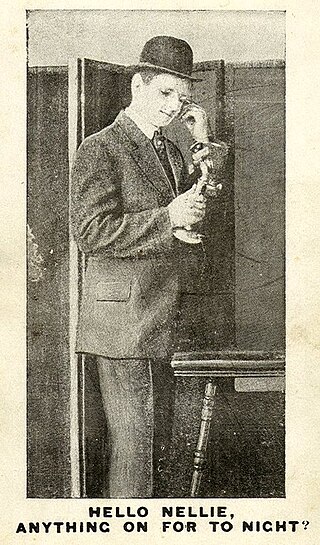
Hello is a salutation or greeting in the English language. It is first attested in writing from 1826.
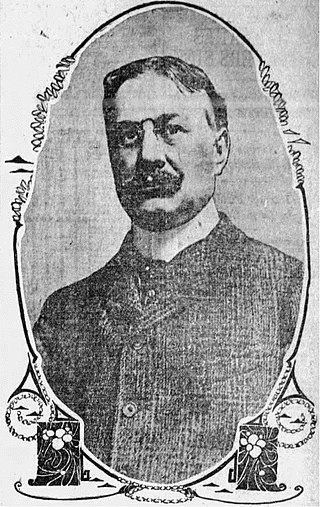
Gustave Adolph Kerker, sometimes given as Gustav or Gustavus Kerker, was a Kingdom of Prussia-born composer and conductor who spent most of his life in the United States. He became a musical director for Broadway theatre productions and wrote the music for a series of operettas and musicals produced on Broadway and in the West End. His most famous musical was The Belle of New York (1897).

Phyllis McKee Rankin was a Broadway actress and singer from the 1880s to the 1920s.

Elizabeth Tyree was an American actress in Broadway theatrical productions beginning in the mid-1890s. Her married name was Elizabeth Tyree Metcalfe. Professionally she was billed as Bess Tyree.

Emily Bancker was a popular stage actress active on the North American stage over the balance of the 1880s and '90s. Sources disagree regarding her origins, with contemporary newsprint articles divided on whether she was English or American.

Louis Mann was an American theatre actor and sometime director, who in his later life made a few appearances in motion pictures. He was married to actress and playwright Clara Lipman.
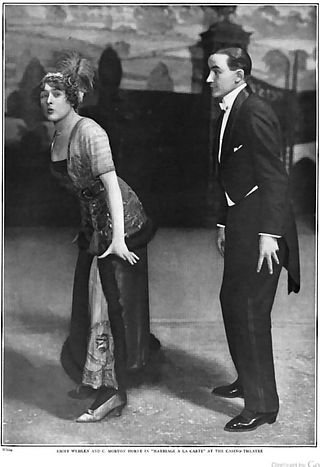
Marriage a la Carte is a three-act Broadway musical comedy composed and written by C. M. S. McLellan and scored by Ivan Caryll. The play was staged by Austen Hurgon with musical direction provided by J. Sebastian Hiller and Carl H. Engel. Marriage a la Carte opened on January 2, 1911 at the Casino Theatre and had a run of 64 performances.

Louise Groody was an American Broadway musical comedy star of the 1920s who introduced to New York audiences the song "Tea for Two" in the musical No, No, Nanette.

Our Flat is a farce-comedy by Mrs. H. Musgrave first produced as a matinee performance on June 13, 1889, at the Prince of Wales Theatre. The play made its New York premier on October 21, 1889, at the Lyceum Theatre. In the mid-1890s Our Flat became a successful vehicle for actress Emily Bancker on road tours of North American venues.

Charles Morton Stewart McLellan (1865–1916) was a London-based American playwright and composer who often wrote under the pseudonym Hugh Morton. McLellan is probably best remembered for the musical The Belle of New York and drama Leah Kleschna.
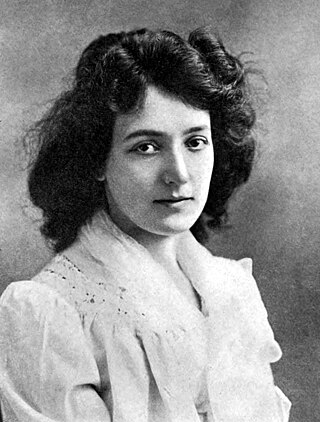
Clara Lipman was an American musical comedy actress and playwright whose career began in 1885 and continued on until her retirement in 1927. She was the wife of comedian Louis Mann and the sister of popular Lieder singer Mattie Lipman Marum.

George Gaston Bell was an American stage and film actor active over the early decades of the twentieth century.
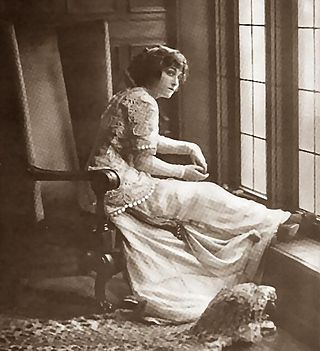
Mabel Hite was a vaudeville comedian and musical comedy actress.

Madge Lessing was a British stage actress and singer, panto principal boy and postcard beauty of Edwardian musical comedy who had a successful career in the West End in London, Europe and on Broadway from 1890 to 1921 and who made a number of early film appearances in Germany for director Max Mack.
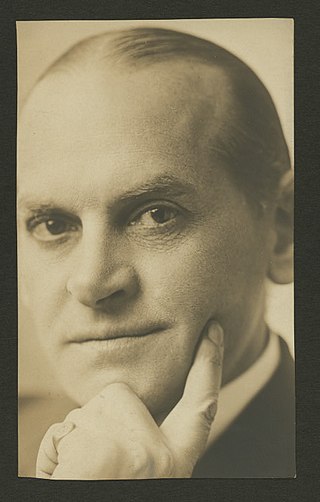
Francis Henry Westerton was a British stage and silent film actor of the 19th and early 20th centuries who carved a successful career on Broadway from 1905 to 1922.

The Casino Girl is an Edwardian musical comedy in two acts with music by Ludwig Engländer, Will Marion Cook, Will Accooe, Harry Truman MacConnell and Arthur Nevin, lyrics by Engländer, Cook and MacConnell, and a book by Harry B. Smith and Arthur Nevin. The story concerns a former chorus girl at the Casino Theatre in New York, who flees to Cairo under an assumed name to escape amorous advances of an admirer.
Otis C. Sheridan was an American character actor who had a five decade long career on the stage from the 1890s into the early 1940s. He made his Broadway debut in 1901 as Ludwig Dollar in Thomas Q. Seabrooke's revival of the musical The Rounders. He appeared in several more Broadway musicals and plays into the late 1930s, and was also active in regional theatre until his retirement from the stage in 1941. In addition to a career in the theater, he appeared in the films The Night Angel (1931) and Sweet Surrender (1935).

