 | This article relies largely or entirely on a single source .(May 2014) |
Thomas Allison (fl. 1697), was an English Arctic voyager.
| | This article relies largely or entirely on a single source .(May 2014) |
Thomas Allison (fl. 1697), was an English Arctic voyager.
Of Allison's personal history we have no record beyond what is to be gleaned from a journal of one of his voyages afterwards published. While in command of the ship Ann, of Yarmouth, of 260 tons, in the service of the Russia Company, he left Archangel in the White Sea on his homeward voyage, on 8 October 1697. After beating about for seventeen days off the coasts of Russia and Lapland, he found himself, on the 23rd of the same month, twenty-one miles N.E. from the Nord Kyn, the northernmost point of Europe and Norway, in lat. 71° 6′ N. Two days later, during a gale in thick weather, he sighted the North Cape, and ran for shelter into the 'Fuel,' or wide opening between the Nord Kyn and the North Cape.
A perusal of his journal in the light of the best modern charts and sailing directions for these parts serves to show that he finally anchored in a small but secure harbour on the west side of what is now known as Porsanger Fjord, probably Saernoes Pollen, where he, by stress of weather, was forced to winter. It was during this period, under most difficult and trying circumstances, that his once famous journal was written, which is a faithful record of the daily experiences and trials of himself and his hardy crew. Such was the intense cold on 1 February 1698, that, in order to write his journal, 'a boy had to thaw the ink as oft as he had occasion to dip his pen.' The writer appears to have been not only a thorough seaman, well experienced in northern navigation, but also one well able to command the respect of his men by his unswerving adherence to daily work and discipline during a period of nearly five months' apparently enforced idleness.
After enduring all the hardships of a severe Arctic winter with the loss of only one man, the Ann left the Fuel on 26 March 1698, and on 24 April following finally reached Gravesend. This narrative was published in the following year under the title of An Account of a Voyage from Archangel in Russia, in the year 1697, of the Ship and Company wintering near the North Cape, in the Latitude of 71. Their manner of Living and what they suffered by the Extreame Cold. Also Observations of the Climate, Country, and Inhabitants. Together with a Chart. By Tho. Allison, Commander of the Ship. Published at the request of the Russia Company, chiefly for the benefit of those who sail that way, as well for the satisfaction of the curious, or any who are concerned in that trade. London, 1699, 8vo (112 pp.). This account, often overlooked, was afterwards reprinted in Pinkerton's Voyages.

The Kara Sea is a marginal sea, separated from the Barents Sea to the west by the Kara Strait and Novaya Zemlya, and from the Laptev Sea to the east by the Severnaya Zemlya archipelago. Ultimately the Kara, Barents and Laptev Seas are all extensions of the Arctic Ocean north of Siberia.

The Northwest Passage (NWP) is the sea lane between the Atlantic and Pacific oceans through the Arctic Ocean, along the northern coast of North America via waterways through the Arctic Archipelago of Canada. The eastern route along the Arctic coasts of Norway and Siberia is accordingly called the Northeast Passage (NEP). The various islands of the archipelago are separated from one another and from Mainland Canada by a series of Arctic waterways collectively known as the Northwest Passages, Northwestern Passages or the Canadian Internal Waters.

Henry Hudson was an English sea explorer and navigator during the early 17th century, best known for his explorations of present-day Canada and parts of the northeastern United States.

Willem Barentsz, anglicized as William Barents or Barentz, was a Dutch navigator, cartographer, and Arctic explorer.
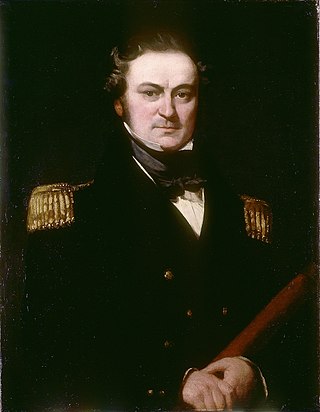
Sir William Edward Parry was a Royal Navy officer and explorer best known for his 1819–1820 expedition through the Parry Channel, probably the most successful in the long quest for the Northwest Passage, until it was finally negotiated by Roald Amundsen in 1906. In 1827, Parry attempted one of the earliest expeditions to the North Pole. He reached 82° 45' N, setting a record for human exploration Farthest North that stood for nearly five decades before being surpassed at 83° 20' N by Albert Hastings Markham in 1875.

Willem Hesselsz de Vlamingh was a Dutch sea captain who explored the central west coast of New Holland (Australia) in the late 17th century, where he landed in what is now Perth on the Swan River. The mission proved fruitless, but he charted parts of the continent's western coast.
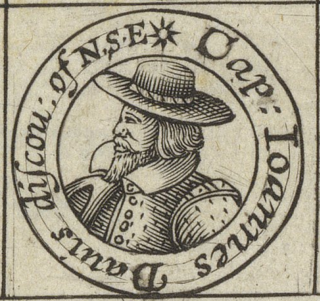
John Davis was one of the chief navigators of Queen Elizabeth I of England. He led several voyages to discover the Northwest Passage and served as pilot and captain on both Dutch and English voyages to the East Indies. He discovered the Falkland Islands in August 1592.

John Meares was an English navigator, explorer, and maritime fur trader, best known for his role in the Nootka Crisis, which brought Britain and Spain to the brink of war.

Frederick William Beechey was an English naval officer, artist, explorer, hydrographer and writer.
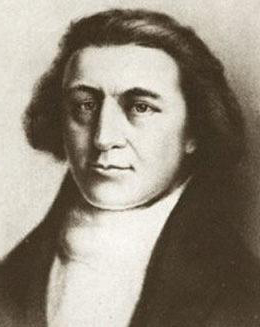
Robert Gray was an American merchant sea captain who is known for his achievements in connection with two trading voyages to the northern Pacific coast of North America, between 1790 and 1793, which pioneered the American maritime fur trade in that region. In the course of those voyages, Gray explored portions of that coast and in the year 1790 he completed the first American circumnavigation of the world. He was also noted for coming upon and naming the Columbia River, in 1792, while on his second voyage.
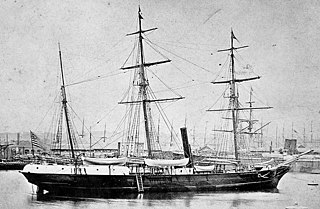
USSJeannette was a naval exploration vessel which, commanded by George W. De Long, undertook the Jeannette expedition of 1879–1881 to the Arctic. After being trapped in the ice and drifting for almost two years, the ship and her crew of 33 were released from the ice, then trapped again, crushed and sunk some 300 nautical miles north of the Siberian coast. The entire crew survived the sinking, but eight died while sailing towards land in a small cutter. The others reached Siberia, but 12 subsequently perished in the Lena Delta, including De Long.

Frank Arthur Worsley was a New Zealand sailor and explorer who served on Ernest Shackleton's Imperial Trans-Antarctic Expedition of 1914–1916, as captain of Endurance. He also served in the Royal Navy Reserve during the First World War.

Richard Chancellor was an English explorer and navigator; the first to penetrate to the White Sea and establish relations with the Tsardom of Russia.

Sir Hugh Willoughby was an English soldier and an early Arctic voyager. He served in the court of Henry VIII and fought in the Scottish campaign where he was knighted for his valour. In 1553, he was selected by a company of London merchants to lead a fleet of three vessels in search of a Northeast Passage.
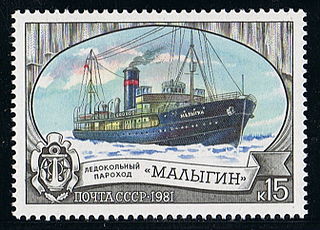
The steamship Malygin (Малыгин) was a Soviet icebreaker of 3,200 tonnes displacement. She was named after Stepan Malygin.

Jason was a Norwegian whaling vessel laid down in 1881 by Rødsverven in Sandefjord, Norway, the same shipyard which later built Ernest Shackleton's ship Endurance. The ship, financed by Christen Christensen, an entrepreneur from Sandefjord, was noted for his participation in an 1892-1893 Antarctic expedition led by Carl Anton Larsen.

The Shackleton–Rowett Expedition (1921–22) was Sir Ernest Shackleton's last Antarctic project, and the final episode in the Heroic Age of Antarctic Exploration.
Convoy PQ 14 was an Arctic convoy sent from Britain by the Western Allies to aid the Soviet Union during the Second World War. Convoys from Britain had been despatched since August 1941 and advantage had been taken of the perpetual darkness of the Arctic winter. German operations against the convoys had been muted due to the need to support Operation Barbarossa, confidence in imminent victory and the small size of the convoys. In late 1941 and early 1942 the Luftwaffe and Kriegsmarine had reinforced Norway with aircraft and ships.
Convoy QP 14 was an Arctic convoy of the QP series which ran during the Second World War. The convoy was a return journey of Allied ships from the port of Archangelsk in the Soviet Union to Loch Ewe in the west of Scotland. The British planned to send Convoy PQ 18 from Iceland to Murmansk and when the convoys crossed transfer much of the escort force from the outbound convoy to Convoy QP 14 and escort back it through the most dangerous waters off Norway.

Thomas Abernethy was a Scottish seafarer, gunner in the Royal Navy, and polar explorer. Because he was neither an officer nor a gentleman, he was little mentioned in the books written by the leaders of the expeditions he went on, but was praised in what was written. In 1857, he was awarded the Arctic Medal for his service as an able seaman on the 1824–25 voyage of HMS Hecla, the first of his five expeditions for which participants were eligible for the award. He was in parties that, for their time, reached the furthest north, the furthest south (twice), and the nearest to the South Magnetic Pole. In 1831, along with James Clark Ross's team of six, Abernethy was in the first party ever to reach the North Magnetic Pole.
. Dictionary of National Biography . London: Smith, Elder & Co. 1885–1900.