
Landscape architecture is the design of outdoor areas, landmarks, and structures to achieve environmental, social-behavioural, or aesthetic outcomes. It involves the systematic investigation of existing social, ecological, and soil conditions and processes in the landscape, and the design of interventions that will produce the desired outcome. The scope of the profession includes landscape design; site planning; stormwater management; erosion control; environmental restoration; parks and recreation planning; visual resource management; green infrastructure planning and provision; and private estate and residence landscape master planning and design; all at varying scales of design, planning and management. A practitioner in the profession of landscape architecture is called a landscape architect.

Queen's University Belfast is a public research university in Belfast, United Kingdom. The university was chartered in 1845, and opened in 1849 as ’Queen's College, Belfast’. Queen's University Belfast is one of the leading universities in the UK and Ireland with a distinguished heritage and history. Today, Queen’s is ranked in the top 173 universities in the world, with the second highest ranking in Ireland. Queen's offers academic degrees at various levels and across a broad subject range, with over 300 degree programmes available. The current president and vice-chancellor is Ian Greer. The annual income of the institution for 2017–18 was £369.2 million of which £91.7 million was from research grants and contracts, with an expenditure of £338.4 million.

Ebbw Vale is a town at the head of the valley formed by the Ebbw Fawr tributary of the Ebbw River in Wales. It is the largest town and the administrative centre of Blaenau Gwent county borough. The Ebbw Vale and Brynmawr conurbation has a population of roughly 33,000. It has direct access to the dualled A465 Heads of the Valleys trunk road and borders the Brecon Beacons National Park.
The Centre for Alternative Technology (CAT) is an eco-centre in Powys, mid-Wales, dedicated to demonstrating and teaching sustainable development. CAT, despite its name, no longer concentrates its efforts exclusively on alternative technology, but provides information on all aspects of sustainable living. It is open to visitors, offers postgraduate degrees as well as shorter residential and one day courses; and publishes information on renewable energy, sustainable architecture, organic farming, gardening, and sustainable living. CAT also runs education programmes for schools and sells environmentally friendly items through its on site shop, restaurant and mail order department.
Tom Bender is one of the American founders of the green architecture and sustainability movements.

The Green Party in Northern Ireland is a political party in Northern Ireland which works in co-operation with green parties across Britain and Ireland, Europe and globally. Like many green parties around the world, its origins lie in the anti-nuclear, labour and peace movements of the 1970s and early 1980s.

The Bartlett Faculty of the Built Environment is the academic centre for the study of the built environment at University College London, part of the University of London. It is home to the Bartlett School of Architecture and The Bartlett School of Planning. UCL was ranked highest in the world for the "Architecture / Built Environment" category in the 2019 QS World University Rankings.
Alan Montgomery Jones is a chartered architect and academic based in Northern Ireland, UK. He studied architecture at Queen's University Belfast, and after practising in London returned to Northern Ireland in 1998 to practise and to teach at Queen's University. He jointly led architecture at Queen's (2008–16) and is currently professor of architecture and director of professional practice in its School of Natural and Built Environment.
O'Donnell + Tuomey is an architectural practice based in Dublin, Ireland, described by Architecture Today as one of "the godfathers of contemporary Irish architecture". O'Donnell and Tuomey are the recipients of the 2015 Royal Gold Medal, awarded by the RIBA.
Ciarán Mackel, BSc, Dip. Arch, Dip. Project Management, MSc Design, RIBA MRIAI, was born in 1955 and is best known as one of foremost Belfast-based architects and urban designers of his generation.

The Good Homes Alliance (GHA) is a UK organisation established in 2007 that grew to have over 70 members, including architects, planners, developers, universities, local authorities, urban designers, consultants, building professionals and suppliers whose stated aim is to build and promote sustainable homes and communities and to transform the whole of mainstream UK house building into a sustainable endeavour.It is a not-for-profit Community Interest Company with a board of Directors.
Building services engineering is a professional engineering discipline that strives to achieve a safe and comfortable indoor environment whilst minimizing the environmental impact of a building.
Scott Tallon Walker is an architecture practice with its head office in Dublin, Ireland and further offices in London, Galway and Cork. It is one of the largest architecture practices in Ireland. Established in 1931 as Scott and Good, becoming Michael Scott Architect in 1938, and Michael Scott and Partners in 1957 before changing to the current Scott Tallon Walker in 1975. Scott Tallon Walker and its earlier incarnations developed a reputation for modernism.
William Robert Dunster OBE is a British architect.

Feilden Clegg Bradley Studios is a British architectural design firm, established in 1978, with offices in Bath, London, Manchester, Belfast and Edinburgh. The firm is known for its pioneering work in sustainable design and social design agenda.

The Wales Institute for Sustainable Education (WISE) is an educational building located at the Centre for Alternative Technology near Machynlleth, Powys, Wales. It was designed as a case study for sustainable architecture and green building and has won several awards.
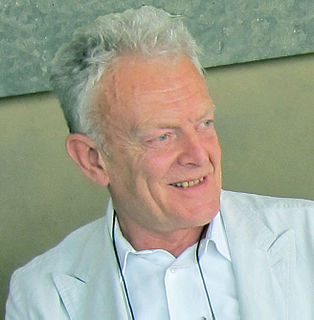
David Lloyd Jones AA DIP, RIBA, FRSA is a founding partner of Studio E LLP, an architectural practice established in London in 1994. He has been described as "a godfather of the sustainable architecture movement in the UK". Lloyd Jones has been heavily involved in both promoting 'green' design and demonstrating it in practice. He has been responsible for a series of seminal bioclimatic buildings, including the National Farmers Union and Avon Insurance Head Office at Stratford upon Avon; the Solar Office Doxford International near Sunderland; Beaufort Court Zero Emissions Building at Kings Langley; Grange Park Opera House and the current Pakistan Islamic Arts Institute in Lahore. His book, Architecture and the Environment, was published in 1998.
Christof Jantzen is an architect based in Los Angeles, California. Throughout his professional career Jantzen has directed and designed various sustainably designed projects. Many have received international recognition for leadership in global green design including the Santa Monica Parking Structure #6, the Genzyme Corporate Headquarters, Mill Street Lofts, Los Angeles and the Harvard Allston Science Complex. Other recognition of Jantzens’s work includes the Leadership in Energy and Environmental Design (LEED) Platinum Award, AIA/COTE Top Ten Green Project Award, California Green Leadership Award, Northeast Sustainable Energy Association Award, American Architecture Award… Jantzen was the founding partner of Behnisch Architekten LLP in the United States. He is a professor at the University of Washington International Center for Advanced Renewable Energy and Sustainability I-CARES. Jantzen taught design at the Southern California Institute of Architecture, California State Polytechnic University and the University of Southern California. He is the principal and owner of the Venice, California -based architectural practice Studio Jantzen.
Justin Bere is a British architect based in London. He is founder of his own practice bere:architects and has developed a specialism in low energy passive house (Passivhaus) buildings, resulting in the first certified passive house building in London in 2010. In 2012 he was named one of the most influential people in UK sustainability by Building Design magazine.

Dr. Tan Loke Mun is the founding Director of ArchiCentre Sdn. Bhd, DTLM Design Group and principal of DrTanLM Architect, architectural design studios in Subang Jaya, Malaysia. He is best known for having designed the first Green Building Index Platinum rated house in Malaysia, the S11 House.

