
Vegemite is a thick, dark brown Australian food spread made from leftover brewers' yeast extract with various vegetable and spice additives. It was developed by Cyril Callister in Melbourne, Victoria in 1922. The Vegemite brand was owned by Mondelez International until January 2017, when it was acquired by the Australian Bega Cheese group in a US$460,000,000 agreement for full Australian ownership after Bega would buy most of Mondelez International's Australia and New Zealand grocery and cheese business.

Kanakas were workers from various Pacific Islands employed in British colonies, such as British Columbia (Canada), Fiji, Solomon Island, Vanuatu, Papua New Guinea and Queensland (Australia) in the 19th and early 20th centuries. They also worked in California and Chile.

Maryborough is a city and a suburb in the Fraser Coast Region, Queensland, Australia. As of June 2018 Maryborough had an estimated urban population of 27,282, having grown slightly at an annual average of 0.12% year-on-year over the preceding five years.
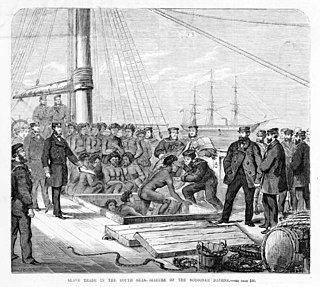
Blackbirding involves the coercion of people through deception or kidnapping to work as slaves or poorly paid labourers in countries distant to their native land. The term has been most commonly applied to the large-scale taking of people indigenous to the numerous islands in the Pacific Ocean during the 19th and 20th centuries. These blackbirded people were called Kanakas or South Sea Islanders. They were taken from places such as the Solomon Islands, Vanuatu, Niue, Easter Island, Gilbert Islands, Tuvalu and the islands of the Bismarck Archipelago amongst others.

Edmund Besley Court Kennedy J. P. was an explorer in Australia in the mid nineteenth century. He was the Assistant-Surveyor of New South Wales, working with Sir Thomas Mitchell. Kennedy explored the interior of Queensland and northern New South Wales, including the Thomson River, the Barcoo River, Cooper Creek, and Cape York Peninsula. He died in December 1848 after being speared by Aboriginal Australians in far north Queensland near Cape York.

Sydney Heritage Fleet, is the trading name of Sydney Maritime Museum Ltd., a public (non-profit) company in Sydney, New South Wales, Australia.

Polly Woodside is a Belfast-built, three-masted, iron-hulled barque, preserved in Melbourne, Victoria (Australia), and forming the central feature of the South Wharf precinct. The ship was originally built in Belfast by William J. Woodside and was launched in 1885. Polly Woodside is typical of thousands of smaller iron barques built in the last days of sail, intended for deep water trade around the world and designed to be operated as economically as possible.

COON is the Australian trademark of a cheddar cheese produced by the Warrnambool Cheese and Butter company (WCB). It was launched in 1935 by Fred Walker. Coon cheese is named after its American creator, Edward William Coon (1871–1934) of Philadelphia, who patented a method, subsequently known as the Cooning process, for fast maturation of cheese via high temperature and humidity.
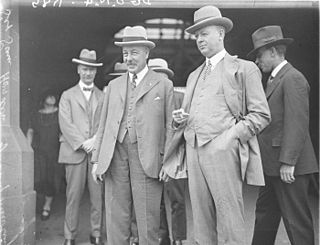
Sir Samuel Hordern was an Australian businessman, animal breeder and philanthropist. Born into the prominent Sydney trading family, Hordern directed the family company of Anthony Hordern & Sons from 1909 to 1926.
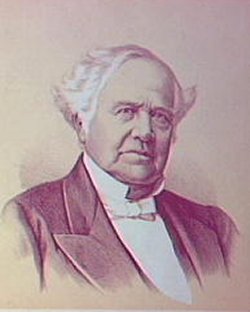
Robert Towns was a British master mariner who settled in Australia where he became a businessman, sandalwood merchant, colonist, shipowner, pastoralist, politician, coolie and Kanaka slave trader, whaler and civic leader. He was the founder of Townsville, Queensland.

Fred Walker was an Australian businessman and founder of Fred Walker & Co. The company is best known for creating Vegemite, a food paste and Australian cultural icon.
Speedwell was a brand of bicycle manufactured by Bennett & Wood, a firm established by Charles W. Bennett and Charles R. Wood in 1882 in Sydney. As motorcars and motorcycles became available Bennett and Wood entered the motor trade. They built and sold the Speedwell bicycle and the Speedwell and Acme motorcycles. The Speedwell motorcycle was built in the early 1900s.

The Australasian Steam Navigation Company was a shipping company of Australia which operated between 1839 and 1887.
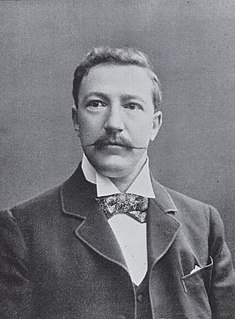
Sir Hugh Robert Denison, originally Hugh Robert Dixson was a businessman, parliamentarian and philanthropist in South Australia and later New South Wales. He was a member of the South Australian House of Assembly from 1901 to 1905, representing West Adelaide (1901-1902) and Adelaide (1902-1905). Outside of politics, he was involved in his family's tobacco business, a forerunner of the British-Australasian Tobacco Company, was involved with a number of newspapers, and founded the Macquarie Broadcasting Services Pty Ltd radio network. He changed his surname by deed poll in 1907 to avoid confusion with his uncle Sir Hugh Dixson.
Margaret Isabella Brownlee Dick was a pioneering Australian microbiologist. She is best known for her role as Chief Microbiologist at Kraft Foods Australia and for the development of a methodology for safe food production. She was the first woman to be elected as a Fellow of the Australian Institute of Food Science and Technology.

Slavery in Australia has existed in various forms from colonisation in 1788 to the present day. European settlement relied heavily on convicts, sent to Australia as punishment for crimes and forced into labour and often sold to free settlers. Many Indigenous Australians were also forced into various forms of slavery and unfree labour from colonisation and this persisted for some Indigenous Australians until the 1970s. Labourers were also imported from the Pacific Islands, India and China; and employed in various degrees of slavery and unfree labour.

Bega Cheese is an Australian diversified food company with manufacturing sites in New South Wales, Queensland and Victoria. Founded as an agricultural cooperative in the town of Bega, New South Wales by their dairy suppliers, it became a public company in 2011 when it listed on the Australian Securities Exchange. Close to half of shares publicly traded are still held by Bega's farmer-suppliers. It is currently one of the largest companies in the dairy sector in Australia, with a FY2018 base milk supply of approximately 750 million litres.

The New Zealand Company was a 19th-century English company that played a key role in the colonisation of New Zealand. The company was formed to carry out the principles of systematic colonisation devised by Edward Gibbon Wakefield, who envisaged the creation of a new-model English society in the southern hemisphere. Under Wakefield's model, the colony would attract capitalists who would then have a ready supply of labour—migrant labourers who could not initially afford to be property owners, but who would have the expectation of one day buying land with their savings.
The Border Police of New South Wales was a frontier policing body introduced by the New South Wales colonial government with the passing of the Crown Lands Unauthorised Occupation Act 1839.
Sylvester John Browne, occasionally referred to as Sylvester John Browne jnr, was a mining magnate, adventurer and sportsman, whose activities spanned practically the whole of Australia. He was a brother of the well-known author Thomas Alexander Browne.
