
Biosphere 2 is an American Earth system science research facility located in Oracle,Arizona. Its mission is to serve as a center for research,outreach,teaching,and lifelong learning about Earth,its living systems,and its place in the universe. It is a 3.14-acre (1.27-hectare) structure originally built to be an artificial,materially closed ecological system,or vivarium. It remains the largest closed ecological system ever created.
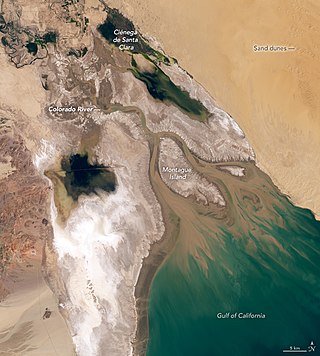
The Colorado River Delta is the region where the Colorado River flows into the Gulf of California in eastern Mexicali Municipality in the north of the state of Baja California in northwesternmost Mexico. The delta is part of a larger geologic region called the Salton Trough. Historically,the interaction of the river's flow and the ocean's tide created a dynamic environment,supporting freshwater,brackish,and saltwater species. Within the delta region,the river split into multiple braided channels and formed a complex estuary and terrestrial ecosystems. The use of water upstream and the accompanying reduction of freshwater flow has resulted in the loss of most of the wetlands of the area,as well as drastic changes to the aquatic ecosystems. However,a scheme is currently in place which aims to rejuvenate the wetlands by releasing a pulse of water down the river delta.

Functional ecology is a branch of ecology that focuses on the roles,or functions,that species play in the community or ecosystem in which they occur. In this approach,physiological,anatomical,and life history characteristics of the species are emphasized. The term "function" is used to emphasize certain physiological processes rather than discrete properties,describe an organism's role in a trophic system,or illustrate the effects of natural selective processes on an organism. This sub-discipline of ecology represents the crossroads between ecological patterns and the processes and mechanisms that underlie them. It focuses on traits represented in large number of species and can be measured in two ways –the first being screening,which involves measuring a trait across a number of species,and the second being empiricism,which provides quantitative relationships for the traits measured in screening. Functional ecology often emphasizes an integrative approach,using organism traits and activities to understand community dynamics and ecosystem processes,particularly in response to the rapid global changes occurring in earth's environment.

A riparian zone or riparian area is the interface between land and a river or stream. In some regions,the terms riparian woodland,riparian forest,riparian buffer zone,riparian corridor, and riparian strip are used to characterize a riparian zone. The word riparian is derived from Latin ripa,meaning "river bank".
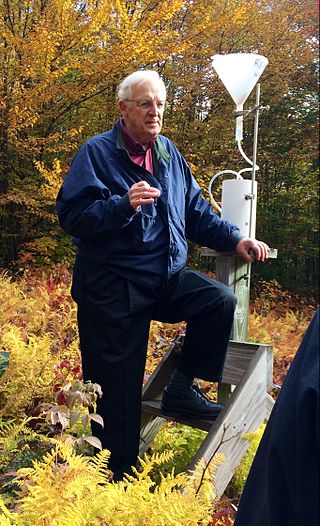
Gene Elden Likens is an American limnologist and ecologist. He co-founded the Hubbard Brook Ecosystem Study at the Hubbard Brook Experimental Forest in 1963,and founded the Cary Institute of Ecosystem Studies in Millbrook,New York in 1983.
Simon Asher Levin is an American ecologist and the James S. McDonnell Distinguished University Professor in Ecology and Evolutionary Biology and the director of the Center for BioComplexity at Princeton University. He specializes in using mathematical modeling and empirical studies in the understanding of macroscopic patterns of ecosystems and biological diversities.
F. Stuart Chapin III is a professor of Ecology at the Department of Biology and Wildlife of the Institute of Arctic Biology,University of Alaska. He was President of the Ecological Society of America (ESA) from August 2010 until 2011.

Riparian-zone restoration is the ecological restoration of riparian-zonehabitats of streams,rivers,springs,lakes,floodplains,and other hydrologic ecologies. A riparian zone or riparian area is the interface between land and a river or stream. Riparian is also the proper nomenclature for one of the fifteen terrestrial biomes of the earth;the habitats of plant and animal communities along the margins and river banks are called riparian vegetation,characterized by aquatic plants and animals that favor them. Riparian zones are significant in ecology,environmental management,and civil engineering because of their role in soil conservation,their habitat biodiversity,and the influence they have on fauna and aquatic ecosystems,including grassland,woodland,wetland or sub-surface features such as water tables. In some regions the terms riparian woodland,riparian forest,riparian buffer zone, or riparian strip are used to characterize a riparian zone.
Brian Joseph Enquist is an American biologist and academic. Enquist is a Professor of Biology at the University of Arizona. He is also external professor at the Santa Fe Institute. He is a biologist,plant biologist and an ecologist. He was elected as a Fellow of the American Association for the Advancement of Science (AAAS) in 2012 and the Ecological Society of America (ESA) in 2018.
Niwot Ridge is an alpine ecology research station located 65 km north-west of Denver in north-central Colorado. It is on the Front Range of the southern Rocky Mountains and lies within the Roosevelt National Forest. Niwot Ridge is 2,900 metres (9,500 ft) high.

Exequiel Ezcurra is an Argentine-Mexican plant ecologist and conservationist. His highly interdisciplinary work spans desert plant ecology,mangroves,island biogeography,sea birds,fisheries,oceanography,and deep-sea ecosystems.
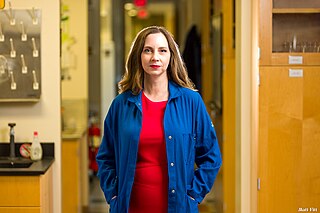
Kathleen Kay Treseder is an American ecologist who specializes in the interplay between global climate change and fungal ecology. She also serves as a member of the Irvine City Council after being elected to the position in 2022. She is currently a professor in the Department of Ecology and Evolutionary Biology at the University of California,Irvine. She is a Fellow of the American Association for the Advancement of Science,the American Academy of Microbiology,and the Ecological Society of America.
Diane E. Pataki is a Foundation Professor and Director of the School of Sustainability at Arizona State University. She is an elected Fellow of the American Geophysical Union,the Ecological Society of America,and the American Association for the Advancement of Science. She was a recipient of the James B. Macelwane Medal in 2008 from the American Geophysical Union for her research on coupled water and carbon cycles. The award is given to “significant contributions to the geophysical sciences by an outstanding early career scientist.”
Emily Stanley is an American professor of limnology at the University of Wisconsin–Madison. She was named a 2018 Ecological Society of America Fellow and her research focuses on the ecology of freshwater ecosystems.
Vicky J. Meretsky is an American professor and Director of Environmental Masters Programs at Indiana University Bloomington.
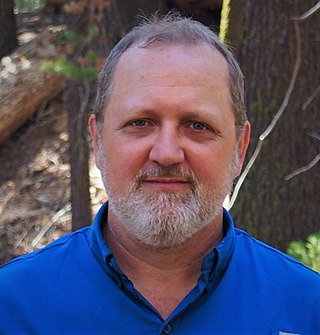
Bradley Cardinale is an American ecologist,conservation biologist,academic and researcher. He is Head of the Department of Ecosystem Science and Management and Penn State University.
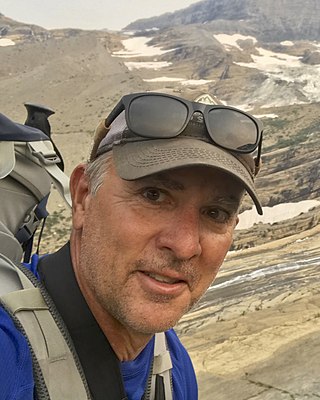
James Elser is an American ecologist and limnologist. He is Director &Bierman Professor of Ecology,Flathead Lake Biological Station,University of Montana and research professor,School of Life Sciences,Arizona State University. He is known for his work in ecological stoichiometry. In 2019,he was elected to the National Academy of Sciences.
Jennifer B. H. Martiny is an American ecologist who is a professor at the University of California,Irvine. Her research considers microbial diversity in marine and terrestrial ecosystems. In 2020 she was elected a Fellow of the American Association for the Advancement of Science.
Anna Amelia Sher is an American plant ecologist who is a professor at the University of Denver. She works on conservation and the restoration of areas invaded by Tamarix. She is the author of two textbooks,Ecology:Concepts and Applications and Introduction to conservation biology.
Albert Farrell Bennett is an American zoologist,physiologist,evolutionary biologist,author,and academic. He is Dean Emeritus of the School of Biological Sciences at University of California,Irvine.

