
Naval warfare in the Mediterranean during World War I took place between the naval forces of the Entente and the Central Powers in the Mediterranean Sea between 1914 and 1918.
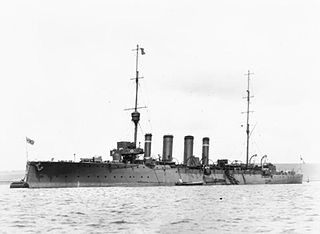
The First Battle of Durazzo was a naval battle of World War I. It was fought off Durazzo, Albania at the end of December 1915 and involved the navies of Austria-Hungary, the United Kingdom, Italy, and France.

The Adriatic Campaign of World War I was a naval campaign fought between the Central Powers and the Mediterranean squadrons of Great Britain, France, the Kingdom of Italy, Australia, and the United States.

T3 was a sea-going torpedo boat that was operated by the Royal Yugoslav Navy between 1921 and 1941. Originally 78 T, a 250t-class torpedo boat of the Austro-Hungarian Navy built in 1914, she was armed with two 66 mm (2.6 in) guns, four 450 mm (17.7 in) torpedo tubes, and could carry 10–12 naval mines. She saw active service during World War I, performing convoy, escort and minesweeping tasks, anti-submarine operations and shore bombardment missions. In 1917 the suffixes of all Austro-Hungarian torpedo boats were removed, and thereafter she was referred to as 78. She was part of the escort force for the Austro-Hungarian dreadnought Szent István during the action that resulted in the sinking of that ship by Italian torpedo boats in June 1918.

The Royal Navy, commonly the Royal Yugoslav Navy, was the naval warfare service branch of the Kingdom of Yugoslavia. It was brought into existence in 1921, and initially consisted of a few former Austro-Hungarian Navy vessels surrendered at the conclusion of World War I and transferred to the new nation state under the terms of the Treaty of Saint-Germain-en-Laye. The only modern sea-going warships transferred to the new state were twelve steam-powered torpedo boats, although it did receive four capable river monitors for use on the Danube and other large rivers. Significant new acquisitions began in 1926 with a former German light cruiser, followed by the commissioning of two motor torpedo boats (MTBs) and a small submarine flotilla over the next few years. When the name of the state was changed to Yugoslavia in 1929, the name of its navy was changed to reflect this. In the late 1920s, several of the original vessels were discarded.

The Bombardment of Ancona was a naval engagement of the Adriatic Campaign of World War I between the navies of Italy and Austria-Hungary. Forces of the Imperial and Royal Navy attacked and bombarded military and civilian targets all across Ancona in central Italy and several other nearby islands and communities in response to Italy's declaration of war on Austria-Hungary.
T1 was a seagoing torpedo boat that was operated by the Royal Yugoslav Navy between 1921 and 1941. Originally 76 T, a 250t-class torpedo boat of the Austro-Hungarian Navy built in 1914, she was armed with two 66 mm (2.6 in) guns and four 450 mm (17.7 in) torpedo tubes, and could carry 10–12 naval mines. She saw active service during World War I, performing convoy, escort and minesweeping tasks, anti-submarine operations and shore bombardment missions. In 1917 the suffixes of all Austro-Hungarian torpedo boats were removed, and thereafter she was referred to as 76. She was part of the escort force for the Austro-Hungarian dreadnought Szent István during the action that resulted in the sinking of that ship by Italian torpedo boats in June 1918.
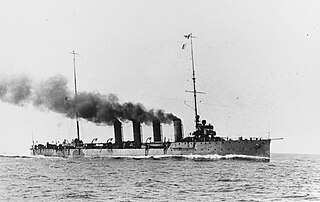
SMS Saida was a Novara-class scout cruiser built for the Austro-Hungarian Navy in the early 1910s. The ship was armed with a main battery of nine 10 cm (3.9 in) guns, and six twin 53.3 cm (21.0 in) torpedo tubes were added in 1917. She was built by the Cantiere Navale Triestino shipyard from 1911 to 1914, entering service days after the outbreak of World War I. She spent the war as a flotilla leader, conducting raids and patrols in the narrow waters of the Adriatic Sea.
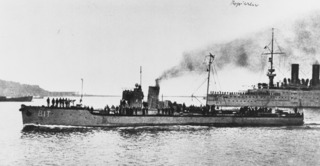
The 250t class were high-seas torpedo boats built for the Austro-Hungarian Navy between 1913 and 1916. A total of 27 boats were built by three shipbuilding companies, with the letter after the boat number indicating the manufacturer. There were small variations between manufacturers, mainly in the steam turbines used, and whether they had one or two funnels. The eight boats of the T-group, designated 74 T – 81 T, were built by Stabilimento Tecnico Triestino, located at Triest. The sixteen boats of the F-group, 82 F – 97 F, were built by Ganz-Danubius at their shipyards at Fiume and Porto Re. The three M-group boats, 98 M – 100 M, were manufactured by Cantiere Navale Triestino at Monfalcone.
T7 was a sea-going torpedo boat operated by the Royal Yugoslav Navy between 1921 and 1941. Originally 96 F, a 250t-class torpedo boat of the Austro-Hungarian Navy built in 1915–1916, she was armed with two 66 mm (2.6 in) guns and four 450 mm (17.7 in) torpedo tubes, and could carry 10–12 naval mines. She saw active service during World War I, performing convoy escort, patrol, and minesweeping tasks, and anti-submarine operations. In 1917 the suffixes of all Austro-Hungarian torpedo boats were removed, and thereafter she was referred to as 96.
T5 was a sea-going torpedo boat operated by the Royal Yugoslav Navy between 1921 and 1941. Originally 87 F, a 250t-class torpedo boat of the Austro-Hungarian Navy built in 1914–1915, she was armed with two 66 mm (2.6 in) guns and four 450 mm (17.7 in) torpedo tubes, and could carry 10–12 naval mines. She saw active service during World War I, performing convoy, patrol, escort and minesweeping tasks, anti-submarine operations and shore bombardment missions. In 1917 the suffixes of all Austro-Hungarian torpedo boats were removed, and thereafter she was referred to as 87. She was part of the escort force for the Austro-Hungarian dreadnought Szent István during the action that resulted in the sinking of that ship by Italian torpedo boats in June 1918, and rescued many of her crew.
T6 was a sea-going torpedo boat that was operated by the Royal Yugoslav Navy between 1921 and 1941. Originally 93 F, a 250t-class torpedo boat of the Austro-Hungarian Navy built in 1915–1916, she was armed with two 66 mm (2.6 in) guns and four 450 mm (17.7 in) torpedo tubes, and could carry 10–12 naval mines. She saw active service during World War I, performing convoy, escort, patrol and minesweeping tasks, and anti-submarine operations. In 1917 the suffixes of all Austro-Hungarian torpedo boats were removed, and thereafter she was referred to as 93.
T8 was a sea-going torpedo boat that was operated by the Royal Yugoslav Navy between 1921 and 1941. Originally 97 F, a 250t-class torpedo boat of the Austro-Hungarian Navybuilt in 1915–1916, she was armed with two 66 mm (2.6 in) guns and four 450 mm (17.7 in) torpedo tubes, and could carry 10–12 naval mines. She saw active service during World War I, performing convoy escort, patrol, and minesweeping tasks, and anti-submarine operations. In 1917 the suffixes of all Austro-Hungarian torpedo boats were removed, and thereafter she was referred to as 97.
T2 was a seagoing torpedo boat operated by the Royal Yugoslav Navy between 1923 and 1939. Originally 77 T, a 250t-class torpedo boat of the Austro-Hungarian Navy built in 1914, she was armed with two 66 mm (2.6 in) guns and four 450 mm (17.7 in) torpedo tubes, and could carry 10–12 naval mines. She saw active service during World War I, performing convoy, patrol, escort, minesweeping and minelaying tasks, anti-submarine operations, and shore bombardment missions. In 1917, the suffixes of all Austro-Hungarian torpedo boats were removed, and thereafter she was referred to as 77. Present in the Bocche di Cattaro during the short-lived mutiny by Austro-Hungarian sailors in early February 1918, members of her crew raised the red flag but undertook no other mutinous actions. 77 was part of the escort force for the Austro-Hungarian dreadnought Szent István during the action that resulted in the sinking of that ship by Italian torpedo boats in June 1918.
T4 was a seagoing torpedo boat operated by the Royal Yugoslav Navy between 1921 and 1932. Originally 79 T, a 250t-class torpedo boat of the Austro-Hungarian Navy built in 1914, she was armed with two 66 mm (2.6 in) guns and four 450 mm (17.7 in) torpedo tubes, and could carry 10–12 naval mines. She saw active service during World War I, performing convoy, patrol, escort and minesweeping tasks, anti-submarine operations and shore bombardment missions. In 1917 the suffixes of all Austro-Hungarian torpedo boats were removed, and thereafter she was referred to as 79. Underway during the short-lived mutiny by Austro-Hungarian sailors in early February 1918, her captain realised the danger and put her crew ashore. She was part of the escort force for the Austro-Hungarian dreadnought Szent István during the action that resulted in the sinking of that ship by Italian torpedo boats in June 1918.

SMS Triglav was one of six Tátra-class destroyers built for the kaiserliche und königliche Kriegsmarine shortly before the First World War. Completed in August 1914, the ship participated in an unsuccessful attempt to recapture a small island in the Central Adriatic Sea from the Italians in July 1915. In November and early December Triglav was one of the ships conducting raids off the Albanian coast to interdict the supply lines between Italy and Albania. She was crippled by a mine during the 1st Battle of Durazzo in late December, but was taken in tow. The ship had to be abandoned when the Austro-Hungarian ships were spotted on the return voyage and she was sunk by French destroyers.

SMS Csepel was one of six Tátra-class destroyers built for the kaiserliche und königliche Kriegsmarine shortly before the First World War. Completed in 1913, she helped to sink an Italian destroyer during the action off Vieste in May 1915 after Italy declared war on Austria-Hungary. Two months later the ship participated in an unsuccessful attempt to recapture a small island in the central Adriatic Sea from the Italians. In November and early December Csepel was one of the ships conducting raids off the Albanian coast to interdict the supply lines between Italy and Albania. She was hit one time during the First Battle of Durazzo in late December. Her stern was blown off by a French submarine in early 1916 and her repairs were not completed until early 1917.

SMS Balaton was one of six Tátra-class destroyers built for the kaiserliche und königliche Kriegsmarine shortly before the First World War. Completed in 1913, she did not participate in the attacks on the Italian mainland after Italy declared war on Austria-Hungary in May 1915. Two months later the ship bombarded a small island in the Central Adriatic Sea during an unsuccessful attempt to recapture it from the Italians. In November and early December Balaton was one of the ships conducting raids off the Albanian coast to interdict the supply lines between Italy and Albania. She played a minor role in the 1st Battle of Durazzo in late December. Balaton participated in several unsuccessful raids on the Otranto Barrage in 1917, although she sank an ammunition ship during the Battle of the Strait of Otranto. She was transferred to Italy in 1920 in accordance with the peace treaties ending the war and renamed Zenson. The Regia Marina used her for spare parts; she was discarded in 1923 and subsequently scrapped.

SMS Tátra was the lead ship of her class of six destroyers built for the kaiserliche und königliche Kriegsmarine shortly before the First World War. Completed in 1913, she helped to sink an Italian destroyer during the action off Vieste in May 1915 after Italy declared war on Austria-Hungary. Two months later the ship participated in an unsuccessful attempt to recapture a small island in the Central Adriatic Sea from the Italians. In November and early December Tátra was one of the ships conducting raids off the Albanian coast to interdict the supply lines between Italy and Albania. During the early stages of the 1st Battle of Durazzo in late December, the ship was tasked to tow her one of her sister ships that had been crippled by a mine. She was forced to abandon her sister when the Austro-Hungarians were spotted by a strong force of Allied ships and had to evade their pursuit. Tátra participated in several unsuccessful raids on the Otranto Barrage in 1917. She was transferred to Italy in 1920 in accordance with the peace treaties ending the war and renamed Fasana. The Regia Marina used her for spare parts; she was discarded in 1923 and subsequently scrapped.
SMS Triglav was one of four Ersatz Triglav-class destroyers built for the kaiserliche und königliche Kriegsmarine during the First World War. Completed in 1917, she participated in several unsuccessful raids on the Otranto Barrage later that year. She was transferred to Italy in 1920 in accordance with the peace treaties ending the war and renamed Grado. The Regia Marina kept her in service until 1937 and the ship was subsequently scrapped.
