
Oolong is a traditional semi-oxidized Chinese tea produced through a process including withering the plant under strong sun and oxidation before curling and twisting. Most oolong teas, especially those of fine quality, involve unique tea plant cultivars that are exclusively used for particular varieties. The degree of oxidation, which varies according to the chosen duration of time before firing, can range from 8–85%, depending on the variety and production style. Oolong is especially popular in south China and among Chinese expatriates in Southeast Asia, as is the Fujian preparation process known as the Gongfu tea ceremony.

Baozhong tea, sometimes known in English by the older romanization pouchong, is a lightly oxidized tea, twist shape, with floral notes, and usually not roasted, somewhere between green tea and what is usually considered oolong tea, though often classified with the latter due to its lack of the sharper green tea flavours. It is produced mainly in Fujian, China and in Pinglin District, New Taipei, Taiwan.

The Rock Islands of Palau, also called Chelbacheb, are a small collection of limestone or coral uprises, ancient relics of coral reefs that violently surfaced to form Islands in Palau's Southern Lagoon, between Koror and Peleliu, and are now an incorporated part of Koror State. There are between 250 and 300 islands in the group according to different sources, with an aggregate area of 47 square kilometres (18 sq mi) and a height up to 207 metres (679 ft). They are a World Heritage Site since 2012.
Oolong is a kind of Chinese tea. This may also mean:

Survivor: Palau is the tenth season of the American CBS competitive reality television series Survivor. The season filmed from October 27, 2004 through December 4, 2004 and premiered on February 17, 2005. Filming took place in Koror, Palau. Hosted by Jeff Probst, it consisted of the usual 39 days of gameplay with 20 competitors, the most the series ever began with.
Tom Westman is a reality TV personality best known as the winner of the tenth season of the U.S. reality show Survivor.

Stephenie LaGrossa is a former contestant on Survivor: Palau, where she placed 7th, Survivor: Guatemala, where she placed second and Survivor: Heroes vs. Villains, where she was the second person voted out and placed 19th. She was one of the most popular players ever to play the game, with her popularity peaking at 97%. LaGrossa was an In-Arena host for the Philadelphia Flyers of the NHL, and currently works for the radio station WRDW-FM. She is also one of the owners of GIGI Restaurant & Lounge in Old City, Philadelphia.
Kim Mullen is a former model and beauty queen who has competed in the Miss USA pageant. She has also participated in the reality television show Survivor: Palau.

Darjeeling tea is a tea grown in the Darjeeling district in West Bengal, India, and widely exported and known. It is processed as black, green, white and oolong tea. When properly brewed, it yields a thin-bodied, light-coloured infusion with a floral aroma. The flavour can include a tinge of astringent tannic characteristics and a musky spiciness sometimes described as "muscatel".

Bai Jiguan is a Si Da Ming Cong and a very light Wuyi Oolong tea.

Taiwanese tea culture includes tea arts, traditional tea ceremonies, and the social aspects of tea consumption. While the most common teas consumed in Taiwan are oolongs, especially Taiwanese oolongs such as Alishan and Lishan, black, red and green teas are also popular. Many of the classical arts can be seen in the tea culture, such as calligraphy, flower arts, and incense arts. Most people in Taiwan drink tea, and tea serves not only as a drink, but also as a part of the culture. The tea culture of Taiwan can be traced back to its roots in Chinese tea culture. Many people visit one of the numerous traditional tea houses or "tea-arts" shops, located all over Taiwan.
Dongfang Meiren or Baihao (白毫), marketed as Oriental Beauty, or White Tip Oolong or Champagne Oolong, is a heavily oxidized, non-roasted, tip-type oolong tea originating in Hsinchu County, Taiwan.

Survivor: Micronesia — Fans vs. Favorites is the sixteenth season of the American CBS competitive reality television series Survivor. It is the show's third season to include contestants from past seasons, after the all-returning contestant pool from Survivor: All-Stars, along with Survivor: Guatemala, in which two contestants from Survivor: Palau returned for a second chance.

Antelope was a packet ship built for the British East India Company (EIC) in 1781. She made one voyage for the company that ended when she was wrecked on 10 August 1783 off Ulong, near Koror Island in Palau. This resulted in the first sustained European contact with those islands.
Ethnic Chinese have been settling in Palau in small numbers since the 19th century. The early settlers consisted of traders and labourers, and often intermarried with Palauan women. Their offspring quickly assimilated with the local populace and generally identify themselves as Palauan. In recent years, Palau has seen a growing expatriate business community from Taiwan, after Palau established formal diplomatic ties with Taiwan in 1999.

Jennifer "Jenn" Jane Lyon was an American actress and one of the competitors in Survivor: Palau. She finished fourth in the competition.
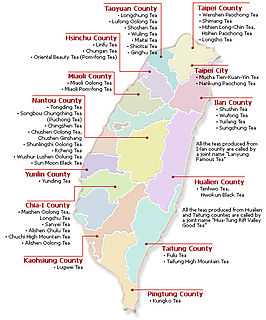
Taiwan is famous for its tea which are of four main types: oolong tea, black tea, green tea and white tea. The earliest record of tea trees found in Taiwan can be traced back to 1717 in Shui Sha Lian (水沙連), present-day Yuchi and Puli, Nantou County. Some of the teas retain the island country's former name, Formosa.

Dong Ding, also spelled Tung-ting, is an oolong tea from Taiwan. A translation of Dong Ding is "Frozen Summit" or "Icy Peak", and is the name of the mountain in Taiwan where the tea is cultivated. Those plants were brought to Taiwan from the Wuyi Mountains in China's Fujian Province about 150 years ago.


