
Look up unconscious in Wiktionary, the free dictionary.
Unconscious may refer to:
Unconscious may refer to:


Consciousness, at its simplest, is sentience and awareness of internal and external existence. However, its nature has led to millennia of analyses, explanations and debates by philosophers, theologians, linguists, and scientists. Opinions differ about what exactly needs to be studied or even considered consciousness. In some explanations, it is synonymous with the mind, and at other times, an aspect of mind. In the past, it was one's "inner life", the world of introspection, of private thought, imagination and volition. Today, it often includes any kind of cognition, experience, feeling or perception. It may be awareness, awareness of awareness, or self-awareness either continuously changing or not. The disparate range of research, notions and speculations raises a curiosity about whether the right questions are being asked.
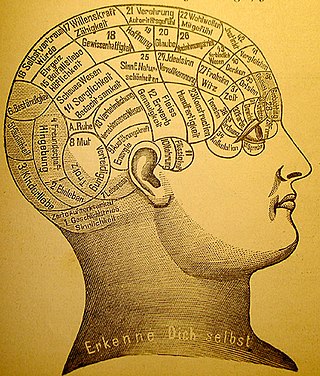
The mind is the set of faculties responsible for all mental phenomena. Often the term is also identified with the phenomena themselves. These faculties include thought, imagination, memory, will, and sensation. They are responsible for various mental phenomena, like perception, pain experience, belief, desire, intention, and emotion. Various overlapping classifications of mental phenomena have been proposed. Important distinctions group them according to whether they are sensory, propositional, intentional, conscious, or occurrent. Minds were traditionally understood as substances but it is more common in the contemporary perspective to conceive them as properties or capacities possessed by humans and higher animals. Various competing definitions of the exact nature of the mind or mentality have been proposed. Epistemic definitions focus on the privileged epistemic access the subject has to these states. Consciousness-based approaches give primacy to the conscious mind and allow unconscious mental phenomena as part of the mind only to the extent that they stand in the right relation to the conscious mind. According to intentionality-based approaches, the power to refer to objects and to represent the world is the mark of the mental. For behaviorism, whether an entity has a mind only depends on how it behaves in response to external stimuli while functionalism defines mental states in terms of the causal roles they play. Central questions for the study of mind, like whether other entities besides humans have minds or how the relation between body and mind is to be conceived, are strongly influenced by the choice of one's definition.
Psyche is the Greek term for "soul".

Unconsciousness is a state in which a living individual exhibits a complete, or near-complete, inability to maintain an awareness of self and environment or to respond to any human or environmental stimulus. Unconsciousness may occur as the result of traumatic brain injury, brain hypoxia, severe intoxication with drugs that depress the activity of the central nervous system, severe fatigue, pain, anaesthesia, and other causes.
The unconscious mind consists of processes in the mind that occur automatically and are not available to introspection. Although these processes exist beneath the surface of conscious awareness, they are thought to exert an effect on conscious thought processes and behavior. Empirical evidence suggests that unconscious phenomena include repressed feelings and desires, memories, automatic skills, subliminal perceptions, and automatic reactions. The term was coined by the 18th-century German Romantic philosopher Friedrich Schelling and later introduced into English by the poet and essayist Samuel Taylor Coleridge.
Blindsight is the ability of people who are cortically blind to respond to visual stimuli that they do not consciously see due to lesions in the primary visual cortex, also known as the striate cortex or Brodmann Area 17. The term was coined by Lawrence Weiskrantz and his colleagues in a paper published in a 1974 issue of Brain. A previous paper studying the discriminatory capacity of a cortically blind patient was published in Nature in 1973.
Developed in his (1999) book, "The Feeling of What Happens", Antonio Damasio's theory of consciousness proposes that consciousness arises from the interactions between the brain, the body, and the environment. According to this theory, consciousness is not a unitary experience, but rather emerges from the dynamic interplay between different brain regions and their corresponding bodily states. Damasio argues that our conscious experiences are influenced by the emotional responses that are generated by our body's interactions with the environment, and that these emotional responses play a crucial role in shaping our conscious experience. This theory emphasizes the importance of the body and its physiological processes in the emergence of consciousness.
In psychology, the subconscious is the part of the mind that is not currently of focal awareness.
Global workspace theory (GWT) is a simple cognitive architecture that has been developed to account qualitatively for a large set of matched pairs of conscious and unconscious processes. It was proposed by Bernard Baars. Brain interpretations and computational simulations of GWT are the focus of current research.
Hidden personality is the part of the personality that is determined by unconscious processes.
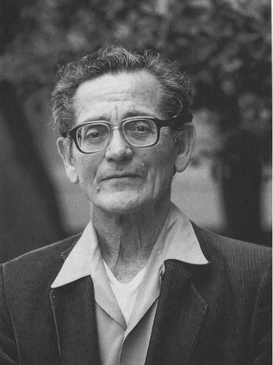
Benjamin Libet was an American neuroscientist who was a pioneer in the field of human consciousness. Libet was a researcher in the physiology department of the University of California, San Francisco. In 2003, he was the first recipient of the Virtual Nobel Prize in Psychology from the University of Klagenfurt, "for his pioneering achievements in the experimental investigation of consciousness, initiation of action, and free will".
A mental state, or a mental property, is a state of mind of a person. Mental states comprise a diverse class, including perception, pain experience, belief, desire, intention, emotion, and memory. There is controversy concerning the exact definition of the term. According to epistemic approaches, the essential mark of mental states is that their subject has privileged epistemic access while others can only infer their existence from outward signs. Consciousness-based approaches hold that all mental states are either conscious themselves or stand in the right relation to conscious states. Intentionality-based approaches, on the other hand, see the power of minds to refer to objects and represent the world as the mark of the mental. According to functionalist approaches, mental states are defined in terms of their role in the causal network independent of their intrinsic properties. Some philosophers deny all the aforementioned approaches by holding that the term "mental" refers to a cluster of loosely related ideas without an underlying unifying feature shared by all. Various overlapping classifications of mental states have been proposed. Important distinctions group mental phenomena together according to whether they are sensory, propositional, intentional, conscious or occurrent. Sensory states involve sense impressions like visual perceptions or bodily pains. Propositional attitudes, like beliefs and desires, are relations a subject has to a proposition. The characteristic of intentional states is that they refer to or are about objects or states of affairs. Conscious states are part of the phenomenal experience while occurrent states are causally efficacious within the owner's mind, with or without consciousness. An influential classification of mental states is due to Franz Brentano, who argues that there are only three basic kinds: presentations, judgments, and phenomena of love and hate.
The adaptive unconscious, first coined by social psychologist Daniel Wegner in 2002, is described as a set of mental processes that is able to affect judgement and decision-making, but is out of reach of the conscious mind. It is thought to be adaptive as it helps to keep the organism alive. Architecturally, the adaptive unconscious is said to be unreachable because it is buried in an unknown part of the brain. This type of thinking evolved earlier than the conscious mind, enabling the mind to transform information and think in ways that enhance an organism's survival. It can be described as a quick sizing up of the world which interprets information and decides how to act very quickly and outside the conscious view. The adaptive unconscious is active in everyday activities such as learning new material, detecting patterns, and filtering information. It is also characterized by being unconscious, unintentional, uncontrollable, and efficient without requiring cognitive tools. Lacking the need for cognitive tools does not make the adaptive unconscious any less useful than the conscious mind as the adaptive unconscious allows for processes like memory formation, physical balancing, language, learning, and some emotional and personalities processes that includes judgement, decision making, impression formation, evaluations, and goal pursuing. Despite being useful, the series of processes of the adaptive unconscious will not always result in accurate or correct decisions by the organism. The adaptive unconscious is affected by things like emotional reaction, estimations, and experience and is thus inclined to stereotyping and schema which can lead to inaccuracy in decision making. The adaptive conscious does however help decision making to eliminate cognitive biases such as prejudice because of its lack of cognitive tools.
In psychoanalysis, preconscious is the loci preceding consciousness. Thoughts are preconscious when they are unconscious at a particular moment, but are not repressed. Therefore, preconscious thoughts are available for recall and easily 'capable of becoming conscious'—a phrase attributed by Sigmund Freud to Josef Breuer.
John A. Bargh is a social psychologist currently working at Yale University, where he has formed the Automaticity in Cognition, Motivation, and Evaluation (ACME) Laboratory. Bargh's work focuses on automaticity and unconscious processing as a method to better understand social behavior, as well as philosophical topics such as free will. Much of Bargh's work investigates whether behaviors thought to be under volitional control may result from automatic interpretations of and reactions to external stimuli, such as words.
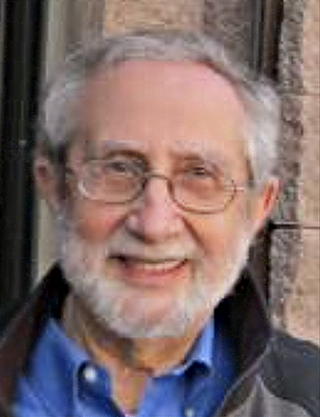
David Rosenthal is an American philosopher who has made significant contributions to the philosophy of mind, particularly in the area of consciousness and related topics. He is professor of philosophy at the Graduate Center of the City University of New York (CUNY). He was educated at the University of Chicago and then Princeton University. Rosenthal also has research interests in cognitive science, and is Coordinator of the CUNY Graduate Center's Interdisciplinary Concentration in Cognitive Science. And he has done work in philosophy of language, metaphysics, ancient philosophy, and 17th-century rationalism.
Primary consciousness is a term the American biologist Gerald Edelman coined to describe the ability, found in humans and some animals, to integrate observed events with memory to create an awareness of the present and immediate past of the world around them. This form of consciousness is also sometimes called "sensory consciousness". Put another way, primary consciousness is the presence of various subjective sensory contents of consciousness such as sensations, perceptions, and mental images. For example, primary consciousness includes a person's experience of the blueness of the ocean, a bird's song, and the feeling of pain. Thus, primary consciousness refers to being mentally aware of things in the world in the present without any sense of past and future; it is composed of mental images bound to a time around the measurable present.
Bhavaṅga, also bhavanga-sota and bhavanga-citta is a passive mode of intentional consciousness (citta) described in the Abhidhamma of Theravada Buddhism. It is also a mental process which conditions the next mental process at the moment of death and rebirth. It is an exclusively Theravada doctrine that differs from Sarvastivadin and Sautrantika theories of mind, and has been compared to the Mahayana concept of store-consciousness.
This is a glossary of terms used in New Thought.

Consciousness and the Brain: Deciphering How the Brain Codes Our Thoughts is a 2014 book by Stanislas Dehaene. It summarizes research on the neuroscience of consciousness, particularly from recent decades.