
Arthur Aikin, FLS, FGS was an English chemist, mineralogist and scientific writer, and was a founding member of the Chemical Society. He first became its treasurer in 1841, and later became the society's second president.

Solomon Schechter was a Moldavian-born American rabbi, academic scholar and educator, most famous for his roles as founder and President of the United Synagogue of America, President of the Jewish Theological Seminary of America, and architect of American Conservative Judaism.

Alfred Ernest Jones was a Welsh neurologist and psychoanalyst. A lifelong friend and colleague of Sigmund Freud from their first meeting in 1908, he became his official biographer. Jones was the first English-speaking practitioner of psychoanalysis and became its leading exponent in the English-speaking world. As President of both the International Psychoanalytical Association and the British Psycho-Analytical Society in the 1920s and 1930s, Jones exercised a formative influence in the establishment of their organisations, institutions and publications.

Sir Adolphus William Ward was an English historian and man of letters.

Cyrus Adler was an American educator, Jewish religious leader and scholar.

The Polish Academy of Arts and Sciences or Polish Academy of Learning, headquartered in Kraków and founded in 1872, is one of two institutions in contemporary Poland having the nature of an academy of sciences.
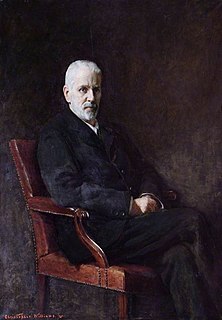
Claude Joseph Goldsmid Montefiore, also Goldsmid–Montefiore or just Goldsmid Montefiore (1858–1938) was the intellectual founder of Anglo-Liberal Judaism and the founding president of the World Union for Progressive Judaism, a scholar of the Hebrew Bible, rabbinic literature and New Testament. He was a significant figure in the contexts of modern Jewish religious thought, Jewish-Christian relations, and Anglo-Jewish socio-politics, and educator. Montefiore was President of the Anglo-Jewish Association and an influential anti-Zionist leader, who co-founded the anti-Zionist League of British Jews in 1917.
Theodor Goldstücker was a German Sanskrit scholar.
Sarpay Beikman originated as the Burmese Translation Society. Its first President was Prime Minister U Nu, who started a Burmese translation job at Judson College. The purpose was to translate world culture, literature, education for the Burmese public. In 1963 the society was absorbed into the Ministry of Information's Printing and Publishing Enterprise as the Sarpay Beikman Literature House, and the mandate was extended to encourage local writers and to print and publish books of all types. The society presents the annual Sarpay Beikman Manuscript Awards and Burma National Literature Awards for excellent new unpublished and published writing in various categories.

Joseph Jacobs was an Australian folklorist, translator, literary critic, social scientist, historian and writer of English literature who became a notable collector and publisher of English folklore.

Nohum Shtif, was a Jewish linguist, literary historian, publisher, translator, and philologist of the Yiddish language and social activist. In his early years he wrote under the pen name Baal Dimion.
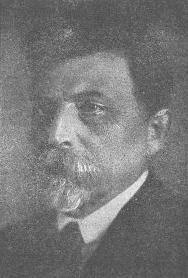
Chaim Zhitlowsky was a Jewish socialist, philosopher, social and political thinker, writer and literary critic born in Ushachy, Vitebsk Governorate, Russian Empire.
Harold Pinter and academia concerns academic recognition of and scholarship pertaining to Harold Pinter, CH, CBE (1930–2008), English playwright, screenwriter, actor, director, poet, author, political activist, and the 2005 Nobel Laureate in Literature, at the time of his death considered by many "the most influential and imitated dramatist of his generation."

VOKS was an entity created by the government of the Soviet Union in 1925 to promote international cultural contact between writers, composers, musicians, cinematographers, artists, scientists, educators, and athletes of the USSR with those of other countries. The organization conducted tours and conferences of such cultural workers.
Saad Abdulrahman Albazei is a Saudi intellectual who is known for his critiques of Arabic culture and comparative studies that map the East-West cultural and literary relations.
Indian Mathematical Society (IMS) is the oldest organization in India devoted to the promotion of study and research in mathematics. The Society was founded in April 1907 by V. Ramaswami Aiyar with its headquarters at Pune. The Society started its activities under the tentatively proposed name Analytic Club and the name was soon changed to Indian Mathematical Club. After the adoption of a new constitution in 1910, the society acquired its present name, namely, the Indian Mathematical Society. The first president of the Society was B. Hanumantha Rao.

Alek D. Epstein is a Russian-Israeli sociologist of culture and politics. He divides his time between Jerusalem and Moscow, taking part in a number of academic, educational, social change and civil rights activism projects in both countries. An expert in Israeli art, history and politics, as well as in the history of the Arab-Israeli conflict, he published more than 200 manuscripts in various scientific journals and collections and authored more than twenty books on Israel and the Middle East, published in various languages worldwide.

The sociology of Jewry involves the application of sociological theory and method to the study of the Jewish people and the Jewish religion. Sociologists are concerned with the social patterns within Jewish groups and communities; American Jewry, Israeli Jews and Jewish life in the diaspora. Sociological studies of the Jewish religion include religious membership, ritual and denominational patterns. Notable journals include Jewish Social Studies, The Jewish Journal of Sociology and Contemporary Jewry.
The Kipling Society is a literary society open to everyone interested in the work and life of British author Rudyard Kipling (1865–1936). The Kipling Society focuses on Kipling and his place in English Literature, and as such attracts members from all over the world, both general readers and academic researchers.
Mark Lvovich Slonim was a Russian politician, literary critic, scholar and translator. He was a lifelong member of the Socialist Revolutionary Party, and, in 1917, served as its deputy for Bessarabia in the Russian Constituent Assembly. He joined the Samara Government during the early phases of the Civil War, opposing both the Bolsheviks and the conservative elements of the White movement. Assigned to his party's Foreign Delegation, Slonim lobbied unsuccessfully for the return of Bessarabia to Russia during the Paris Peace Conference. After a short stay in Tuscany, he settled in Czechoslovakia in 1922, an editor of Volya Rossii review.


