Research
Urban Sustainability Index
The Urban Sustainability Index (USI) is a unique tool tailored specifically for Chinese cities. Its purpose is to assist urban leaders in making informed policy decisions by identifying cities that would derive the greatest benefits from sustainable development initiatives. Additionally, the index aims to showcase effective case studies by identifying and analyzing cities that have demonstrated notable progress in recent years. The USI was initially published by UCI in November 2010, with the first annual update completed in April 2012.
Urban Financing
Lack of urban development funding has been one of the major bottlenecks for China's urbanization. This project explores financing models for local government that provide support for promoting urban development and meeting the various needs of the growing population. The research will review best international practice of urban financing by municipal governments as well as conduct several case studies. It will then comprehensively analyze problems existing in current urban financing mechanisms in China and financing needs of different local governments. Based on the analysis, the research will propose financing models and case studies especially for the development of the energy industry, infrastructure, affordable housing and industrial zones.
Smart City
The construction of smart cities could bring a new investment wave in urban infrastructure and change city management in many aspects. This project seeks an in-depth understanding of smart city construction practices in China, and to develop a smart city construction model fitting actual situation of China on the bases of related theories and international experiences. The research will review the basic concept and development history of smart city, and compare the experiences of the typical districts and cities in China (Beijing, Shanghai, Jiang’an (Wuhan), Zhenhai (Ningbo), Xixian (Xian), and so on) and developed countries.
Monitoring and Evaluation of Local Government
China is in a phase of rapid urbanization guided by the forthcoming National Plan of Promoting Healthy Development of Urbanization. This research will employ the Urban Indicator System jointly developed by the Urban China Initiative and the National Development and Reform Commission in 2012 to monitor the urbanization process at both national and local scale, evaluate developments in economy, society and environment and assess the implementation of urbanization policies. The research will also select high-performing cities to review their experience and identify possible suggestions for under-performing cities. The research is expected to propose the establishment of a nationwide database, to publish an annual monitoring report and to provide case studies of implementation of urbanization policies.
Urban Indicator System
The Urban China Initiative and the Department of Development Planning (DDP) at the National Development and Reform Commission (NDRC) are currently conducting joint research to build a comprehensive indicators system to assess the pace and quality of China's urbanization. The Urban Indicators System will be informed by UCI's past work in the area of sustainability indicators. The system will inform the drafting of the NDRC's long-term urban policy plan, in particular three major challenges facing China as it urbanizes: integration of migrants into cities, optimization of urban layouts and structures, and ensuring sustainable development of China's growing cities.
Urban Citizenship of Chinese Migrants
The Urban China Initiative cooperates with National Development and Reform Commission, Sichuan Development and Reform Commission, and Guangdong Development and Reform Commission on Policy Research on Urban Citizenship of Chinese Migrants. China’s urbanization witnesses a massive influx of rural peasants toward cities. These so-called migrant workers – amounting to more than 200 million in China – provided cheap and productive labor for China's economic boom in urban areas. But they usually fall victim to China's divided rural-urban social policies and are largely denied government benefits that urban residents receive. The central and local governments have launched a series of pilot programs to help migrants better integrate into cities. The UCI research aims to take stock of these experiments and provide inputs to relevant policy makings.
Research on Mega Regions
The Urban China Initiative works with the National Development and Reform Commission and Guangdong Development and Reform Commission in combining through the cases of mega region planning in the world in order to find the best international practices. The joint research makes a comprehensive review on the forming and evolving of mega regions. It also sums up the major challenges and solutions of a series of classic mega region cases in the world to provide strategic thinking to Chinese policy making in the field of spatial planning, density and intra-cluster network development.
Grants
The Urban China Initiative's grant program promotes innovative research on urban development in China, leading to the publication of working papers and implementation through city pilots. Upon completion of supported research projects, UCI reviews successful grant-supported projects for implementation in pilot programs at the city level in cooperation with local authorities.
The Urban China Initiative accepts grant applications twice a year. To encourage researchers and practitioners pursuing the topic of sustainable urbanization, UCI accepts research applications on a bi-annual basis for grants up to RMB 100,000. Research for the grants is expected to be completed within a year. Successful applicants are required to produce a research paper to be published as part of the Initiative's research program.
Core Grants (up to RMB 100,000) are identified as Urban China Initiative projects and receive research assistance and analytical support from the Initiative in addition to grant funding.
Research Grants (up to RMB 50,000) may be used to carry out the grantee's research proposal, including hiring research assistants, obtaining course relief, and funding travel and per diems.
UCI supports research on the effectiveness of programs and technologies related to urban development; emerging domestic and global best practices in project design, development, and execution; and paths to successful structural adjustment in China's cities. Grant-supported research focuses on sustainable urbanization, including but not limited to public health, energy efficiency, consumer awareness, public finance, industrial policy, migrant labor, urban infrastructure, environmental issues, social development, housing and land, and education.
Events
Annual Forum
The UCI Annual Forum provides an inclusive forum for international and Chinese urban thinkers to discuss urban problems and trends, to trigger innovative ideas for solutions, and to create a network of policy makers, professionals and academics.
The UCI hosted its first annual forum in Beijing on October 22, 2011, providing a dialogue platform for over 300 participants. And the 2012 annual forum in Beijing on September 7, involves more than 400 urbanists from central and local government, academia, corporates, and nonprofits.
Urban Leaders Roundtable
The Urban Leaders Roundtable Series is UCI's quarterly flagship and invitation-only event. The event brings together 20 leaders in China, including ministers, government directors, corporate senior executives, NGO leaders, and top academic theorists. The roundtable series examines pressing urban issues in China.
Training
The UCI hosts and co-organizes trainings on urban issues. These trainings provide theoretical and practical knowledge for urbanists to think in a professional, systematic, and long-term way and make wiser decisions for the sustainable development of China's cities. Trainers are mainly scholars and professional experts in urban affairs. It is our hope that these training sessions will help Chinese cities learn from domestic and international best practices.
Workshops
In addition to the Annual Forum and Urban Leaders Roundtable, a series of urbanization workshops are held to convene professionals involved in China's urban affairs to examine problems, solutions, and implications of specific urbanization challenges.

The National Civic League is an American nonpartisan, non-profit organization founded in 1894 as the "National Municipal League," it adopted its new name in 1937. Its mission is to advance civic engagement to create equitable, thriving communities. To upgrade quality and efficiency of government in cities it enlists the business and professional classes, and promotes greater involvement in government. It also sought create merit-based systems for selecting public officials. The League envisions a country where the full diversity of community members are actively and meaningfully engaged in local governance, including both decision making and implementation of activities to advance the common good. It also promotes professional management of local government through publication of "model charters" for both city and county governments.

The Ministry of Finance of the People's Republic of China is the constituent department of the State Council of the People's Republic of China which administers macroeconomic policies and the annual budget. It also handles fiscal policy, economic regulations and government expenditure for the state.
Hukou is a system of household registration used in mainland China. The system itself is more properly called "huji", and has origins in ancient China; hukou is the registration of an individual in the system. A household registration record officially identifies a person as a permanent resident of an area and includes identifying information such as name, parents, spouse and date of birth. A hukou can also refer to a family register in many contexts since the household register is issued per family, and usually includes the births, deaths, marriages, divorces, and moves, of all members in the family.
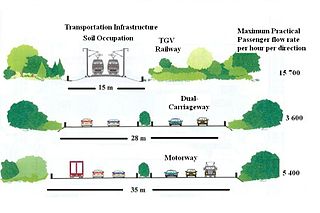
Sustainable urban infrastructure expands on the concept of urban infrastructure by adding the sustainability element with the expectation of improved and more resilient urban development. In the construction and physical and organizational structures that enable cities to function, sustainability also aims to meet the needs of the present generation without compromising the capabilities of the future generations.
The United Nations Human Settlements Programme (UN-Habitat) is the United Nations programme for human settlements and sustainable urban development. It was established in 1977 as an outcome of the first United Nations Conference on Human Settlements and Sustainable Urban Development held in Vancouver, Canada, in 1976. UN-Habitat maintains its headquarters at the United Nations Office at Nairobi, Kenya. It is mandated by the United Nations General Assembly to promote socially and environmentally sustainable towns and cities with the goal of providing adequate shelter for all. It is a member of the United Nations Development Group. The mandate of UN-Habitat derives from the Habitat Agenda, adopted by the United Nations Conference on Human Settlements in Istanbul, Turkey, in 1996. The twin goals of the Habitat Agenda are adequate shelter for all and the development of sustainable human settlements in an urbanizing world.
An eco-city or ecocity is "a human settlement modeled on the self-sustaining resilient structure and function of natural ecosystems", as defined by Ecocity Builders. Simply put, an eco-city is an ecologically healthy city. The World Bank defines eco-cities as "cities that enhance the well-being of citizens and society through integrated urban planning and management that harness the benefits of ecological systems and protect and nurture these assets for future generations". Although there is no universally accepted definition of an 'eco-city', among available definitions, there is some consensus on the basic features of an eco-city.
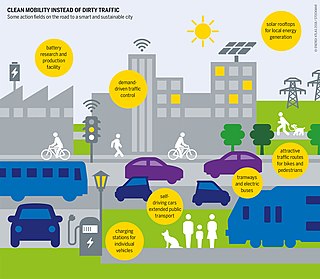
A smart city is a technologically modern urban area that uses different types of electronic methods and sensors to collect specific data. Information gained from that data is used to manage assets, resources and services efficiently; in return, that data is used to improve operations across the city. This includes data collected from citizens, devices, buildings and assets that is processed and analyzed to monitor and manage traffic and transportation systems, power plants, utilities, urban forestry, water supply networks, waste, criminal investigations, information systems, schools, libraries, hospitals, and other community services. Smart cities are defined as smart both in the ways in which their governments harness technology as well as in how they monitor, analyze, plan, and govern the city. In smart cities, the sharing of data is not limited to the city itself but also includes businesses, citizens and other third parties that can benefit from various uses of that data. Sharing data from different systems and sectors creates opportunities for increased understanding and economic benefits.

Urbanization in China increased in speed following the initiation of the reform and opening policy. By the end of 2023, China had an urbanization rate of 66.2% and is expected to reach 75-80% by 2035.
Internal migration in the People's Republic of China is one of the most extensive in the world according to the International Labour Organization. This is because migrants in China are commonly members of a floating population, which refers primarily to migrants in China without local household registration status through the Chinese Hukou system. In general, rural-urban migrant most excluded from local educational resources, citywide social welfare programs and many jobs because of their lack of hukou status. Migrant workers are not necessarily rural workers; they can simply be people living in urban areas with rural household registration.
Sustainability metrics and indices are measures of sustainability, using numbers to quantify environmental, social and economic aspects of the world. There are multiple perspectives on how to measure sustainability as there is no universal standard. Intead, different disciplines and international organizations have offered measures or indicators of how to measure the concept.
The Boston Foundation is a community foundation established in 1915. Serving the city of Boston, Massachusetts, it is made up of nearly 1,100 separate charitable funds established by donors over more than 100 years. Funds are set up for the community or for special purposes, such as supporting individual non-profit organizations or particular causes. Since 2001, the Boston Foundation has commissioned and published research, hosted forums and platforms for discussion and public policy development, and joined or formed coalitions addressing issues around individual-, systems- and root-level causes of inequity facing Boston and the region.

The 2030 Agenda for Sustainable Development, adopted by all United Nations members in 2015, created 17 world Sustainable Development Goals (SDGs). They were created with the aim of "peace and prosperity for people and the planet..." – while tackling climate change and working to preserve oceans and forests. The SDGs highlight the connections between the environmental, social and economic aspects of sustainable development. Sustainability is at the center of the SDGs.

The Alliance for Financial Inclusion (AFI) is a policy leadership alliance owned and led by member central banks and financial regulatory in developing countries with the objective of advancing financial inclusion.
The East Asian Bureau of Economic Research (EABER) is a forum for economic research and analysis of the major issues facing the economies of East Asia.
Habitat III, the United Nations Conference on Housing and Sustainable Urban Development, took place in Quito, Ecuador, from 17 – 20 October 2016.

Established in 1992, the Major Group for Children and Youth is the United Nations General Assembly mandated, official, formal and self-organised space for children and youth to contribute to and engage in certain intergovernmental and allied policy processes at the United Nations.

Sustainable Development Goal 11, titled "sustainable cities and communities", is one of 17 Sustainable Development Goals established by the United Nations General Assembly in 2015. The official mission of SDG 11 is to "Make cities inclusive, safe, resilient and sustainable". The 17 SDGs take into account that action in one area will affect outcomes in other areas as well, and that development must balance social, economic and environmental sustainability.
Sustainable finance is the set of practices, standards, norms, regulations and products that pursue financial returns alongside environmental and/or social objectives. It is sometimes used interchangeably with Environmental, Social & Governance (ESG) investing. However, many distinguish between ESG integration for better risk-adjusted returns and a broader field of sustainable finance that also includes impact investing, social finance and ethical investing.

Climate change and cities are deeply connected. Cities are one of the greatest contributors and likely best opportunities for addressing climate change. Cities are also one of the most vulnerable parts of the human society to the effects of climate change, and likely one of the most important solutions for reducing the environmental impact of humans. The UN projects that 68% of the world population will live in urban areas by 2050. In the year 2016, 31 mega-cities reported having at least 10 million in their population, 8 of which surpassed 20 million people. However, secondary cities - small to medium size cities are rapidly increasing in number and are some of the fastest growing urbanizing areas in the world further contributing to climate change impacts. Cities have a significant influence on construction and transportation—two of the key contributors to global warming emissions. Moreover, because of processes that create climate conflict and climate refugees, city areas are expected to grow during the next several decades, stressing infrastructure and concentrating more impoverished peoples in cities.

Eco-Citiesin China are ambitious, planned urban development projects that serve as a key component of China’s climate change and urbanization strategies, which aim to integrate environmental sustainability with urban planning and design. These cities are envisioned as models of sustainable development, seeking to address the pressing challenges of rapid urbanization, environmental degradation, and resource constraints in China. With their emphasis on green technologies, low-carbon infrastructure, and eco-friendly practices, Chinese eco-cities strive to create livable, harmonious, and ecologically conscious urban environments.

