
In biology, histones are highly basic proteins abundant in lysine and arginine residues that are found in eukaryotic cell nuclei. They act as spools around which DNA winds to create structural units called nucleosomes. Nucleosomes in turn are wrapped into 30-nanometer fibers that form tightly packed chromatin. Histones prevent DNA from becoming tangled and protect it from DNA damage. In addition, histones play important roles in gene regulation and DNA replication. Without histones, unwound DNA in chromosomes would be very long. For example, each human cell has about 1.8 meters of DNA if completely stretched out; however, when wound about histones, this length is reduced to about 90 micrometers (0.09 mm) of 30 nm diameter chromatin fibers.
In molecular biology and genetics, transcriptional regulation is the means by which a cell regulates the conversion of DNA to RNA (transcription), thereby orchestrating gene activity. A single gene can be regulated in a range of ways, from altering the number of copies of RNA that are transcribed, to the temporal control of when the gene is transcribed. This control allows the cell or organism to respond to a variety of intra- and extracellular signals and thus mount a response. Some examples of this include producing the mRNA that encode enzymes to adapt to a change in a food source, producing the gene products involved in cell cycle specific activities, and producing the gene products responsible for cellular differentiation in multicellular eukaryotes, as studied in evolutionary developmental biology.

Regulation of gene expression, or gene regulation, includes a wide range of mechanisms that are used by cells to increase or decrease the production of specific gene products. Sophisticated programs of gene expression are widely observed in biology, for example to trigger developmental pathways, respond to environmental stimuli, or adapt to new food sources. Virtually any step of gene expression can be modulated, from transcriptional initiation, to RNA processing, and to the post-translational modification of a protein. Often, one gene regulator controls another, and so on, in a gene regulatory network.
Myc is a family of regulator genes and proto-oncogenes that code for transcription factors. The Myc family consists of three related human genes: c-myc (MYC), l-myc (MYCL), and n-myc (MYCN). c-myc was the first gene to be discovered in this family, due to homology with the viral gene v-myc.
Sir Philip Cohen is a British researcher, academic and Royal Medal winner based at the Medical Research Council Protein Phosphorylation and Ubiquitylation Unit, School of Life Sciences at the University of Dundee.

Histone-modifying enzymes are enzymes involved in the modification of histone substrates after protein translation and affect cellular processes including gene expression. To safely store the eukaryotic genome, DNA is wrapped around four core histone proteins, which then join to form nucleosomes. These nucleosomes further fold together into highly condensed chromatin, which renders the organism's genetic material far less accessible to the factors required for gene transcription, DNA replication, recombination and repair. Subsequently, eukaryotic organisms have developed intricate mechanisms to overcome this repressive barrier imposed by the chromatin through histone modification, a type of post-translational modification which typically involves covalently attaching certain groups to histone residues. Once added to the histone, these groups elicit either a loose and open histone conformation, euchromatin, or a tight and closed histone conformation, heterochromatin. Euchromatin marks active transcription and gene expression, as the light packing of histones in this way allows entry for proteins involved in the transcription process. As such, the tightly packed heterochromatin marks the absence of current gene expression.

Eukaryotic translation initiation factor 4E, also known as eIF4E, is a protein that in humans is encoded by the EIF4E gene.

Pvt1 oncogene, also known as PVT1 or Plasmacytoma Variant Translocation 1 is a long non-coding RNA gene. In mice, this gene was identified as a breakpoint site in chromosome 6;15 translocations. These translocations are associated with murine plasmacytomas. The equivalent translocation in humans is t(2;8), which is associated with a rare variant of Burkitt's lymphoma. In rats, this breakpoint was shown to be a common site of proviral integration in retrovirally induced T lymphomas. Transcription of PVT1 is regulated by Myc.
Dario Alessi FRSE FRS is a biochemist, Director of the Medical Research Council Protein Phosphorylation and Ubiquitylation Unit and Professor of Signal Transduction, at the School of Life Sciences, University of Dundee.

Robin Campbell Allshire is Professor of Chromosome Biology at University of Edinburgh and a Wellcome Trust Principal Research Fellow. His research group at the Wellcome Trust Centre for Cell Biology focuses on the epigenetic mechanisms governing the assembly of specialised domains of chromatin and their transmission through cell division.

Thomas Jenuwein is a German scientist working in the fields of epigenetics, chromatin biology, gene regulation and genome function.

Neil Alexander Steven Brockdorff is a Wellcome Trust Principal Research Fellow and professor in the department of biochemistry at the University of Oxford. Brockdorff's research investigates gene and genome regulation in mammalian development. His interests are in the molecular basis of X-inactivation, the process that evolved in mammals to equalise X chromosome gene expression levels in XX females relative to XY males.
Anindya Dutta is an Indian-born American biochemist and cancer researcher, a Chair of the Department of Genetics at the University of Alabama at Birmingham School of Medicine since 2021, who has served as Chair of the Department of Biochemistry and Molecular Genetics at the University of Virginia School of Medicine in 2011–2021. Dutta's research has focused on the mammalian cell cycle with an emphasis on DNA replication and repair and on noncoding RNAs. He is particularly interested in how de-regulation of these processes promote cancer progression. For his accomplishments he has been elected a Fellow of the American Association for the Advancement of Science, received the Ranbaxy Award in Biomedical Sciences, the Outstanding Investigator Award from the American Society for Investigative Pathology, the Distinguished Scientist Award from the University of Virginia and the Mark Brothers Award from the Indiana University School of Medicine.
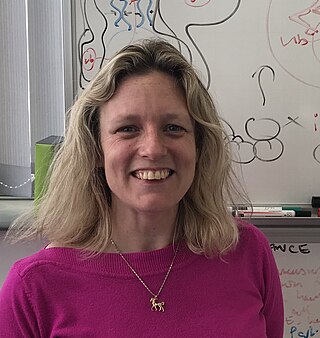
Helen Walden is an English structural biologist who received the Colworth medal from the Biochemical Society in 2015. She was awarded European Molecular Biology Organization (EMBO) membership in 2022. She is a Professor of Structural Biology at the University of Glasgow and has made significant contributions to the Ubiquitination field.
Asifa Akhtar is a Pakistani biologist who has made significant contributions to the field of chromosome regulation. She is Senior Group Leader and Director of the Department of Chromatin Regulation at the Max Planck Institute of Immunobiology and Epigenetics. Akhtar was awarded EMBO membership in 2013. She became the first international and female Vice President of the Max Planck Society's Biology and Medicine Section in July 2020.

Claire Eyers is a British biological mass spectrometrist who is professor of biological mass spectrometry at the University of Liverpool, where she heads up the Centre for Proteome Research. Her research publications list her either as Claire E Haydon or Claire E Eyers.
Anne Bertolotti is a French biochemist and cell biologist who works as Programme Leader at the MRC Laboratory of Molecular Biology in Cambridge, UK. She is known for her research into the cellular defences against misfolded proteins and the mechanisms underlying their deposition, the molecular problem causative of neurodegenerative diseases.

Sónia Maria Campos Soares da Rocha, usually referred to as Professor Sónia Rocha, is a Portuguese cell biologist who holds a personal chair in biochemistry at the University of Liverpool, where she is the head of the Department of Biochemistry. Rocha runs an active multidisciplinary cell signaling research group studying hypoxia, and focused around transcription factors such as Hypoxia-inducible factors and NF-κB. Her laboratory is currently based in the Institute of Integrative Biology.
Miratul Muqit FRSE is a British neurologist and a Programme Lead at the MRC Protein Phosphorylation and Ubiquitylation Unit (MRCPPU) in the School of Life Sciences at the University of Dundee. His research focuses on the study of the PINK1 gene, mutations in which are a major cause of Parkinson’s disease.

M. Madan Babu is an Indian-American computational biologist and bioinformatician. He is the endowed chair in biological data science and director of the center of excellence for data-driven discovery at St. Jude Children’s Research Hospital. Previously, he served as a programme leader at the MRC Laboratory of Molecular Biology (LMB).


