
Odesa is the third most populous city and municipality in Ukraine and a major seaport and transport hub located in the south-west of the country, on the northwestern shore of the Black Sea. The city is also the administrative centre of the Odesa Raion and Odesa Oblast, as well as a multiethnic cultural centre. As of January 2021, Odesa's population was approximately 1,010,537. On 25 January 2023, its historic city centre was declared a World Heritage Site and added to the List of World Heritage in Danger by the UNESCO World Heritage Committee in recognition of its influence on cinema, literature, and the arts. The declaration was made in response to the bombing of Odesa during the Russian invasion of Ukraine, which has damaged or destroyed buildings across the city.

Battleship Potemkin, sometimes rendered as Battleship Potyomkin, is a 1925 Soviet silent epic film produced by Mosfilm. Directed and co-written by Sergei Eisenstein, it presents a dramatization of the mutiny that occurred in 1905 when the crew of the Russian battleship Potemkin rebelled against its officers.
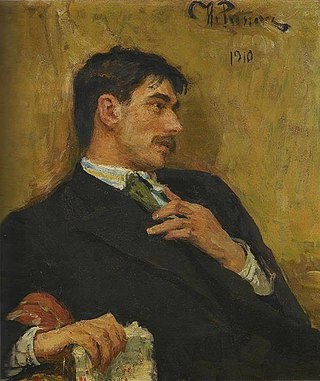
Korney Ivanovich Chukovsky was one of the most popular children's poets in the Russian language. His catchy rhythms, inventive rhymes and absurd characters have invited comparisons with the American children's author Dr. Seuss. Chukovsky's poems Tarakanische, Krokodil ("Crocodile"), Telefon and Moydodyr ("Wash-'em-Clean") have been favorites with many generations of Russophone children. Lines from his poems, in particular Telefon, have become universal catch-phrases in the Russian media and everyday conversation. He adapted the Doctor Dolittle stories into a book-length Russian poem as Doctor Aybolit, and translated a substantial portion of the Mother Goose canon into Russian as Angliyskiye Narodnyye Pesenki. He also wrote very popular translations of Walt Whitman, Mark Twain, Oscar Wilde, Rudyard Kipling, O. Henry, and other authors, and was an influential literary critic and essayist.

NikodimPavlovich Kondakov, was an art historian with special expertise in the history of Russian and Serbian Christian icons. He is remembered as a pioneer among art historian who studied the treasures of Mount Athos like Frenchman Gabriel Millet.
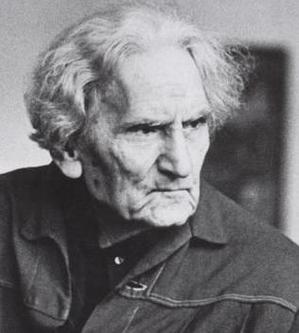
Martiros Saryan was an Armenian painter, the founder of a modern Armenian national school of painting.

Vladimir Davidovich Baranov-Rossiné, also spelled Baranoff-Rossiné, born Shulim Wolf Leib Baranov, was a painter and sculptor active in Russia and France. His work belonged to the avant-garde movement of Cubo-Futurism. He was also an inventor.

Kseniya Boguslavskaya was a Russian avant-garde artist, illustrator and scenic designer. She was the wife of the painter Ivan Puni, whom he supported very much.

Vladimir Davydovych Burliuk was a Ukrainian avant-garde artist and book illustrator from the Russian empire. He died at the age of 32 in 1917 in World War I.

Pyotr Alexandrovich Nilus. was a Russian and Ukrainian impressionist painter and writer.
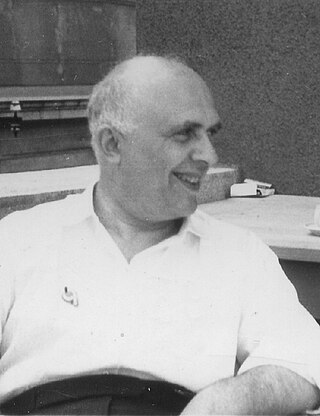
Vitaly Halberstadt was a French chess player, theorist, problemist, and a noted endgame study composer.
Pogroms in the Russian Empire were large-scale, targeted, and repeated anti-Jewish rioting that began in the 19th century. Pogroms began to occur after Imperial Russia, which previously had very few Jews, acquired territories with large Jewish populations from the Polish–Lithuanian Commonwealth and the Ottoman Empire from 1772 to 1815. These territories were designated "the Pale of Settlement" by the Imperial Russian government, within which Jews were reluctantly permitted to live. The Pale of Settlement primarily included the territories of Poland, Ukraine, Belarus, Bessarabia, Lithuania and Crimea. Jews were forbidden from moving to other parts of European Russia, unless they converted from Judaism or obtained a university diploma or first guild merchant status. Migration to the Caucasus, Siberia, the Far East or Central Asia was not restricted.

Lucien Dulfan is a Soviet-born conceptualist artist, resident in the United States since 1990. During his career in the USSR, he was considered a Nonconformist artist.
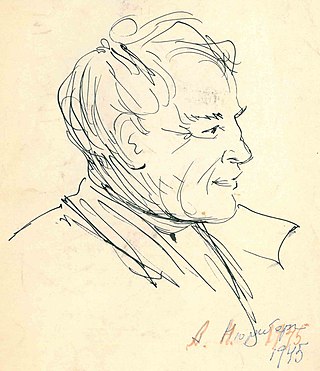
Amshey Markovich Nurenberg was a Ukrainian, Russian and Soviet painter, graphic artist, art critic, and memoirist. He was an adherent of the School of Paris.

Arnold Borisovich Lakhovsky was a painter and sculptor of Ukrainian-Jewish descent, he was known for his landscape paintings.

Ivan Pavlovich Pokhitonov was a Russian landscape painter and graphic artist, who spent much of his working life in France and Belgium.
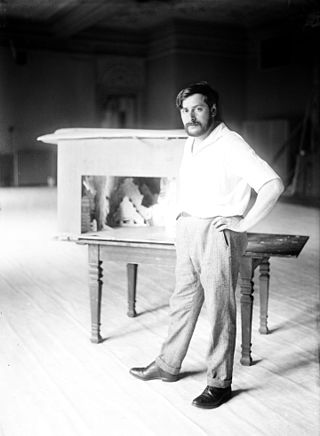
Boris Izrailevich Anisfeld (1878–1973) was a Russian-American painter and theater designer.
David Nowakowsky (1848-1921) was a Russian/Ukrainian Jewish composer, choirmaster and music teacher. Along with several contemporaries, Nowakowsky integrated traditional Jewish liturgical modes with western harmonies and styles, reinvigorating music for the synagogue. He was also noted as the music director and choirmaster of the Brody Synagogue in Odessa for 50 years. His work is not well known today although he is mentioned in Ira Gershwin's song, Tschaikowsky .

Leonid Isaakovich Vail was a painter and art theorist from the Russian Empire. He was born in Vinnytsia, in the Podolia Governorate of the Russian Empire, to a family of Russian-Jewish Traders. Vail spent his childhood in Odessa, where he graduated at Grekov Odessa Art school, later enrolling at the Imperial Academy of Arts, St.Petersburg. Vail began painting studies at the age of 17.
Nadezhda (Esther) Markovna Ulanovskaya (1903—1986), AKA Nadia or Nadya, was a Soviet intelligence GRU officer, translator, English teacher, wife of Alexander Ulanovsky, and mother of Maya Ulanovskaya.
Juda Solomonovich Grossman was a Ukrainian revolutionary anarchist, journalist and literary critic.


