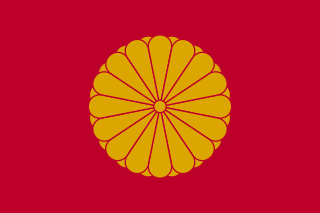
The Emperor of Japan is the monarch, "de facto" head of state and head of the Imperial House of Japan. Under the Constitution of Japan, he is defined as the symbol of the Japanese state and the unity of the Japanese people, and his position is derived from "the will of the people with whom resides sovereign power". Imperial Household Law governs the line of imperial succession. The emperor is immune from prosecution by the Supreme Court of Japan. He is the head of the Shinto religion. In Japanese, the emperor is called Tennō, literally "Emperor of heaven" or "Heavenly Sovereign". The Japanese Shinto religion holds him to be the direct descendant of the sun goddess Amaterasu.

The Fujiwara clan was a powerful family of imperial regents in Japan, descending from the Nakatomi clan and, as legend held, through them their ancestral god Ame-no-Koyane. The Fujiwara prospered since the ancient times and dominated the imperial court until the Meiji Restoration in 1868. They held the title of Ason. The abbreviated form is Tōshi (藤氏).

Shogun, officially Sei-i Taishōgun, was the title of the military dictators of Japan during most of the period spanning from 1185 to 1868. Nominally appointed by the Emperor, shoguns were usually the de facto rulers of the country, although during part of the Kamakura period, shoguns were themselves figureheads, with real power in the hands of the Shikken of the Hōjō clan.

Emperor Go-Daigo was the 96th emperor of Japan, according to the traditional order of succession. He successfully overthrew the Kamakura shogunate in 1333 and established the short-lived Kenmu Restoration to bring the Imperial House back into power. This was to be the last time the emperor had real power until the Meiji Restoration in 1868. The Kenmu restoration was in turn overthrown by Ashikaga Takauji in 1336, ushering in the Ashikaga shogunate, and split the imperial family into two opposing factions between the Ashikaga backed Northern Court situated in Kyoto and the Southern Court based in Yoshino led by Go-Daigo and his later successors.

The Forbidden City is a palace complex in Dongcheng District, Beijing, China, at the center of the Imperial City of Beijing. It is surrounded by numerous opulent imperial gardens and temples including the 22 ha (54-acre) Zhongshan Park, the sacrificial Imperial Ancestral Temple, the 69 ha (171-acre) Beihai Park, and the 23 ha (57-acre) Jingshan Park. It is officially administered by the Palace Museum.
The Ashikaga shogunate, also known as the Muromachi shogunate, was the feudal military government of Japan during the Muromachi period from 1336 to 1573.
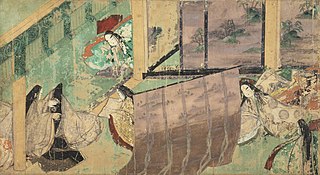
The Heian period is the last division of classical Japanese history, running from 794 to 1185. It followed the Nara period, beginning when the 50th emperor, Emperor Kammu, moved the capital of Japan to Heian-kyō. Heian (平安) means "peace" in Japanese. It is a period in Japanese history when the Chinese influences were in decline and the national culture matured. The Heian period is also considered the peak of the Japanese imperial court and noted for its art, especially poetry and literature. Two types of Japanese script emerged, including katakana, a phonetic script which was abbreviated into hiragana, both unique alphabets distinctive to Japan. This gave rise to Japan's famous vernacular literature, with many of its texts written by court women who were not as educated in Chinese compared to their male counterparts.

Emperor Go-Nara was the 105th Emperor of Japan, according to the traditional order of succession. He reigned from June 9, 1526, until his death in 1557, during the Sengoku period. His personal name was Tomohito (知仁).
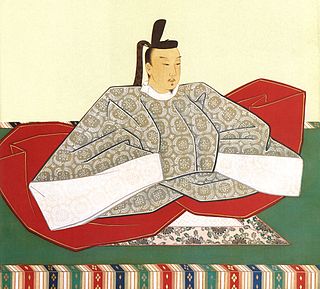
Emperor Go-Komatsu was the 100th emperor of Japan, according to the traditional order of succession, and the sixth and final Emperor of the Northern Court.

Emperor Go-Murakami was the 97th emperor of Japan, according to the traditional order of succession, and a member of the Southern Court during the Nanboku-chō period of rival courts. He reigned from September 18, 1339, until March 29, 1368. His personal name was Noriyoshi (義良). He reigned from Sumiyoshi, Ōsaka, Yoshino, Nara, and other temporary locations.
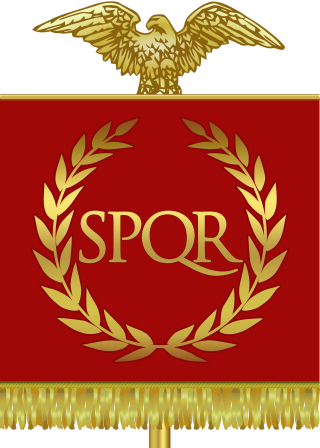
The Roman emperor was the ruler and monarchial head of state of the Roman Empire during the imperial period, starting with the granting of the title augustus to Octavian in 27 BC. The emperors used a variety of different titles throughout history. Often when a given Roman is described as becoming emperor in English, it reflects his taking of the title augustus and later basileus. Another title often used was caesar, used for heirs-apparent, and imperator, originally a military honorific. Early emperors also used the title princeps civitatis. Emperors frequently amassed Republican titles, notably princeps senatus, consul, and pontifex maximus.

Empress Dowager Cixi ; born Yehe Nara Xingzhen, was a Chinese noblewoman of the Manchu Yehe Nara clan, concubine and later regent who effectively controlled the Chinese government in the late Qing dynasty for almost 50 years, from 1861 until her death in 1908. Selected as a concubine of the Xianfeng Emperor in her adolescence, she gave birth to a son, Zaichun, in 1856. After the Xianfeng Emperor's death in 1861, the young boy became the Tongzhi Emperor, and she assumed the role of co-empress dowager, alongside the Emperor's widow, Empress Dowager Ci'an. Cixi ousted a group of regents appointed by the late emperor and assumed the regency along with Ci'an, who later died. Cixi then consolidated control over the dynasty when she installed her nephew as the Guangxu Emperor at the death of her son, the Tongzhi Emperor, in 1875. This was contrary to the traditional rules of succession of the Qing dynasty that had ruled China since 1644.

The Qiánlóng Emperor, also known by his temple name Emperor Gāozōng of Qing, personal name Hongli, was the fifth emperor of the Qing and the fourth Qing emperor to rule over China proper. The fourth son of the Yongzheng Emperor, he reigned officially from 11 October 1735 to 8 February 1796. In 1796, he abdicated in favour of his son, the Jiaqing Emperor, out of filial piety towards his grandfather, the Kangxi Emperor, who ruled for 61 years, so that he not officially usurp him as the longest-reigning emperor. Despite his retirement, however, the Qianlong Emperor retained ultimate power as the Emperor Emeritus until his death in 1799, making him one of the longest-reigning monarchs in history as well as one of the longest-lived, having died at the age of 87. He was respected as the "Emperor Manjushri" (文殊皇帝) by Tibetans.

Mughal emperors were the supreme heads of state of the Mughal Empire on the Indian subcontinent, mainly corresponding to the modern countries of India, Pakistan, Afghanistan and Bangladesh. The Mughal rulers styled themselves as Badshah or Shahanshah, a title usually translated from Persian as "emperor". They began to rule parts of India from 1526, and by 1707 ruled most of the sub-continent. After that they declined rapidly, but nominally ruled territories until the Indian Rebellion of 1857.

The Emperor of Austria was the ruler of the Austrian Empire and later the Austro-Hungarian Empire. The hereditary imperial title and office was proclaimed in 1804 by Holy Roman Emperor Francis II, a member of the House of Habsburg-Lorraine, and continually held by him and his heirs until Charles I relinquished power in 1918.

The term Western Roman Empire is used in modern historiography to refer to the western provinces of the Roman Empire, collectively, during any period in which they were administered separately from the eastern provinces by a separate, independent Imperial court—and particularly during the period from 395 to 476, in which there were separate, coequal courts dividing the governance of the empire in the Western provinces from that of the Eastern provinces, with a distinct imperial succession in the separate courts. The terms Western Roman Empire and Eastern Roman Empire were coined in modern times to describe political entities that were de facto independent; contemporary Romans did not consider the Empire to have been split into two empires but viewed it as a single polity governed by two imperial courts as an administrative expediency. The Western Roman Empire collapsed in 476, and the Western imperial court in Ravenna was formally dissolved by Justinian I in 554. The Eastern imperial court lasted until 1453.
The Northern Court, also known as the Ashikaga Pretenders or Northern Pretenders, were a set of six pretenders to the throne of Japan during the Nanboku-chō period from 1336 through 1392. The present Imperial House of Japan is descended from the Northern Court emperors.
The History of Ming or the Ming History is one of the official Chinese historical works known as the Twenty-Four Histories. It consists of 332 volumes and covers the history of the Ming dynasty from 1368 to 1644. It was written by a number of officials commissioned by the court of Qing dynasty, with Zhang Tingyu as the lead editor. The compilation started in the era of the Shunzhi Emperor and was completed in 1739 in the era of the Qianlong Emperor, though most of the volumes were written in the era of the Kangxi Emperor.
The Southern Court were a set of four emperors whose claims to sovereignty during the Nanboku-chō period spanning from 1336 through 1392 were usurped by the Northern Court. This period ended with the Southern Court definitively losing the war, and they were forced to completely submit sovereignty to the Northern Court. This had the result that, while later Japanese sovereigns were descended from the Northern Court, posterity assigns sole legitimacy during this period to the Southern Court.

The Government of Japan consists of legislative, executive and judiciary branches and is based on popular sovereignty. The Government runs under the framework established by the Constitution of Japan, adopted in 1947. It is a unitary state, containing forty-seven administrative divisions, with the Emperor as its Head of State. His role is ceremonial and he has no powers related to Government. Instead, it is the Cabinet, comprising the Ministers of State and the Prime Minister, that directs and controls the Government and the civil service. The Cabinet has the executive power and is formed by the Prime Minister, who is the Head of Government. The Prime Minister is nominated by the National Diet and appointed to office by the Emperor.

