Web community

Last updated

A web community is a web site (or group of web sites) where specific content or links are only available to its members. [1] A web community may take the form of a social network service, an Internet forum, a group of blogs, or another kind of social software web application. The rise in popularity of Web 2.0 websites has allowed for easier real-time communication and ability to connect to others as well as producing new ways for information to be exchanged. [2]

Internet forum online discussion site

An Internet forum, or message board, is an online discussion site where people can hold conversations in the form of posted messages. They differ from chat rooms in that messages are often longer than one line of text, and are at least temporarily archived. Also, depending on the access level of a user or the forum set-up, a posted message might need to be approved by a moderator before it becomes publicly visible.

A blog is a discussion or informational website published on the World Wide Web consisting of discrete, often informal diary-style text entries (posts). Posts are typically displayed in reverse chronological order, so that the most recent post appears first, at the top of the web page. Until 2009, blogs were usually the work of a single individual, occasionally of a small group, and often covered a single subject or topic. In the 2010s, "multi-author blogs" (MABs) emerged, featuring the writing of multiple authors and sometimes professionally edited. MABs from newspapers, other media outlets, universities, think tanks, advocacy groups, and similar institutions account for an increasing quantity of blog traffic. The rise of Twitter and other "microblogging" systems helps integrate MABs and single-author blogs into the news media. Blog can also be used as a verb, meaning to maintain or add content to a blog.

Social software, also known as Web 2.0 applications or social apps, include communication and interactive tools often based on the Internet. Communication tools typically handle the capturing, storing and presentation of communication, usually written but increasingly including audio and video as well. Interactive tools handle mediated interactions between a pair or group of users. They focus on establishing and maintaining a connection among users, facilitating the mechanics of conversation and talk. Although we do not have a generally accepted definition, social software generally refers to software that makes collaborative behaviour, the organisation and moulding of communities, self-expression, social interaction and feedback possible for individuals. Another important element of the existing definition of "social software" is that it allows for the structured mediation of opinion between people, in a centralized or self-regulating manner. The most improved area for social software is that Web 2.0 applications can all promote cooperation between people and the creation of online communities more than ever before.

Contents

Purpose

Web communities provide a platform for a range of services to users. They allow for social interaction across the world between people of different cultures who might not otherwise have met with offline meetings also becoming more common. Another key use of web communities is access to and the exchange of information. With communities for even very small niches it is possible to find people also interested in a topic and to seek and share information on a subject where there are not such people available in the immediate area offline. This has led to a range of popular sites based on areas such as health, employment, finances and education.

Unexpected and innovative uses of web communities have also emerged with Social networks being used in conflicts to alert citizens of impending attacks, [3] the UN sees the web and specifically social networks as an important tool in conflicts and emergencies. [4]

A social networking service is an online platform which people use to build social networks or social relations with other people who share similar personal or career interests, activities, backgrounds or real-life connections.

United Nations Intergovernmental organization

The United Nations (UN) is an intergovernmental organization that was tasked to maintain international peace and security, develop friendly relations among nations, achieve international co-operation and be a centre for harmonizing the actions of nations. The headquarters of the UN is in Manhattan, New York City, and is subject to extraterritoriality. Further main offices are situated in Geneva, Nairobi, Vienna and The Hague. The organization is financed by assessed and voluntary contributions from its member states. Its objectives include maintaining international peace and security, protecting human rights, delivering humanitarian aid, promoting sustainable development and upholding international law. The UN is the largest, most familiar, most internationally represented and most powerful intergovernmental organization in the world. In 24 October 1945, at the end of World War II, the organization was established with the aim of preventing future wars. At its founding, the UN had 51 member states; there are now 193. The UN is the successor of the ineffective League of Nations.

Types

Blogs

Blogging involves a website or webpage that is updated in a reverse chronological order on either a topic or a person's life. There are different types of blogs including Microblogging where the amount of information in a single element is smaller as on the popular social network site Twitter and Liveblogging when an ongoing event is blogged upon in real time, this has been used to live update important worldwide stories including a Twitter user inadvertently live blogging the raid which killed Osama bin Laden. [5]

Microblogging is an online broadcast medium that exists as a specific form of blogging. A microblog differs from a traditional blog in that its content is typically smaller in both actual and aggregated file size. Microblogs "allow users to exchange small elements of content such as short sentences, individual images, or video links", which may be the major reason for their popularity. These small messages are sometimes called microposts.

Twitter Global micro-blogging Internet service

Twitter is an American online news and social networking service on which users post and interact with messages known as "tweets". Tweets were originally restricted to 140 characters, but on November 7, 2017, this limit was doubled for all languages except Chinese, Japanese, and Korean. Registered users can post, like, and retweet tweets, but unregistered users can only read them. Users access Twitter through its website interface, through Short Message Service (SMS) or its mobile-device application software ("app"). Twitter, Inc. is based in San Francisco, California, and has more than 25 offices around the world.

A liveblog is a blog post which is intended to provide a rolling textual coverage of an ongoing event, similar to Live television or live radio. Liveblogging has increased in usage by news organizations and blogging establishments since the mid-2000s, when they were initially used to broadcast updates of technology conferences in the absence of or alongside streaming video captures, and like microblogs, have gained currency as an online publication format which performs the same function as that of live television news coverage.

The ease and convenience of blogging has allowed for its growth with platforms such as Twitter and Tumblr combining social media and blogging alongside other solutions such as WordPress which allow content to be hosted on their own servers or for users to download and install the software on their own servers where user made modifications can be added. This has become so popular that as of October 2014 23.1% of the top 10 million websites are either hosted on or run WordPress. [6]

Tumblr Microblogging and social networking website

Tumblr is a microblogging and social networking website founded by David Karp in 2007 and owned by Verizon Media. The service allows users to post multimedia and other content to a short-form blog. Users can follow other users' blogs. Bloggers can also make their blogs private. For bloggers many of the website's features are accessed from a "dashboard" interface.

WordPress (WordPress.org) is a free and open-source content management system (CMS) based on PHP & MySQL. Features include a plugin architecture and a template system. It is most associated with blogging but supports other types of web content including more traditional mailing lists and forums, media galleries, and online stores. Used by more than 60 million websites, including 33.6% of the top 10 million websites as of April 2019, WordPress is the most popular website management system in use. WordPress has also been used for other application domains such as pervasive display systems (PDS).

Bulletin boards

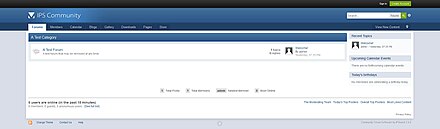
A screenshot of a newly installed version of IPB 3.4.6 Invision Power Board 3.4.6.jpg
A screenshot of a newly installed version of IPB 3.4.6

Bulletin boards or Internet forums are websites which allow users to post topics also known as threads for discussion with other users able to reply creating a conversation. Forums follow a categorised structure with many popular forum software solutions categorising forums depending on their purpose with multiple forums that can potentially contain sub-forums that within contain threads. With time more advanced features have been added into forums with the ability to attach files, embed YouTube videos and private messaging now common place. Currently the largest forum Gaia Online contains over 2 billion posts. [7]

Gaia Online

Gaia Online is an English-language, anime-themed social networking and forums-based website. It was founded as go-gaia on February 18, 2003, and the name was changed to GaiaOnline.com in 2004 by its owner, Gaia Interactive. Gaia originally began as an anime linklist and eventually developed a small community, but following a statement by founder Derek Liu, the website moved towards social gaming, and eventually became forum-based. In 2007, over a million posts were made daily, and 7 million unique users visited each month. Gaia also won the 2007 Webware 100 award in the Community category and was included in Time Magazine's list of 50 best websites in 2008. In January 2011, the company won the Mashable Best User experience Award for 2010.

Members are commonly assigned into user groups which control their access rights and permissions with two popular levels of staff access:

Social networks

Social networks are platforms allowing users to set up their own profile and build connections with like minded people who pursue similar interests through interaction. The first traceable example of such a site is SixDegrees.com set up in 1997 which included a friends list and the ability to send messages to members linked to friends and see other users associations. For over a decade the popularity of such networks has been growing with Friendster the first social network to gain mass media attention however by 2004 it had been overtaken in popularity by Myspace which was later overtaken by Facebook, by far the most popular social network currently attracting 1.23 billion monthly users in 2013, a rapid increase from 145 million in 2008. [8] This does appear to show a birth and death cycle with new social networks rapidly growing and overtaking their predecessors and sending older networks into decline.

SixDegrees.com

SixDegrees.com was a social network service website that lasted from 1997 to 2000 and was based on the Web of Contacts model of social networking. It was named after the six degrees of separation concept and allowed users to list friends, family members and acquaintances both on the site and externally; external contacts were invited to join the site. Users could send messages and post bulletin board items to people in their first, second, and third degrees, and see their connection to any other user on the site. It was one of the first manifestations of social networking websites in the format now seen today. Six Degrees was followed by more successful social networking sites based on the "social-circles network model" such as Friendster, MySpace, LinkedIn, XING, and Facebook.

Friendster social gaming site

Friendster was a social gaming site based in Kuala Lumpur, Malaysia. It was originally a social networking service website. Before Friendster was redesigned, the service allowed users to contact other members, maintain those contacts, and share online content and media with those contacts. The website was also used for dating and discovering new events, bands and hobbies. Users could share videos, photos, messages and comments with other members via profiles and networks. It is considered one of the original social networks.

Myspace social network

Myspace is a social networking website offering an interactive, user-submitted network of friends, personal profiles, blogs, groups, photos, music, and videos. Myspace was the largest social networking site in the world from 2005 to 2009. It is headquartered in Beverly Hills, California.

Current trends focus around the increased use of mobile devices when using social networks, statistics from Statista show in 2013 97.9 million users accessed social networks from a mobile device in the US with this projected to increase to 160.5 million by 2017. [9]

Popularity

Web communities have grown in popularity with 6 of the current top 20 websites by traffic being community based sites. [10] The amount of traffic to such websites is expected to increase as by the end of 2015 it is estimated 42% of the worlds population will have internet access compared to 17.6% in 2006 according to the European Travel Commission [11] with current chairman of Google Eric Schmidt stating his belief that by 2020 the entire world will have internet access. [12]

Issues

Reliability of information

Web communities can be an easy and useful tool to access information. However, the information contained as well as the users' credentials cannot always be trusted, with the internet giving a relatively anonymous medium for some to fraudulently claim anything from their qualifications or where they live to, in rare cases, pretending to be a specific person. [13] Malicious fake accounts created with the aim of defrauding victims out of money has become more high-profile with four men sentenced to between 8 years and 46 weeks for defrauding 12 women out of £250,000 using fake accounts on a dating website. [14] In relation to accuracy one survey based on Wikipedia that evaluated 50 articles found that 24% contained inaccuracies, [15] while in most cases the consequence might just be the spread of misinformation in areas such as health the consequences can be far more damaging leading to the U.S. Food and Drug Administration providing help on evaluating health information on the web. [16]

Privacy

Internet privacy relates to the transmission and storage of a persons data and their right to anonymity whilst online with the UN in 2013 adopting online privacy as a human right by a unanimous vote. [17] Many websites allow users to sign up with a username which needn't be their actual name which allows a level of anonymity, in some cases such as the infamous imageboard 4chan users of the site do not need an account to engage with discussions. However, in these cases depending on the detail of information about a person posted it can still be possible to work out a users identity.

Even when a person takes measures to protect their anonymity and privacy revelations by Edward Snowden a former contractor at the Central Intelligence Agency about mass surveillance programs conducted by the US intelligence services involving the mass collection of data on both domestic and international users of popular websites including Facebook and YouTube as well as the collection of information straight from fiber cables without consent appear to show individuals privacy is not always respected. [18] Facebook founder Mark Zuckerberg publicly stated that the company had not been informed of any such programs and only handed over individual users data when required by law [19] implying that if the allegations are true that the data harvested had been done so without the company's consent.

The growing popularity of social networks where a user using their real name is the norm also brings a new challenge with one survey of 2,303 managers finding 37% investigated candidates social media activity during the hiring process [20] with a study showing 1 in 10 job application rejections for those aged 16 to 34 could be due to social media checks. [21]

Cyber bullying

Cyber bullying, the "use of long-term aggressive, intentional, repetitive acts by one or more individuals, using electronic means, against an almost powerless victim" [22] which has increased in frequency alongside the continued growth of web communities with an Open University study finding 38% of young people had experienced or witnessed cyber bullying. [23] It has received significant media attention due to high-profile incidents such as the death of Amanda Todd [24] who before her death detailed her ordeal on YouTube. [25]

A key feature of such bullying is that it allows victims to be harassed at all times, something not possible typically with physical bullying. This has forced Governments and other organisations to change their typical approach to bullying with the UK Department for Education now issuing advice to schools on how to deal with cyber bullying cases. [26]

Content

The 1% rule states that within an online community as a rule of thumb only 1% of users actively contribute to creating content. Other variations also exist such as the 1-9-90 rule when taking editing into account. [27] This raises problems for online communities with most users only interested in the information such a community might contain rather than having an interest in actively contributing which can lead to staleness in information and community decline. [28] This has led such communities which rely on user editing of content to promote users into becoming active contributors as well as retention of such existing members through projects such as the Wikimedia Account Creation Improvement Project. [29]

Related Research Articles

An internet relationship is a relationship between people who have met online, and in many cases know each other only via the Internet. Online relationships are similar in many ways to pen pal relationships. This relationship can be romantic, platonic, or even based on business affairs. An internet relationship is generally sustained for a certain amount of time before being titled a relationship, just as in-person relationships. The major difference here is that an internet relationship is sustained via computer or online service, and the individuals in the relationship may or may not ever meet each other in person. Otherwise, the term is quite broad and can include relationships based upon text, video, audio, or even virtual character. This relationship can be between people in different regions, different countries, different sides of the world, or even people who reside in the same area but do not communicate in person.

Pseudonymity, a word derived from pseudonym, meaning 'false name', is a state of disguised identity. The pseudonym identifies a holder, that is, one or more human beings who possess but do not disclose their true names. Most pseudonym holders use pseudonyms because they wish to remain anonymous, but anonymity is difficult to achieve and is often fraught with legal issues. True anonymity requires unlinkability, such that an attacker's examination of the pseudonym holder's message provides no new information about the holder's true name.

A virtual community is a social network of individuals who interact through specific social media, potentially crossing geographical and political boundaries in order to pursue mutual interests or goals. Some of the most pervasive virtual communities are online communities operating under social networking services.

Internet culture, or cyberculture, is the culture that has emerged, or is emerging, from the use of computer networks for communication, entertainment, and business. Internet culture is also the study of various social phenomena associated with the Internet and other new forms of the network communication, such as online communities, online multi-player gaming, wearable computing, social gaming, social media, mobile apps, augmented reality, and texting, and includes issues related to identity, privacy, and network formation.

In Internet culture, a lurker is typically a member of an online community or PLN who observes, but does not participate. The exact definition depends on context. Lurkers make up a large proportion of all users in online communities. Lurking allows users to learn the conventions of an online community before they participate, improving their socialization when they eventually "de-lurk". However, a lack of social contact while lurking sometimes causes loneliness or apathy among lurkers.

An online community of practice (OCoP), also known as a virtual community of practice (VCoP), is a community of practice (CoP) that is developed on, and is maintained using the Internet. To qualify as an OCoP, the characteristics of a community of practice (CoP) as described by Lave and Wenger must be met. To this end, an OCoP must include active members who are practitioners, or "experts," in the specific domain of interest. Members must participate in a process of collective learning within their domain. Additionally, social structures must be created within the community to assist in knowledge creation and sharing. Knowledge must be shared and meaning negotiated within an appropriate context. Community members must learn through both instruction-based learning and group discourse. Finally, multiple dimensions must facilitate the long-term management of support as well as enable immediate synchronous interactions.

The social web is a set of social relations that link people through the World Wide Web. The social web encompasses how websites and software are designed and developed in order to support and foster social interaction. These online social interactions form the basis of much online activity including online shopping, education, gaming and social networking websites. The social aspect of Web 2.0 communication has been to facilitate interaction between people with similar tastes. These tastes vary depending on who the target audience is, and what they are looking for. For individuals working in the public relation department, the job is consistently changing and the impact is coming from the social web. The influence, held by the social network is large and ever changing.
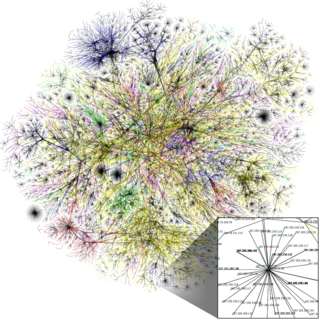
Internet privacy right or mandate of personal privacy concerning the storing, repurposing, provision to third parties, and displaying of information pertaining to oneself via of the Internet; a subset of data privacy

Internet privacy involves the right or mandate of personal privacy concerning the storing, repurposing, provision to third parties, and displaying of information pertaining to oneself via the Internet. Internet privacy is a subset of data privacy. Privacy concerns have been articulated from the beginnings of large-scale computer sharing.

Internet identity (IID), also online identity or internet persona, is a social identity that an Internet user establishes in online communities and websites. It can also be considered as an actively constructed presentation of oneself. Although some people choose to use their real names online, some Internet users prefer to be anonymous, identifying themselves by means of pseudonyms, which reveal varying amounts of personally identifiable information. An online identity may even be determined by a user's relationship to a certain social group they are a part of online. Some can even be deceptive about their identity.

Cyber-ethnography, also known as virtual ethnography, and most commonly online ethnography, is an online research method that adapts ethnographic methods to the study of the communities and cultures created through computer-mediated social interaction. Online ethnography has by far the wider use. As modifications of the term ethnography, cyber-ethnography, online ethnography and virtual ethnography designate particular variations regarding the conduct of online fieldwork that adapts ethnographic methodology. There is no canonical approach to cyber-ethnography that prescribes how ethnography is adapted to the online setting. Instead individual researchers are left to specify their own adaptations. Netnography is another form of online ethnography or cyber-ethnography with more specific sets of guidelines and rules, and a common multidisciplinary base of literature and scholars. This article is not about a particular neologism, but the general application of ethnographic methods to online fieldwork as practiced by anthropologists, sociologists, and other scholars.

Computer-supported collaborative learning (CSCL) is a pedagogical approach where in learning takes place via social interaction using a computer or through the Internet. This kind of learning is characterized by the sharing and construction of knowledge among participants using technology as their primary means of communication or as a common resource. CSCL can be implemented in online and classroom learning environments and can take place synchronously or asynchronously.

Social media Interaction in virtual communities and networks

Social media are interactive computer-mediated technologies that facilitate the creation and sharing of information, ideas, career interests and other forms of expression via virtual communities and networks. The variety of stand-alone and built-in social media services currently available introduces challenges of definition; however, there are some common features:

  1. Social media are interactive Web 2.0 Internet-based applications.
  2. User-generated content, such as text posts or comments, digital photos or videos, and data generated through all online interactions, is the lifeblood of social media.
  3. Users create service-specific profiles for the website or app that are designed and maintained by the social media organization.
  4. Social media facilitate the development of online social networks by connecting a user's profile with those of other individuals or groups.

A community of practice (CoP) is a group of people who share a craft or a profession. The concept was first proposed by cognitive anthropologist Jean Lave and educational theorist Etienne Wenger in their 1991 book Situated Learning. Wenger then significantly expanded on the concept in his 1998 book Communities of Practice.

Online identity management (OIM), also known as online image management, online personal branding or personal reputation management (PRM), is a set of methods for generating a distinguished Web presence of a person on the Internet. Online identity management also refers to identity exposure and identity disclosure, and has particularly developed in the management on online identity in social network services or online dating services.

Digital footprint or digital shadow refers to one's unique set of traceable digital activities, actions, contributions and communications manifested on the Internet or on digital devices. On the World Wide Web, the internet footprint; also known as cyber shadow, electronic footprint, or digital shadow, is the information left behind as a result of a user's web-browsing and stored as cookies. The term usually applies to an individual person, but can also refer to a business, organization and corporation.

Online participation is used to describe the interaction between users and online communities on the web. Online communities often involve members to provide content to the website and/or contribute in some way. Examples of such include wikis, blogs, online multiplayer games, and other types of social platforms. Online participation is currently a heavily researched field. It provides insight into fields such as web design, online marketing, crowdsourcing, and many areas of psychology. Some subcategories that fall under online participation are: commitment to online communities, coordination & interaction, and member recruitment.

Social translucence is a term that was proposed by Thomas Erickson and Wendy Kellogg to refer to "design digital systems that support coherent behavior by making participants and their activities visible to one another".

Since the arrival of early social networking sites in the early 2000s, online social networking platforms have expanded exponentially, with the biggest names in social media in the mid-2010s being Facebook, Instagram, Twitter and SnapChat. The massive influx of personal information that has become available online and stored in the cloud has put user privacy at the forefront of discussion regarding the database's ability to safely store such personal information. The extent to which users and social media platform administrators can access user profiles has become a new topic of ethical consideration, and the legality, awareness, and boundaries of subsequent privacy violations are critical concerns in advance of the technological age.

Technoself studies, commonly referred to as TSS, is an emerging, interdisciplinarity domain of scholarly research dealing with all aspects of human identity in a technological society focusing on the changing nature of relationships between the human and technology. As new and constantly changing experiences of human identity emerge due to constant technological change, technoself studies seeks to map and analyze these mutually influential developments with a focus on identity, rather than technical developments. Therefore, the self is a key concept of TSS. The term "technoself", advanced by Luppicini (2013), broadly denotes evolving human identity as a result of the adoption of new technology, while avoiding ideological or philosophical biases inherent in other related terms including cyborg, posthuman, transhuman, techno-human, beman, digital identity, avatar, and homotechnicus though Luppicini acknowledges that these categories "capture important aspects of human identity". Technoself is further elaborated and explored in Luppicini's "Handbook of Research on Technoself: Identity in a Technological Environment".

References

  1. Gary William Flake; Steve Lawrence; C. Lee Giles (2002). "Efficient Identification of Web Communities" (PDF). p. 1. Retrieved 17 October 2014.
  2. S. Alonso; I.J. Perez; F.J. Cabreizo; E. Herrera-Viedma (January 2013). "A linguistic consensus model for Web 2.0 communities". Applied Soft Computing. 13: 149–157. doi:10.1016/j.asoc.2012.08.009 . Retrieved 17 October 2014.
  3. Emma Tracey (July 2013). "What is it like to be blind in Gaza and Israel?". BBC News. Retrieved 17 October 2014.
  4. Diane Coyle; Patrick Meier (2009). "New Technologies in Emergencies and Conflicts: The Role of Information and Social Networks". UN Foundation-Vodafone Foundation Partnership. Retrieved 17 October 2014.
  5. Jolie O'Dell (May 2011). "One Twitter User Reports Live From Osama Bin Laden Raid". The Metro. Retrieved 21 October 2014.
  6. "Usage of content management systems for websites". W3Techs. Retrieved 21 October 2014.
  7. "TheBiggestBoards". TheBiggestBoards. Retrieved 17 October 2014.
  8. Ami Sedghi (February 2014). "Facebook: 10 years of social networking, in numbers". The Guardian. Retrieved 17 October 2014.
  9. "Number of smartphone social network users in the United States from 2011 to 2017 (in millions)". Statista. 2014. Retrieved 17 October 2014.
  10. "Alexa Top 500 Global Sites". Alexa. Retrieved 21 October 2014.
  11. "Digital Trends Internet Usage". European Travel Commission. 2014. Retrieved 17 October 2014.
  12. Doug Gross (April 2013). "Google boss: Entire world will be online by 2020". CNN. Retrieved 17 October 2014.
  13. Katharine Q. Seelye (December 2005). "Snared in the Web of a Wikipedia Liar". The New York Times. Retrieved 17 October 2014.
  14. "Match.com dating fraud: Four men jailed". BBC News. October 2014. Retrieved 17 October 2014.
  15. Larry Press (May 2006). "Survey of Wikipedia accuracy and completeness". California State University. Retrieved 17 October 2014.
  16. "Buying Medicines Over the Internet". U.S. Food and Drug Administration. December 2005. Retrieved 17 October 2014.
  17. Simon Shawood (December 2013). "United Nations signs off on 'right to privacy in the digital age'". The Register. Retrieved 17 October 2014.
  18. "NSA Prism program slides". The Guardian. November 2013. Retrieved 21 October 2014.
  19. Mark Zuckerberg (June 2013). "Mark Zuckerberg Facebook Post" . Retrieved 21 October 2014.
  20. Jacquelyn Smith (April 2013). "How Social Media Can Help (Or Hurt) You In Your Job Search". Forbes. Retrieved 17 October 2014.
  21. Dara Kerr (May 2013). "Facebookers, beware: That silly update can cost you a job". CNET. Retrieved 17 October 2014.
  22. Peter K. Smith; Jess Mahdavi; Manuel Carvalho; Shanette Russell; Neil Tippett (2008). "Cyberbullying: its nature and impact in secondary school pupils". Journal of Child Psychology and Psychiatry. 49 (4): 376–385. doi:10.1111/j.1469-7610.2007.01846.x.
  23. Saima Tarapdar; Mary Kellett (2011). "Young people's voices on cyber bullying: what can age comparisons tell us". The Open University.Missing or empty |url= (help)
  24. "Canadian teen found dead weeks after posting wrenching YouTube video detailing bullying". Fox News. 12 October 2012. Retrieved 17 October 2014.
  25. My story: Struggling, bullying, suicide, self harm on YouTube, 7 September 2012, Retrieved 17 October 2014.
  26. Department for Education (March 2014). "Preventing and tackling bullying: Advice for headteachers, staff and governing bodies" (PDF). Retrieved 17 October 2014.
  27. Charles Arthur (July 2006). "What is the 1% rule?". The Guardian. Retrieved 17 October 2014.
  28. Aaron Halfaker; R. Stuart Geiger; Jonathan Morgan; John Riedl (2013). "The Rise and Decline of an Open Collaboration Community: How Wikipedia's reaction to sudden popularity is causing its decline". American Behavioral Scientist. Retrieved 17 October 2014.
  29. Lennart Guldbrandsson (2008). "A report on the Account Creation Improvement Project and the Fellowship" (PDF). Wikimedia. Retrieved 17 October 2014.