
An orphanage is a residential institution, total institution or group home, devoted to the care of orphans and children who, for various reasons, cannot be cared for by their biological families. The parents may be deceased, absent, or abusive. There may be substance abuse or mental illness in the biological home, or the parent may simply be unwilling to care for the child. The legal responsibility for the support of abandoned children differs from country to country, and within countries. Government-run orphanages have been phased out in most developed countries during the latter half of the 20th century but continue to operate in many other regions internationally. It is now generally accepted that orphanages are detrimental to the emotional wellbeing of children, and government support goes instead towards supporting the family unit.

The National Society for the Prevention of Cruelty to Children (NSPCC) is a British child protection charity founded as the Liverpool Society for the Prevention of Cruelty to Children (LSPCC) by Thomas Agnew on 19 April 1883. The NSPCC lobbies the government on issues relating to child welfare, and creates child abuse public awareness campaigns. Since the 1980s, the charity has had statutory powers allowing it to apply for help on behalf of children at risk. In the 1990s, the charity's publication, Satanic Indicators, fueled panic in social workers who went and accused parents and removed children from homes when they should not have. It operates a help line. The Paddington Bear character has partnered with the charity to raise funds for the charity. NSPCC operates telephone helplines.

WaterAid is an international non-governmental organization, focused on water, sanitation and hygiene. It was set up in 1981 as a response to the UN International Drinking Water decade (1981–1990). As of 2018, it was operating in 34 countries.
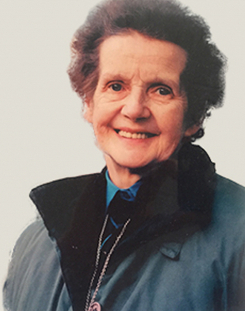
Margaret Susan Cheshire, Baroness Ryder of Warsaw, Baroness Cheshire,, commonly known as Sue Ryder, was a British volunteer with Special Operations Executive in the Second World War, and a member of the First Aid Nursing Yeomanry, who afterwards established charitable organisations, notably the Sue Ryder Foundation.

Islamic Relief Worldwide describes itself as "a faith-inspired humanitarian and development agency which is working to support and empower the world's most vulnerable people".

Chernobyl Children International (CCI) is a non-profit, international development, medical, and humanitarian organisation that works with children, families and communities that continue to be affected by the economic outcome of the 1986 Chernobyl accident. The organisation's founder and chief executive is Adi Roche. Before 2010, it was known as Chernobyl Children's Project International (CCPI).
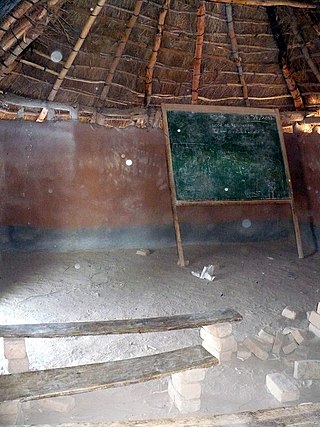
Lower education in Zambia is divided into three levels and these are namely: primary, junior secondary and upper secondary. Higher education in Zambia has improved in the recent years due to the increase of private universities and colleges. The biggest university is the public University of Zambia which is located in the capital city of Lusaka along the great east road and hosts a number of local and international students. The Copperbelt University is the second largest public university and is located in the Copperbelt province of Zambia in Kitwe, and the youngest public university is Mulungushi University, with its main campus 26 km north of Kabwe. There are many other smaller universities, both public and private including the following: Texila American University, Zambia Open University, European University Zambia Zambia Catholic University, Cavendish University, Zambia Adventist University, Northrise University, University of Lusaka, Lusaka Apex Medical University, Woodlands University College, Copperstone University College, University of Barotseland, University of Africa, Information and Communication University, Kwame Nkrumah University of Education, Chalimbana University, Rusangu University, Robert Makasa University, Zambia Centre of Accountancy Studies and there are various Health training Institutes offering Diplomas in clinical medicine Registered Nursing
The Scottish Catholic International Aid Fund, better known by its acronym SCIAF, is the official aid and development agency of the Catholic Church in Scotland. Established in 1965, SCIAF now works in eight countries across Asia, Africa and Latin America and providing assistance to vulnerable people. SCIAF works with partner organisations and has responded to humanitarian disasters with emergency provisions and support. In Scotland, SCIAF raises awareness of the underlying causes of global poverty and injustice, work that includes visiting schools.
Sentebale is a registered charity founded in 2006 by Prince Harry and Prince Seeiso of Lesotho. Sentebale helps children and adolescents struggling to come to terms with their HIV and AIDS diagnosis. It provides a safe environment for them to address their mental health among their peers, giving them tools and knowledge.

Mary's Meals, formerly known as Scottish International Relief (SIR), is a registered charity which sets up school feeding programmes in some of the world's poorest communities, where hunger and poverty prevent children from gaining an education. It was founded in 2002 and has grown from its first feeding operation of 200 children in Malawi, to a worldwide campaign, providing free school meals in hundreds of schools and feeding more than two million children daily. Mary's Meals is named after Mary, the mother of Jesus, by its founders, who were inspired by their Catholic faith, although the charity is not a Catholic organisation.
Quarriers is a Scottish social care charity based in Quarrier's Village, Inverclyde. It provides care and support for people with a disability, children and families, young people, young homeless people, people with epilepsy, and carers. In February 2008 Quarriers was the largest non-church social care charity in Scotland.
Starfish Greathearts Foundation is an international non-governmental organisation formed in 2001 to help orphaned and vulnerable children in South Africa. Its mission is to help make a difference in the lives of such children via community-based projects working at grassroots level. This enables individual communities to develop their own solutions to fight the challenges they come across. As of January 2022, Starfish projects have reached more than 220,000 children in 110 communities across South Africa.</ref> Starfish Greathearts Foundation.
Lifeline Energy is a non-profit social enterprise that provides technology solutions for off-grid learning. The organization designs, manufactures and distributes solar and wind-up media players and radios for classroom and group listening and was behind the first solar and wind-up radio for humanitarian use which launched in 2003. Since it began operations in 1999 more than 550,000 wind-up and solar powered radios and media players have been distributed, mainly in sub-Saharan Africa. Millions of listeners have been reached, as classrooms of up to 60 children or listening groups can use each radio or media player.

Cecily's Fund is a UK-based charity that enables impoverished children to go to school in Zambia, with a particular focus on those orphaned or made vulnerable by AIDS.
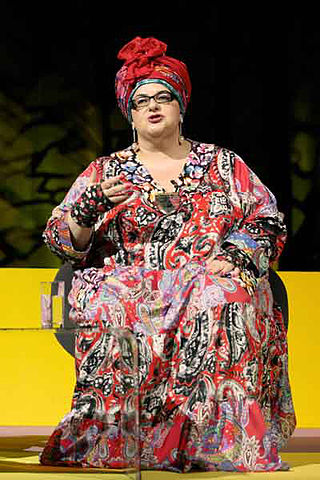
Camila Batmanghelidjh CBE was an Iranian-Belgian author, psychotherapist, and charity executive based in the United Kingdom. She was the founder of the charity Kids Company and Place2Be, charities that worked with marginalised children and young people at risk, in inner London, Bristol and Liverpool.
Street Child is a British-founded charity with a global vision: to see all children safe, in school and learning. Established in Sierra Leone in 2008, the charity has since expanded its operations into over 20 of the world’s poorest and most disaster-hit countries, across sub-Saharan Africa, Asia, the Middle East and Europe.

Msizi Africa is an international charitable organisation set up by Lucy Caslon in 2007. Msizi means 'helper' in Zulu. The charity, based in South London and originally named Mants'ase Children's Home UK, is registered with the UK Charity commission and provides children in Lesotho with nutritious food. Msizi Africa actively supports and closely works with a number of local projects and collaborates with Letsema, a network of service providers working with orphans and vulnerable children in Lesotho. Since October 2015, Msizi Africa Lesotho has been registered as a Lesotho registered charitable organisation.
KidsOut is a multi-faceted national charity based in Leighton Buzzard which provides a range of services to bring about positive change to thousands of underprivileged and vulnerable children situated all around the UK. They pride themselves as "a charity based on actions rather than words”. Every year they help approximately 80,000 disadvantaged children, including over 20,000 who, with their mothers, have had to flee from their homes to escape domestic abuse and now live in one of approximately 650 refuges situated across the UK. These children will have witnessed or experienced, mental, physical or sexual abuse and often arrive in refuge traumatised and with no more than the clothes they are wearing. KidsOut provides each child with a box of new toys and books to help make the children feel welcome.

Mohammed Sadiq Mamdani is an English social entrepreneur and activist, who is currently the UK Director of Kijana Kwanza. He is known for his extensive work in founding charitable organisations; including Muslim Youth Helpline, Ansar Youth Project, Al-Mizan Charitable Trust and Sufra NW London. Mamdani is an advocate on youth issues and community development, who is passionate about interfaith social action.
Al-Khair Foundation (AKF) is an international Muslim aid NGO based in the United Kingdom and Turkey, and is the third largest Muslim charity in the UK. It was established in 2003, and aims to deliver aid to the poor and vulnerable, as well as education for the Muslim community. It specialises in humanitarian support, international development, emergency aid and disaster relief in some of the world's most deprived areas.
