Related Research Articles

Conrad Lafcadio Hall, ASC was a French Polynesian-born American cinematographer. Named after writers Joseph Conrad and Lafcadio Hearn, he became widely prominent as a cinematographer earning numerous accolades including three Academy Awards, three BAFTA Awards and five American Society of Cinematographers Awards.

Andrew Lesnie ACS ASC was an Australian cinematographer. He was best known as the cinematographer for The Lord of the Rings trilogy (2001–2003) and its prequel The Hobbit trilogy (2012–2014), both directed by New Zealand director Peter Jackson. He received the Academy Award for Best Cinematography for his work on The Lord of the Rings: The Fellowship of the Ring in 2002.

Jack Cardiff was a British cinematographer, film and television director, and photographer. His career spanned the development of cinema, from silent film, through early experiments in Technicolor, to filmmaking more than half a century later.

Robert L. Surtees was an American cinematographer who won three Academy Awards for the films King Solomon's Mines, The Bad and the Beautiful and the 1959 version of Ben-Hur. Surtees worked at various studios, including Universal, UFA, Warner Brothers, and MGM, lighting for notable directors Howard Hawks, Mike Nichols, and William Wyler, gaining him a reputation as one of the most versatile cinematographers of his time.
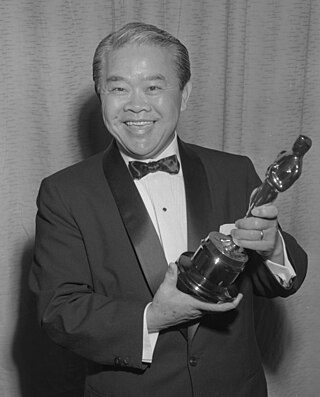
Wong Tung Jim, A.S.C. (Chinese: 黃宗霑; August 28, 1899 – July 12, 1976), known professionally as James Wong Howe (Houghto), was a Chinese-born American cinematographer who worked on over 130 films. During the 1930s and 1940s, he was one of the most sought after cinematographers in Hollywood due to his innovative filming techniques. Howe was known as a master of the use of shadow and one of the first to use deep-focus cinematography, in which both foreground and distant planes remain in focus.
Joseph Francis Biroc, ASC was an American cinematographer. He was born in New York City and began working in films at the Paragon Studios in Fort Lee, New Jersey. After working there for approximately six years, he moved to Los Angeles. Once in Southern California, Biroc worked at the RKO Pictures movie studio. During World War II, he served in the U.S. Army Signal Corps and filmed the Liberation of Paris in August 1944. In 1950, Biroc left RKO Pictures and freelanced on projects at various studios. In addition to his film work, which included It's a Wonderful Life (1946) and The Flight of the Phoenix (1965), Biroc worked on various television series, including the Adventures of Superman and Wonder Woman. He frequently collaborated with film director Robert Aldrich.

Karl Struss, A.S.C. was an American photographer and a cinematographer of the 1900s through the 1950s. He was also one of the earliest pioneers of 3-D films. While he mostly worked on films, such as F.W. Murnau's Sunrise: A Song of Two Humans and Charlie Chaplin's The Great Dictator and Limelight, he was also one of the cinematographers for the television series Broken Arrow and photographed 19 episodes of My Friend Flicka.
Richard Howard KlineASC was an American cinematographer, known for his collaborations with directors Richard Fleischer and Michael Winner. He was a second-generation filmmaker, being the son of cinematographer Benjamin H. Kline and the nephew of ASC co-founder Phil Rosen. He was nominated twice for an Academy Award for Best Cinematography, for Camelot (1968) and King Kong (1976).
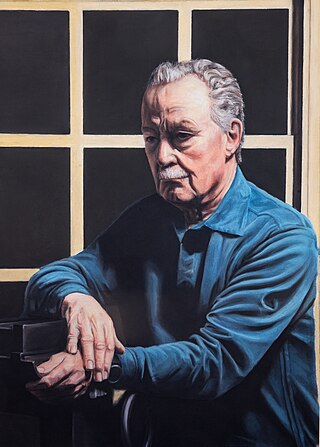
Michael Crawford Chapman, ASC was an American cinematographer and film director well known for his work on many films of the American New Wave of the 1970s and in the 1980s with directors such as Martin Scorsese and Ivan Reitman. He shot more than forty feature films.
Frederick James Koenekamp, A.S.C. was an American cinematographer. He was the son of cinematographer Hans F. Koenekamp.

Gaetano (Tony) Gaudio, A.S.C. was a pioneer Italian-American cinematographer of more than 1000 films. Gaudio won the Academy Award for Best Cinematography for Anthony Adverse, becoming the first Italian to have won an Oscar, and was nominated five additional times for Hell's Angels, Juarez, The Letter, Corvette K-225, and A Song to Remember. He is cited as the first to have created a montage sequence for a film in The Mark of Zorro. He was among the founders of the American Society of Cinematographers, and served as president from 1924 until 1925.
Dean Raymond Cundey, A.S.C. is an American cinematographer and film director. He is known for his collaborations with John Carpenter, Steven Spielberg, and Robert Zemeckis, as well as his extensive work in the horror genre, in addition to numerous family and comedy films. His filmography as a cinematographer includes Halloween (1978), The Fog (1980), Escape from New York (1981), The Thing (1982), the Back to the Future trilogy (1985–1990), Who Framed Roger Rabbit (1988), Jurassic Park (1993), Apollo 13 (1995), and Garfield: The Movie (2004).
Walter C. Pfister is an American director and former cinematographer, who is best known for his work with filmmaker Christopher Nolan. Some of his collaborations with Nolan include Memento (2000), The Dark Knight Trilogy (2005–2012), and Inception (2010). For his work on Inception, Pfister won an Academy Award for Best Cinematography and received a BAFTA Award nomination.

John Alcott, BSC was an English cinematographer known for his four collaborations with director Stanley Kubrick: 2001: A Space Odyssey (1968), for which he took over as lighting cameraman from Geoffrey Unsworth in mid-shoot, A Clockwork Orange (1971), Barry Lyndon (1975), the film for which he won his Oscar, and The Shining (1980). Alcott died from a heart attack in Cannes, France, in July 1986; he was 55. He received a tribute at the end of his last film No Way Out starring Kevin Costner.
David Russell Boyd, A.S.C. is an American cinematographer and director of television and film known for his role as director of photography for the Fox television series Firefly and the AMC series The Walking Dead. He also worked as cinematographer on the first three episodes of HBO's Deadwood. On the NBC television series Friday Night Lights he served as director of photography on 18 of 22 episodes in the first season and moved up to direct two more. He also directed the film Home Run, which was released in 2013.
Bruce Mohr Powell Surtees was an American cinematographer, the son of Maydell and cinematographer Robert L. Surtees. He is best known for his extensive work on Clint Eastwood's films. His cinematography was compared to that of the Dollars trilogy of Sergio Leone.
Thomas Evans Stern, ASC, AFC is an American cinematographer. He is best known for his work on films directed by Clint Eastwood, having been his primary cinematographer since Blood Work in 2002. Stern began work as a gaffer in 1977, and for his work in Changeling (2008) was nominated for an Academy Award for Best Cinematography.
Stephen Campanelli is a Canadian movie cameraman and film director. He has been a long-term member of Clint Eastwood's film production crew.

Ernest Day, B.S.C. was a British cinematographer and director of film and television, known for his collaborations with David Lean and Lewis Gilbert. He spent the majority of his career as a camera operator, often referred to Lean as his "eyes", and was the first British cameraman to operate a 70mm film camera. He was nominated for an Academy Award and BAFTA Award for Lean's final film A Passage to India (1984).
References
- ↑ Kay Weniger: Das große Personenlexikon des Films. Band 3, Berlin 2001, ISBN 3-89602-340-3, p. 375.
- 1 2 3 4 5 6 "JACK N. GREEN". www.cinematographers.nl. Retrieved August 28, 2017.
- 1 2 3 4 Udel, James C.: "Cinematographer Jack N. Green’s Aerial Work Led to Gigs on Clint Eastwood Movies," August 2, 2019, Variety, retrieved October 2, 2021
